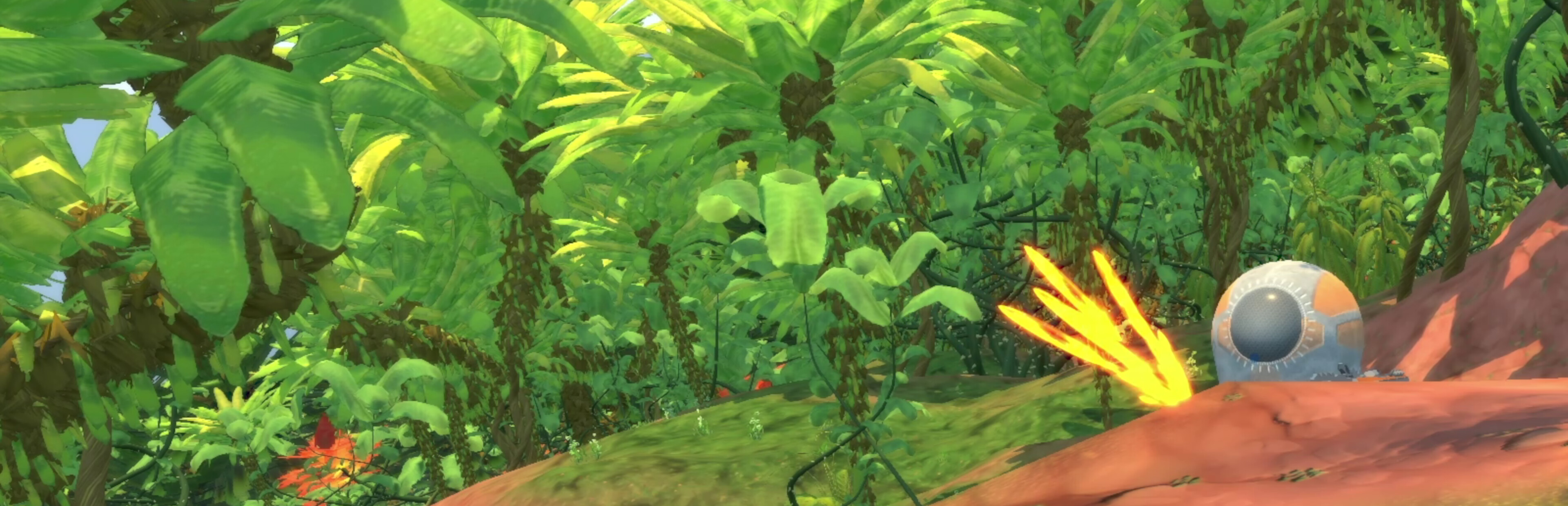
Hello everyone! The time has come to share one of our most important achievements to date.
In this update3
Full notes
Full Ecliptica update
Read the full published notes in a cleaner layout. The original post stays linked below.
Repeated intro
Hello everyone!
What changed
0 fixes0 additions5 changes0 removals
Gameplay
Maps
changedFrom the Old System to the New: Why We Changed?Previously, like most developers, we used a tile-based LOD system for generating the game world. Essentially, we created chunks based on heightmaps using Qt HeightFieldGeometry. This solution worked initially, but over time, our ambitions for draw distance grew. When we added rocky and sandy terrains to the game, we encountered many problems:
changedFrom the Old System to the New: Why We Changed?Increased CPU load: The number of tiles reached up to 1600, heavily stressing the system.
changedFrom the Old System to the New: Why We Changed?Difficulties with smoothing transitions: When players changed altitudes (e.g., during resource extraction), transitions looked unpolished.
changedInspiration from UE5 and Our SolutionIn the process of finding solutions, we came across the terrain implementation in UE5, specifically their Nanite system. This impressed us greatly, and we decided to create an analogous system in Qt.
changedThe Result: A More Detailed and Lighter WorldUnlike UE5, our system currently works only for primitives (e.g., ocean or ground), but it has completely solved all our problems! Now we can create much more detailed terrain that is significantly less demanding on gaming hardware .
Ecliptica changes
changedPreviously, like most developers, we used a tile-based LOD system for generating the game world. Essentially, we created chunks based on heightmaps using Qt HeightFieldGeometry. This solution worked initially, but over time, our ambitions for draw distance grew. When we added rocky and sandy terrains to the game, we encountered many problems:
changedIncreased CPU load: The number of tiles reached up to 1600, heavily stressing the system.
changedDifficulties with smoothing transitions: When players changed altitudes (e.g., during resource extraction), transitions looked unpolished.
changedIn the process of finding solutions, we came across the terrain implementation in UE5, specifically their Nanite system. This impressed us greatly, and we decided to create an analogous system in Qt.
changedUnlike UE5, our system currently works only for primitives (e.g., ocean or ground), but it has completely solved all our problems! Now we can create much more detailed terrain that is significantly less demanding on gaming hardware .
The time has come to share one of our most important achievements to date. Although this is a purely technical advancement, which will likely be of most interest to other Qt developers, it will also affect all players.
From the Old System to the New: Why We Changed?
Previously, like most developers, we used a tile-based LOD system for generating the game world. Essentially, we created chunks based on heightmaps using Qt HeightFieldGeometry. This solution worked initially, but over time, our ambitions for draw distance grew. When we added rocky and sandy terrains to the game, we encountered many problems:
Grid around tiles: Unsightly lines separating parts of the world.
Increased CPU load: The number of tiles reached up to 1600, heavily stressing the system.
AdjustedDifficulties with smoothing transitionsWhen players changed altitudes (e.g., during resource extraction), transitions looked unpolished.
These problems were very difficult to solve.
Inspiration from UE5 and Our Solution
In the process of finding solutions, we came across the terrain implementation in UE5, specifically their Nanite system. This impressed us greatly, and we decided to create an analogous system in Qt.
The Result: A More Detailed and Lighter World
Unlike UE5, our system currently works only for primitives (e.g., ocean or ground), but it has completely solved all our problems! Now we can create much more detailed terrain that is significantly less demanding on gaming hardware.
We are very excited about these changes and believe they will make the game world even better and more performant for each of you! [dynamiclink href="https://youtu.be/Kva9UvD_kng"]