
In this update4
Full notes
Full Deer & Boy update
Read the full published notes in a cleaner layout. The original post stays linked below.
What changed
- Gameplay
- UI and audio
Deer & Boy changes
My Deerest Friends!
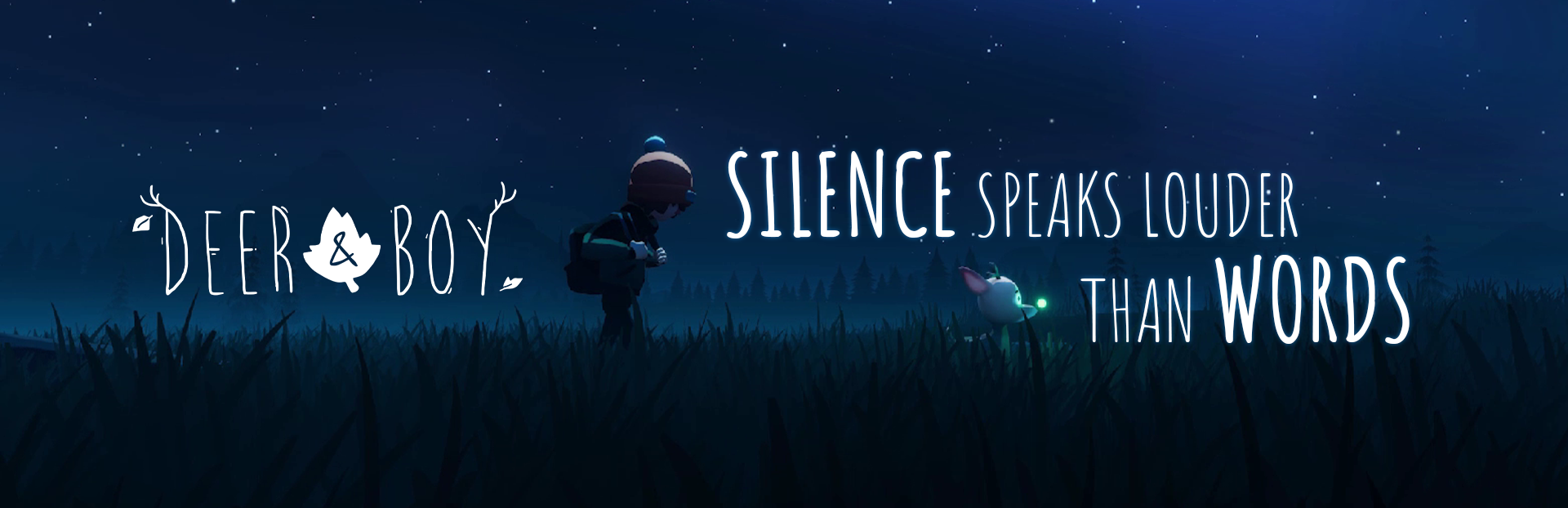
Welcome back to our dev diary series. Last time we talked about gameplay and how the deer's growth shapes the way you play. Today we want to get into something a little more personal: the choice to tell this story without a single word of dialogue.
It wasn't a constraint but rather the whole point.
A story that didn't need words
From very early on, we knew Deer & Boy wasn't going to be a game with dialogue trees or text boxes or voiced characters. The relationship at the heart of the game, a boy and a fawn finding each other at exactly the right moment, felt like the kind of thing that words could actually get in the way of. You know that feeling when something moves you and you can't quite explain why? That's what we were going for.
Silence creates space. Space for the player to bring something of their own to the story.
What does storytelling without dialogue actually look like?
Everything that would normally be carried by words gets redistributed. Animation becomes the script. The way the boy moves when he's carrying the fawn tells you something about how careful he's being. The way the deer turns its head. The way the two of them pause at the edge of something unknown before moving forward together. None of that needs a caption.
The world itself carries narrative weight too. Where you are, what surrounds you, what the world around you is quietly telling you at every step. It's all telling you something if you're paying attention. We put a lot of thought into what each environment communicates on its own, without any assistance from text.
Dialogue-free doesn't mean emotionless
This is something we feel strongly about. Choosing not to use dialogue is not the same as choosing not to tell a story. If anything, it asks more of every other element in the game. The visuals have to work harder. The music and sound design have to carry emotional cues that would normally come from voice acting or written lines. The animation has to be precise enough that you always understand what's happening between the two characters, even without explanation.
We're still deep in that work, and it's one of the most creatively demanding parts of making this game. But when it lands with the players, there's no feeling quite like it for us as devs.
A language anyone can understand
One thing we love about dialogue-free storytelling is what it does for accessibility. There's no language barrier when there's no language. A child playing Deer & Boy and an adult playing it are going to have completely different experiences of the same story, and both of those experiences are valid. We're not telling you what to feel. We're just creating the conditions for you to feel something.
That's the goal, anyway. 😊
The Deer & Boy team
More to come in the next dev diary.
In the meantime, if you haven't already, add Deer & Boy to your Wishlist. The deer will know.
Source
Changelog.gg summarizes and formats this update. How we read updates.