What changed
0 fixes4 additions0 changes0 removals
- UI and audio
- Balance
- Gameplay
addedUpdate 1.0.9.5 has finally arrived, and we nicknamed it Tiger because it started off big and just kept getting fatter. Tiger includes: a pair of overhauls, major system improvements to stacking and air combat, OB updates for the US, USSR, and Germany, new air squadrons across over half the OBs in the game, and much more! On the overhaul front, we have substantially revised Combat Engineering and totally restructured Attack Scenarios. This update also brings the first pillar of the general AI revision. Regarding general improvements, we have (among other things), completely revised how we calculate unit weights, refined air zone generation and propagation, tweaked artillery fire tables - especially for counterbattery, and made numerous user interface improvements/clarifications.
addedCombat Engineering Overhaul:Churchill Crocodile enjoyers rejoice! We have improved the combat engineering system to make it more consistent, detailed, and accessible. What’s New in Combat Engineering? Combat engineering now consists of the combat engineering value of participating units +50% of the fire/air support value assigned to the battle. Moreover, most tank guns over 95mm in bore now possess a combat engineering value proportional to their explosive yield. Combat engineering now further models the intricate details of differences in availability of breaching charges, tactical de-mining equipment, man-packed flamethrowers, and flammable oil capacity in flame tanks. Consequently, the radically different combat engineering capabilities between nations, years, and unit types are readily apparent now. See the example weapon cards below for some of the more striking differences in combat engineering capabilities.
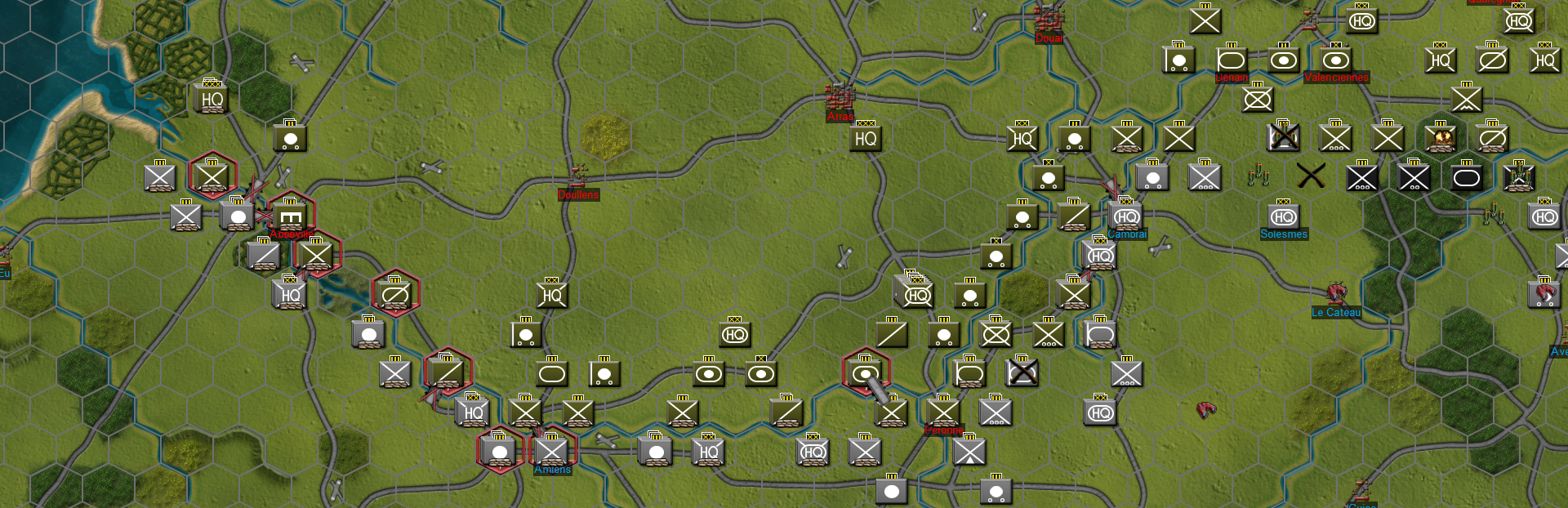
addedDynamic Stacking:Unit stacking weight now dynamically scales based on current strength, with some minor deviations for battlegroups (see below). No more crippled cavalry brigades with 10 squads left somehow still exerting Zone of Control! The new system is designed to make stacking more dynamic and create situations where Zone of Control collapses due to attrition more frequently. The benchmark of 60 strength points to reach 1.0 weight, and thus extend a Zone of Control, means most individual battalions no longer exert ZoC without backup. Regiments/Brigades are generally safe, but some leaner regiments (particularly late-war German Infantry, and some Soviet Regiments) run a real risk of falling below 1.0 stacking value in prolonged combat. See the example of the 377th Grenadier Regiment below for the decline of an individual unit's weight as casualties mount.
addedDynamic Stacking:Key Points of the new stacking system:
Combined Arms Operations Series changes
addedUpdate 1.0.9.5 has finally arrived, and we nicknamed it Tiger because it started off big and just kept getting fatter. Tiger includes: a pair of overhauls, major system improvements to stacking and air combat, OB updates for the US, USSR, and Germany, new air squadrons across over half the OBs in the game, and much more! On the overhaul front, we have substantially revised Combat Engineering and totally restructured Attack Scenarios. This update also brings the first pillar of the general AI revision. Regarding general improvements, we have (among other things), completely revised how we calculate unit weights, refined air zone generation and propagation, tweaked artillery fire tables - especially for counterbattery, and made numerous user interface improvements/clarifications.
addedChurchill Crocodile enjoyers rejoice! We have improved the combat engineering system to make it more consistent, detailed, and accessible. What’s New in Combat Engineering? Combat engineering now consists of the combat engineering value of participating units +50% of the fire/air support value assigned to the battle. Moreover, most tank guns over 95mm in bore now possess a combat engineering value proportional to their explosive yield. Combat engineering now further models the intricate details of differences in availability of breaching charges, tactical de-mining equipment, man-packed flamethrowers, and flammable oil capacity in flame tanks. Consequently, the radically different combat engineering capabilities between nations, years, and unit types are readily apparent now. See the example weapon cards below for some of the more striking differences in combat engineering capabilities.
addedUnit stacking weight now dynamically scales based on current strength, with some minor deviations for battlegroups (see below). No more crippled cavalry brigades with 10 squads left somehow still exerting Zone of Control! The new system is designed to make stacking more dynamic and create situations where Zone of Control collapses due to attrition more frequently. The benchmark of 60 strength points to reach 1.0 weight, and thus extend a Zone of Control, means most individual battalions no longer exert ZoC without backup. Regiments/Brigades are generally safe, but some leaner regiments (particularly late-war German Infantry, and some Soviet Regiments) run a real risk of falling below 1.0 stacking value in prolonged combat. See the example of the 377th Grenadier Regiment below for the decline of an individual unit's weight as casualties mount.
addedKey Points of the new stacking system:
Update 1.0.9.5 has finally arrived, and we nicknamed it Tiger because it started off big and just kept getting fatter. Tiger includes: a pair of overhauls, major system improvements to stacking and air combat, OB updates for the US, USSR, and Germany, new air squadrons across over half the OBs in the game, and much more! On the overhaul front, we have substantially revised Combat Engineering and totally restructured Attack Scenarios. This update also brings the first pillar of the general AI revision. Regarding general improvements, we have (among other things), completely revised how we calculate unit weights, refined air zone generation and propagation, tweaked artillery fire tables - especially for counterbattery, and made numerous user interface improvements/clarifications.
System Updates:
Combat Engineering Overhaul:
Churchill Crocodile enjoyers rejoice! We have improved the combat engineering system to make it more consistent, detailed, and accessible. What’s New in Combat Engineering? Combat engineering now consists of the combat engineering value of participating units +50% of the fire/air support value assigned to the battle. Moreover, most tank guns over 95mm in bore now possess a combat engineering value proportional to their explosive yield. Combat engineering now further models the intricate details of differences in availability of breaching charges, tactical de-mining equipment, man-packed flamethrowers, and flammable oil capacity in flame tanks. Consequently, the radically different combat engineering capabilities between nations, years, and unit types are readily apparent now. See the example weapon cards below for some of the more striking differences in combat engineering capabilities.
Update 1.0.9.5’s engineering update creates 3 broad schools of thought for assaulting forts, all reflective of wartime practices: 1)
The American approach
employ a few strong combat engineer regiments and back them up with apocalyptic levels of fire support. 2)
The Soviet approach
concentrate flamethrower engineers and back them up with heavy assault guns such as SU-152s. 3) The British approach of de-prioritizing infantry engineers entirely and smashing forts with highly specialized assault engineering vehicles, such as the Crocodile. There is of course the 4th option....to just barrage the fort until you crater it out of existence. But this strategy only works against level 1 forts and its efficacy is hit and miss.
Dynamic Stacking:
Unit stacking weight now dynamically scales based on current strength, with some minor deviations for battlegroups (see below). No more crippled cavalry brigades with 10 squads left somehow still exerting Zone of Control! The new system is designed to make stacking more dynamic and create situations where Zone of Control collapses due to attrition more frequently. The benchmark of 60 strength points to reach 1.0 weight, and thus extend a Zone of Control, means most individual battalions no longer exert ZoC without backup. Regiments/Brigades are generally safe, but some leaner regiments (particularly late-war German Infantry, and some Soviet Regiments) run a real risk of falling below 1.0 stacking value in prolonged combat. See the example of the 377th Grenadier Regiment below for the decline of an individual unit's weight as casualties mount.
Key Points of the new stacking system:
6 strength points = 0.1 stacking weight.
Weight for individual units caps out at 2.0 at 120 strength. If a unit (usually a brigade or regiment) has say 210 strength, it will still only have a weight of 2.0.
Weights round down to the nearest 0.1.
Battlegroups can still contain up to 3.0 weight, and they still receive a stacking reduction bonus to represent the command/control benefits of grouping multiple smaller units into a combined force. So a battlegroup with 3.0 weight worth of