Repeated intro
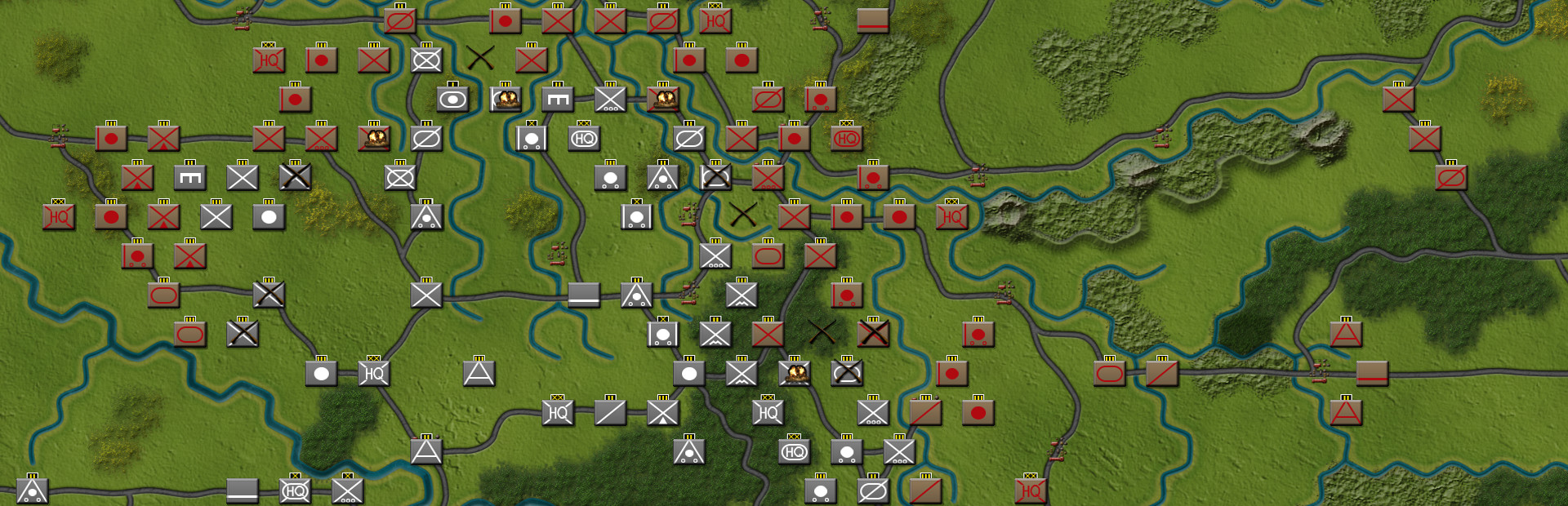
Greetings! Today we bring you a peak into the Soviet Northwestern Front (NWF) as it stood in June/July 1941! The Northwestern Front (or Baltic Special Military District until June 24) is symbolic of the 1941 Red Army in general. It has great potential, on paper, but severely underperforms in actual combat. If properly employed, NWF can bring to bear an astonishing volume of barrage fire to hammer their opponents, negate their zones of control, and inflict terrible casualties However, the frontline protecting the Front’s heavy artillery is dreadfully prone to shattering. Likewise, the armored units responsible for breaching enemy lines or providing mobile reserves are inundated with obsolete equipment and inconsistent motorization. NWF can be an incredibly satisfying OB in the hands of an experienced player, but make no mistake, there is far less room for error here than in most Soviet OBs.
What changed
0 fixes0 additions4 changes0 removals
changedGreetings! Today we bring you a peak into the Soviet Northwestern Front (NWF) as it stood in June/July 1941! The Northwestern Front (or Baltic Special Military District until June 24) is symbolic of the 1941 Red Army in general. It has great potential, on paper, but severely underperforms in actual combat. If properly employed, NWF can bring to bear an astonishing volume of barrage fire to hammer their opponents, negate their zones of control, and inflict terrible casualties However, the frontline protecting the Front’s heavy artillery is dreadfully prone to shattering. Likewise, the armored units responsible for breaching enemy lines or providing mobile reserves are inundated with obsolete equipment and inconsistent motorization. NWF can be an incredibly satisfying OB in the hands of an experienced player, but make no mistake, there is far less room for error here than in most Soviet OBs.
changedStrengths:NWF is a defense-focused order of battle boasting strong artillery and air capabilities, but middling armor and a large selection of expendable infantry. If you are playing a custom scenario where training levels can be changed, NWF is a solid B-grade OB, but playing strictly historically requires getting creative. Your artillery is the key to victory. Most Soviet heavy artillery cannot conduct fire support, but their barrage capabilities are potent. Use your big guns to relentlessly harass hostile concentrations, pin enemy artillery that might provide fire support to key battles, or negate enemy ZoC to enable your own units to move through hostile lines. Likewise, NWF has vast quantities of cheap fighter and bomber cover. NWF will never command a qualitative advantage in the sky, but its sheer numbers alone present a challenge to any opponent.
changedWeaknesses:NWF’s Achilles heel lies in its armor/motorized forces. Without the support of your tanks, the frontline will swiftly collapse in the face of concentrated enemy armor. But your obsolete tanks will struggle to take the Germans in particular on head-to-head. Proper employment of combined arms, and keen judgement to know when to fight and when to run are essential as NWF has less room for error than most Soviet OBs. NWF also suffers from a shortage of recon aircraft, and what is available are obsolete R-5 biplanes that will quickly be neutralized by halfway decent enemy fighter cover. NWF must conduct a delicate balancing act that requires: 1) Skillful maneuver to preserve its armor. 2) Good situational awareness to spot for its arty. 3) Do both of these while being chronically blind.
changedTank/Motorized Divisions:NWF’s armor suffers from dreadfully obsolete equipment, poor readiness levels, and generally slow movement speed compared to their German adversaries. Of the Front’s 4 tank divisions, only 1 (2nd TD) has any meaningful number of modern T-34s and KVs. T-26s and BTs of various types make up the bulk of its armor, and many units are simply understrength. Even in units blessed with modern equipment, insufficient time on type among crews, inadequate unit training, and skilled personnel shortages created by the purges catastrophically degrade morale and cohesion. Inconsistent mobility hammers the final nail in the coffin of NWF’s mechanized forces as many of their tanks are slow, their truck-borne infantry easily outrun them, many artillery units are pulled by civilian tractors, and some “motorized” units lack
Combined Arms Operations Series changes
changedGreetings! Today we bring you a peak into the Soviet Northwestern Front (NWF) as it stood in June/July 1941! The Northwestern Front (or Baltic Special Military District until June 24) is symbolic of the 1941 Red Army in general. It has great potential, on paper, but severely underperforms in actual combat. If properly employed, NWF can bring to bear an astonishing volume of barrage fire to hammer their opponents, negate their zones of control, and inflict terrible casualties However, the frontline protecting the Front’s heavy artillery is dreadfully prone to shattering. Likewise, the armored units responsible for breaching enemy lines or providing mobile reserves are inundated with obsolete equipment and inconsistent motorization. NWF can be an incredibly satisfying OB in the hands of an experienced player, but make no mistake, there is far less room for error here than in most Soviet OBs.
changedNWF is a defense-focused order of battle boasting strong artillery and air capabilities, but middling armor and a large selection of expendable infantry. If you are playing a custom scenario where training levels can be changed, NWF is a solid B-grade OB, but playing strictly historically requires getting creative. Your artillery is the key to victory. Most Soviet heavy artillery cannot conduct fire support, but their barrage capabilities are potent. Use your big guns to relentlessly harass hostile concentrations, pin enemy artillery that might provide fire support to key battles, or negate enemy ZoC to enable your own units to move through hostile lines. Likewise, NWF has vast quantities of cheap fighter and bomber cover. NWF will never command a qualitative advantage in the sky, but its sheer numbers alone present a challenge to any opponent.
changedNWF’s Achilles heel lies in its armor/motorized forces. Without the support of your tanks, the frontline will swiftly collapse in the face of concentrated enemy armor. But your obsolete tanks will struggle to take the Germans in particular on head-to-head. Proper employment of combined arms, and keen judgement to know when to fight and when to run are essential as NWF has less room for error than most Soviet OBs. NWF also suffers from a shortage of recon aircraft, and what is available are obsolete R-5 biplanes that will quickly be neutralized by halfway decent enemy fighter cover. NWF must conduct a delicate balancing act that requires: 1) Skillful maneuver to preserve its armor. 2) Good situational awareness to spot for its arty. 3) Do both of these while being chronically blind.
changedNWF’s armor suffers from dreadfully obsolete equipment, poor readiness levels, and generally slow movement speed compared to their German adversaries. Of the Front’s 4 tank divisions, only 1 (2nd TD) has any meaningful number of modern T-34s and KVs. T-26s and BTs of various types make up the bulk of its armor, and many units are simply understrength. Even in units blessed with modern equipment, insufficient time on type among crews, inadequate unit training, and skilled personnel shortages created by the purges catastrophically degrade morale and cohesion. Inconsistent mobility hammers the final nail in the coffin of NWF’s mechanized forces as many of their tanks are slow, their truck-borne infantry easily outrun them, many artillery units are pulled by civilian tractors, and some “motorized” units lack
Northwestern Front: June/July, 1941:
Type: Historical OB Preferred Playstyle: Artillery-Centric Attrition
Basic Composition:
| Front Totals: | # | Inde. Units | # |
|---|
| Armies | 3 | Arty Bns | 36 |
| Corps | 8 | AT Bns | 20 |
| Tank Divs | 4 | Flak Bns | 9 |
| Mot. Divs | 2 | Engi. Bns | 25 |
| Inf Divs | 13 | | |
| Territorial Divs | 6 | | |
Strengths:
NWF is a defense-focused order of battle boasting strong artillery and air capabilities, but middling armor and a large selection of expendable infantry. If you are playing a custom scenario where training levels can be changed, NWF is a solid B-grade OB, but playing strictly historically requires getting creative. Your artillery is the key to victory. Most Soviet heavy artillery cannot conduct fire support, but their barrage capabilities are potent. Use your big guns to relentlessly harass hostile concentrations, pin enemy artillery that might provide fire support to key battles, or negate enemy ZoC to enable your own units to move through hostile lines. Likewise, NWF has vast quantities of cheap fighter and bomber cover. NWF will never command a qualitative advantage in the sky, but its sheer numbers alone present a challenge to any opponent.
Weaknesses:
NWF’s Achilles heel lies in its armor/motorized forces. Without the support of your tanks, the frontline will swiftly collapse in the face of concentrated enemy armor. But your obsolete tanks will struggle to take the Germans in particular on head-to-head. Proper employment of combined arms, and keen judgement to know when to fight and when to run are essential as NWF has less room for error than most Soviet OBs. NWF also suffers from a shortage of recon aircraft, and what is available are obsolete R-5 biplanes that will quickly be neutralized by halfway decent enemy fighter cover. NWF must conduct a delicate balancing act that requires: 1) Skillful maneuver to preserve its armor. 2) Good situational awareness to spot for its arty. 3) Do both of these while being chronically blind.
Diving Into Details:
Let’s take a closer look at the assets at NWF’s disposal.
Tank/Motorized Divisions:
NWF’s armor suffers from dreadfully obsolete equipment, poor readiness levels, and generally slow movement speed compared to their German adversaries. Of the Front’s 4 tank divisions, only 1 (2nd TD) has any meaningful number of modern T-34s and KVs. T-26s and BTs of various types make up the bulk of its armor, and many units are simply understrength. Even in units blessed with modern equipment, insufficient time on type among crews, inadequate unit training, and skilled personnel shortages created by the purges catastrophically degrade morale and cohesion. Inconsistent mobility hammers the final nail in the coffin of NWF’s mechanized forces as many of their tanks are slow, their truck-borne infantry easily outrun them, many artillery units are pulled by civilian tractors, and some “motorized” units lack