
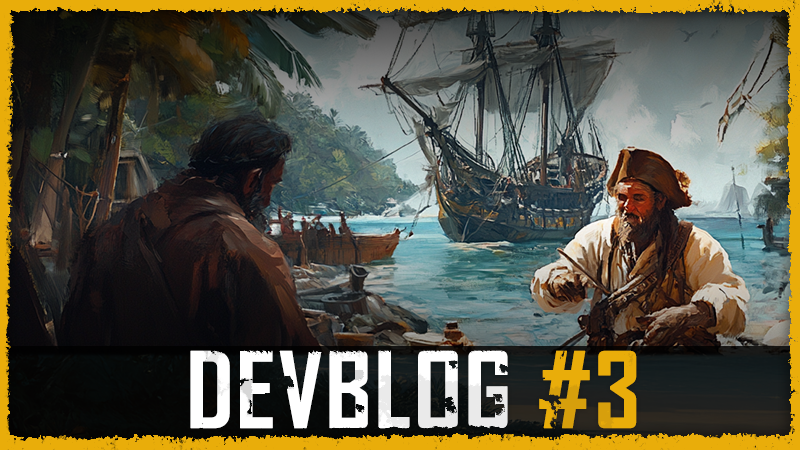
In this update4
Full notes
Full Caribbean Tide update
Read the full published notes in a cleaner layout. The original post stays linked below.
What changed
- Balance
- Maps
- Gameplay
Caribbean Tide changes
This devblog has been split into two parts. The subject of combat is so extensive that one entry would be far too long. Today’s focus is entirely on naval combat, while next week a separate post will cover land battles.
Three durability bars and the crew counter
Every ship in Caribbean Tide has three durability bars and a separate crew counter. This design allows for varied tactical approaches during battles.
Hull - the strongest element of the ship. Destroying the hull leads to sinking. Heavy artillery and armor-piercing ammunition are most effective here.
Masts - essential for sail support. Damaging masts limits the use of sails and reduces maneuvering capability. Targeting masts is a reliable way to slow down an enemy and strip them of initiative.
Rigging and sails - directly affect speed and turning radius. Damaged sails slow the vessel down and make steering sluggish. Firing at sails turns a fast ship into an easy target.
Crew counter - shows how many sailors remain capable of operating the vessel. Losses reduce effectiveness in steering, repairs, and artillery fire. A ship without crew is essentially helpless.
Tactical decisions - choosing targets
Different strategies depend on which bar is targeted:
Battlefield control - firing at masts and sails reduces enemy maneuverability, making them easier to outflank or prepare for boarding.
Quick sinking - focusing on the hull increases the chance of sinking the vessel quickly, though it requires heavy guns and close positioning.
Neutralizing the crew - anti-personnel ammunition such as grapeshot reduces crew numbers. This tactic is most effective when preparing to capture a ship, as even a sturdy vessel is useless without sailors.
Artillery and positioning
Naval artillery depends on gun caliber, placement, and angle relative to the enemy. The most effective are broadside salvos fired perpendicular to an enemy’s hull. Wind and maneuverability play a key role in maintaining position and lining up for the next strike. Smaller guns are suited for anti-personnel fire, while large calibers are critical for destroying hulls and masts.
Production update
Alongside gameplay development, there has been an important change in production. Caribbean Tide is no longer tied to its former publisher. While this brings new challenges, it also creates opportunities for a more community-focused development path.
Early Access - the game is planned for release in Early Access, enabling continued development with active player feedback and financial support through sales.
Crowdfunding - a crowdfunding campaign is under consideration as an additional funding source and a way to involve the community more deeply. Final decisions will follow cost and feasibility analysis.
Community-driven development - independence allows greater flexibility in prioritizing features and balancing according to real player needs, not just marketing metrics.
This change is not only a challenge but also a chance to bring the project closer to community expectations. More details will follow in the next devblogs.
Source
Changelog.gg summarizes and formats this update. How we read updates.