
In this update5
Full notes
Full Astor: Blade of the Monolith update
Read the full published notes in a cleaner layout. The original post stays linked below.
What changed
- Performance
- Gameplay
Astor: Blade of the Monolith changes
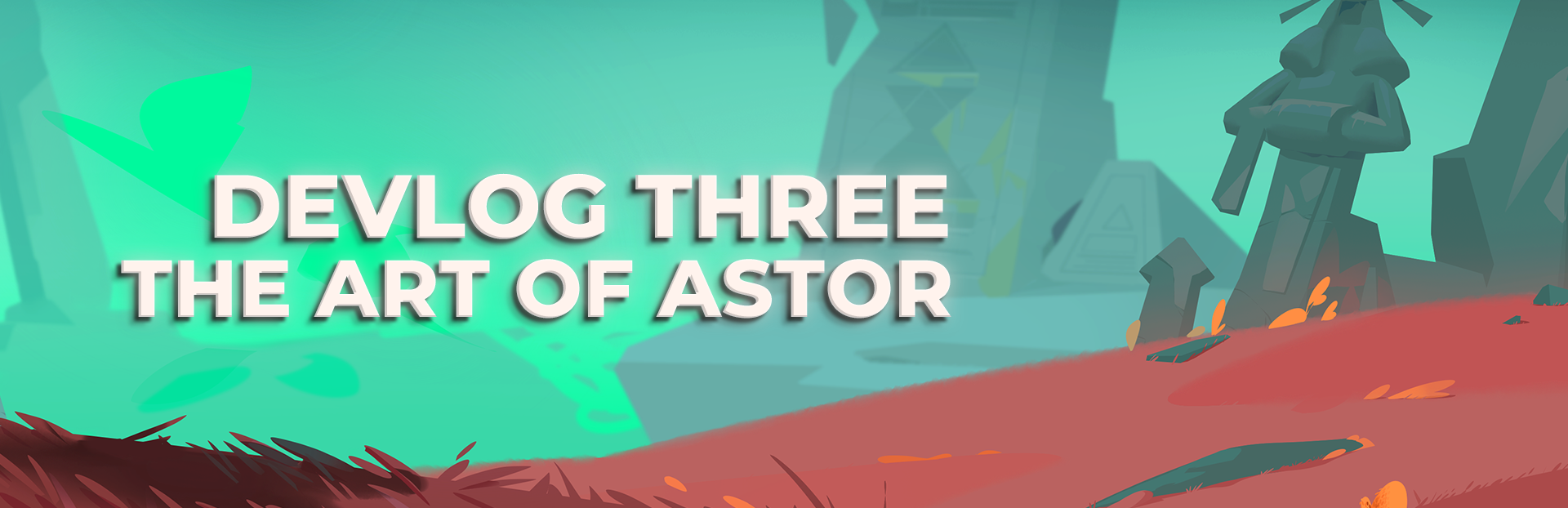
Exploring the Art of Astor: Blade of the Monolith
Welcome to our deep dive into the artistry behind Astor: Blade of the Monolith. In this blog, we'll delve into the evolution of the game's art style, the process behind developing characters like Astor, and the challenges and breakthroughs encountered along the way.
Evolution of the Art Style
The art style of Astor: Blade of the Monolith underwent significant evolution throughout its development journey. Starting with a flat toon style, the team eventually transitioned to a stylized modern rendering approach.
Early inspirations from games like Zelda Breath of the Wild set the tone, guiding the team towards a balance between shapes and color palette reminiscent of that beloved title. However, it was decided that the team wanted to avoid a cell shaded look, and later took influence from Ratchet & Clank: Rift Apart. That game inspired a shift towards adding more detail and realism while maintaining a cartoon-like visual identity resulting in the game’s captivating blend of modern rendering techniques and saturated toon-like textures that immerse players in a visually stunning world.
Balancing Realism and Fantasy
Achieving a harmonious balance between realism and fantasy was crucial in crafting an immersive world for players to explore. By employing modern realistic rendering techniques, the team added depth and dimension to materials, enhancing the game's visual fidelity without compromising its stylized aesthetic. Careful tuning of parameters ensured that the game retained its unique style while offering high-definition details akin to modern gaming experiences.
Developing Astor's Character Design
Astor, the enigmatic protagonist of Astor: Blade of the Monolith, underwent an extensive process of development to ensure he felt both unique and integral to the game world.
Iterations were plentiful as the team sought to create an iconic character with whom players could relate. Ultimately, Astor emerged as a Diokek - a reflection of bravery and fragility in a genre dominated by strong heroes.
His design speaks to the essence of humanity, embodying the potential for greatness and the pursuit of dreams.
Character design in Astor: Blade of the Monolith was guided by a desire to ensure each character served a purpose within the narrative. The Diokek were initially conceived as adversaries, but killing them felt really bad, so they evolved into a whimsical and magical race worthy of protection - and the race of the player character.
Conversely, the Hiltsik emerged as twisted versions of the Diokek, their creepy demeanor adding depth to the game's universe. The decision to integrate masks into the characters' bodies further enriched their identities, linking soul to form in a literal and symbolic manner.
Challenges and Breakthroughs
The journey of creating Astor: Blade of the Monolith was not without its challenges. However, two significant decisions shaped the game's art style: making Astor a Diokek and incorporating realistic properties into materials. These choices, though daunting, ultimately propelled the game towards its final iteration!
That’s all for our art devlog, keep an eye on all of our social channels to keep up with the latest information on Astor: Blade of the Monolith!
Source
Changelog.gg summarizes and formats this update. How we read updates.