
HomeGamesUpdatesPricingMethodology
Steam News15 July 20223y ago

Making of Hoover Dam with Tomek

Hi! This week, we wanted to give you an inside look at the development of our game.

Full notes

Full American Motorcycle Simulator update

Read the full published notes in a cleaner layout. The original post stays linked below.

What changed

0 fixes3 additions4 changes0 removals
  • Gameplay
  • Maps
  • Balance
changedTomek: Hah, it’s not that easy to say. I’m someone between a 3D generalist and a 3D graphic designer. I create the assets for our levels and work with the level designer to make them coherent and light enough so the game isn’t overburdened. I also make the textures for 3D objects. Many of the things that you see, from buildings to energy poles to walls or stairs are either made or touched up by yours truly.
changedWe want to translate real places to our game as true to life as possible, so we did a lot of research. We went through countless photos and maps. We didn’t create traditional concept art, meaning digital paintings. We used real-world photography as concept art.
addedBehind all of the assets in any game. There is no point in making them more complex if you won’t get a chance to approach them from up close. Adding these details would choke your PC, and you wouldn’t notice the extra work anyway. So the foreground objects have more detailed models, high-resolution textures, ambient occlusion, better reflections etc., while things farther from the camera are simplified.
addedI worked on it for about 3 weeks. I started with a terrain created by the level designer. I had to model the dam and make it fit. It all started with a simple, rough model. Then I added more geometry and detail to the top part, adjusted the height, added textures, doors etc.
changedWhat gets made first: the world or the gameplay?
changedWe work on both simultaneously, but only after we have the concept for the entire thing. So the designers tell us what kind of points of interest they want to visit, and how this ties with the game’s story and gameplay. And then we, the visual guys, start to sculpt the area, first with a simple layout that will be enriched with detail. Meanwhile, another part of the team is perfecting the story, and creating the interactions and mechanics. We don’t take turns. Instead, we communicate all the time and make progress together.

American Motorcycle Simulator changes

changedTomek: Hah, it’s not that easy to say. I’m someone between a 3D generalist and a 3D graphic designer. I create the assets for our levels and work with the level designer to make them coherent and light enough so the game isn’t overburdened. I also make the textures for 3D objects. Many of the things that you see, from buildings to energy poles to walls or stairs are either made or touched up by yours truly.
changedWe want to translate real places to our game as true to life as possible, so we did a lot of research. We went through countless photos and maps. We didn’t create traditional concept art, meaning digital paintings. We used real-world photography as concept art.
addedBehind all of the assets in any game. There is no point in making them more complex if you won’t get a chance to approach them from up close. Adding these details would choke your PC, and you wouldn’t notice the extra work anyway. So the foreground objects have more detailed models, high-resolution textures, ambient occlusion, better reflections etc., while things farther from the camera are simplified.
addedI worked on it for about 3 weeks. I started with a terrain created by the level designer. I had to model the dam and make it fit. It all started with a simple, rough model. Then I added more geometry and detail to the top part, adjusted the height, added textures, doors etc.
changedWhat gets made first: the world or the gameplay?

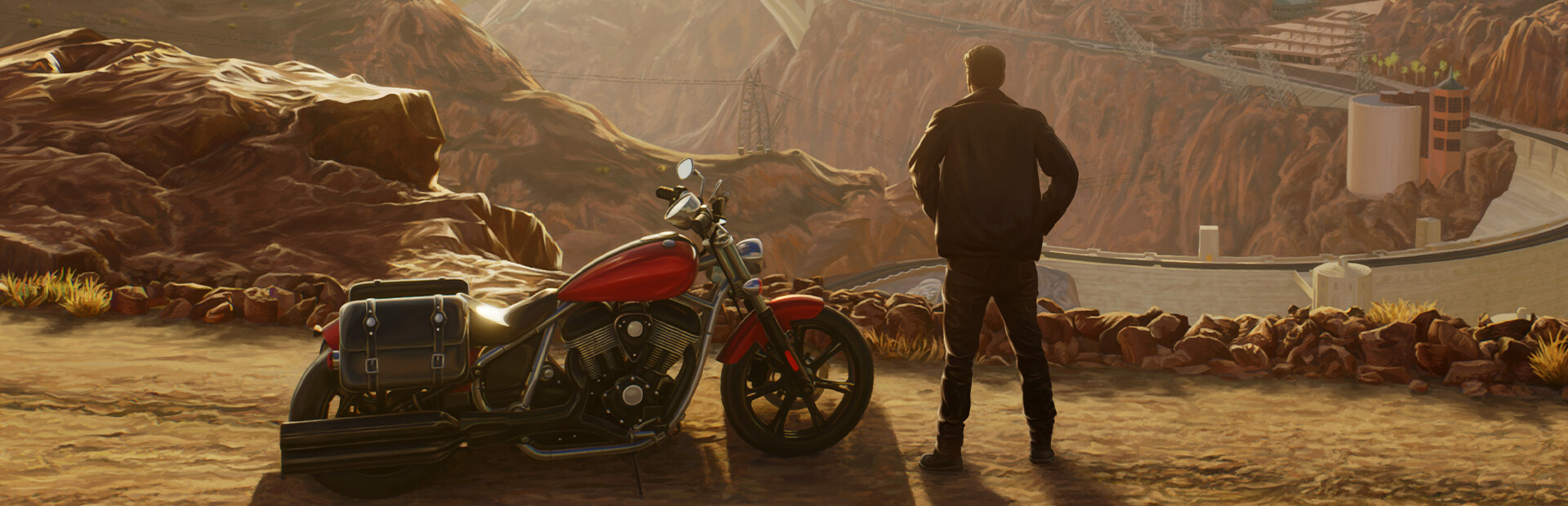
Hi! This week, we wanted to give you an inside look at the development of our game. We invited Tomek Zablotny, the artist behind a large part of our digital world, to talk about one of the monuments you will see in the game: the Hoover Dam.

You will also learn that Tomek is the right person to work on this project. He spends his free time just cruising around the world as you do in American Motorcycle Simulator! But, without further ado…

What’s your role in Road Studio?

Tomek: Hah, it’s not that easy to say. I’m someone between a 3D generalist and a 3D graphic designer. I create the assets for our levels and work with the level designer to make them coherent and light enough so the game isn’t overburdened. I also make the textures for 3D objects. Many of the things that you see, from buildings to energy poles to walls or stairs are either made or touched up by yours truly.

So how did you approach a monstrous construction like the Hoover Dam?

We want to translate real places to our game as true to life as possible, so we did a lot of research. We went through countless photos and maps. We didn’t create traditional concept art, meaning digital paintings. We used real-world photography as concept art.

But at the same time, you must know that video game vistas, in any game, are often smoke and mirrors. Our dam is more detailed at the top than at the bottom because you don’t go down there to see the transformers. They’re there, you can see them, and they are fairly detailed, but just enough to look good from the places you’ll see them from.

Is this the philosophy behind all of the game’s assets?

Behind all of the assets in any game. There is no point in making them more complex if you won’t get a chance to approach them from up close. Adding these details would choke your PC, and you wouldn’t notice the extra work anyway. So the foreground objects have more detailed models, high-resolution textures, ambient occlusion, better reflections etc., while things farther from the camera are simplified.

How long did the dam take to make?

I worked on it for about 3 weeks. I started with a terrain created by the level designer. I had to model the dam and make it fit. It all started with a simple, rough model. Then I added more geometry and detail to the top part, adjusted the height, added textures, doors etc.

What gets made first: the world or the gameplay?

We work on both simultaneously, but only after we have the concept for the entire thing. So the designers tell us what kind of points of interest they want to visit, and how this ties with the game’s story and gameplay. And then we, the visual guys, start to sculpt the area, first with a simple layout that will be enriched with detail. Meanwhile, another part of the team is perfecting the story, and creating the interactions and mechanics. We don’t take turns. Instead, we communicate all the time and make progress together.

When do you know that an object or a level is done?

As someone said before, art is never done, it’s abandoned. This does apply to game graphics. I could keep adding details endlessly. Another bush here, another rock there, maybe some trash to make it feel lived in. But we

Source

Steam News / 15 July 2022

Open original post

Changelog.gg summarizes and formats this update. How we read updates.