
In this update3
Full notes
Full Almanach: Of Empires and Sorcery update
Read the full published notes in a cleaner layout. The original post stays linked below.
Repeated intro
Hey everyone!
What changed
- UI and audio
- Security
- Maps
- Events
Almanach: Of Empires and Sorcery changes
It has been a while since our last update here, and there is a lot of stuff to unpack since march. We originally wanted these updates to be monthly, but considering the (very) small size of the team, we often have had to prioritize actually working on the game rather than making updates (these things take time!). Almanach is still in active development, and we will do larger updates here every couple months. But if you want more, join our community on discord, where we publish smaller updates almost weekly, or have a look at almanach.blog, where we periodically do deep dives on specific game design topics.
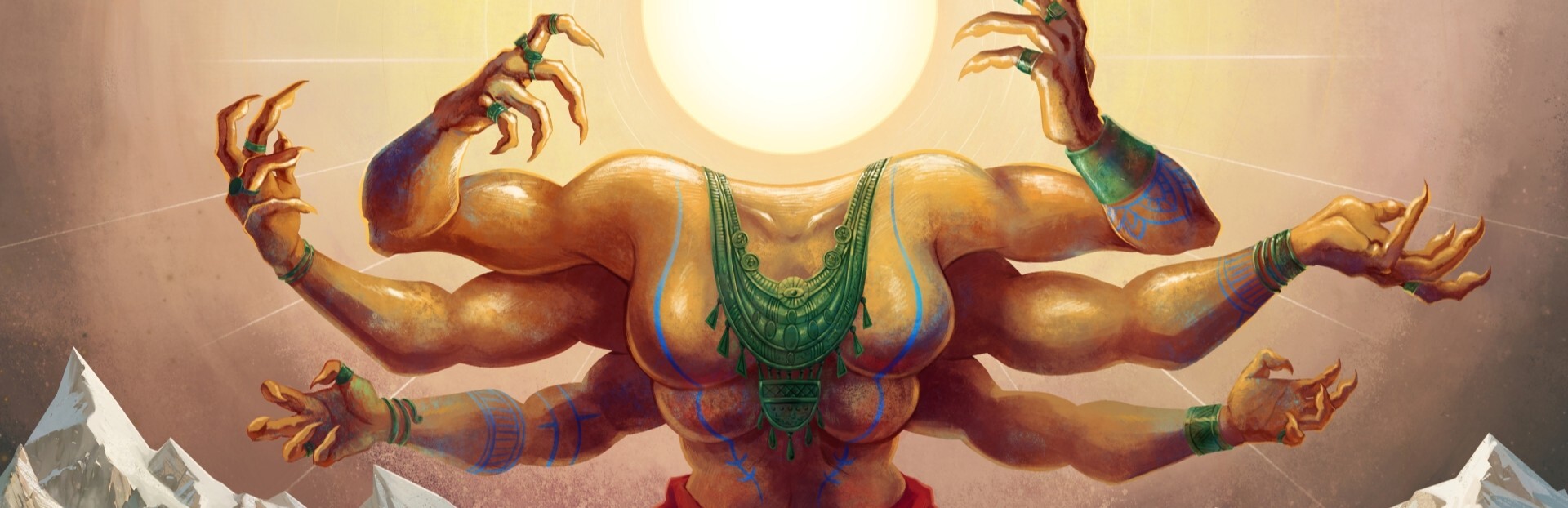
In this update: city UI revamp, tactical AI update, map generation overhaul, and much more! Lets dive right in with first a look at our newest key art (which should take over the steam page shortly!):
City UI
One of the main problems we found during our playtests revolved around the micromanagement of cities. There were a lot of manipulations to do in the city, be it constructing new buildings, clearing out obstacles, exploiting resources and balancing out the needs of a rising population. Basically, there was a lot of stuff to do, but not many of those things were highly impactful on the overall game, and they tended to pile up as soon as you had more than one or two cities.
So we set out in the goal of optimizing, automatizing and overall removing tedious interactions, and came up with two main massive improvements to the city UI: a production queue, and a full revamp of the exploitation system. The production queue is precisely what it sounds like: you can now queue up construction projects, unit trainings and more, and as soon as population becomes available, it gets assigned at whatever top priority you set in the production queue. The exploitation system, on the other hand, changed considerably. In the past, you could place a physical exploitation on the map to exploit a specific resource. Now, all exploitable resources are directly accessible directly from the beginning, and you only need to assign population to their extraction. There is no limit to how many pops you can assign, but careful: assign too many, and your resources may dwindle and disappear...
By the way: we are currently working on integrating new, much nicer visuals for the UI, more on that in the next update!
Map generation
Our map generator needed some love to be able to create nice and interesting maps, now that most systems are implemented in the game.
In the first place, we asked ourselves
what constitutes an interesting map?
And we came up with 3 main answers
-An interesting map will have variety: where you start on the map should shape your empire in some ways. This can mean to have access to different resources, or a facility to access lands or the oceans, or even just starting next to a cool unique feature such as a Gate to the Underworld or a dragon's lair.
-An interesting map should be fair: although there can be zones which are richer in resources than others (jungles vs deserts for example), a special care needs to be put so that every region brings something to the table.
-An interesting map should be fun to navigate: moving units around, whether for exploration, attacking your neighbors or defending your cities, should be rewarding. This means great, open spaces in some places, but also tight, defensible chokepoints in others, and mostly... few dead ends. Nothing worse than having to come back where you came from because there is nowhere else to go!
So we implemented a bunch of new systems and ways to make this happen: the map is now round, with warmer climates in the middle and colder ones out near the edge (note: Almanach has flat worlds, cause it looks cool and makes sense when magic exists... that doesn't mean the flat-Earthers are right). We implemented new climate models for the map, with dominant winds bringing humidity inland, new region delimitations to separate resource types, added many new advanced types of resources (including naval resources, which were previously missing), and designed a whole fertility system to encompass the whole resource placement process.
With all these improvements, we are now fully set up to design the full early to late game progression!
Tactical AI progress
We've mentioned in the past that in order to fix tactical Artificial Intelligence (AI) in 4X games, we believe that using advanced reinforcement-learning (RL) techniques will be necessary, and we've continued making headway in this direction. How does RL differ from traditional AI? For one, RL does not require the programmer to code anything in terms of actual behaviors apart from the most basic moves. Basically, RL works by giving a lot of freedom to an 'agent' (in our case a unit): you tell it the different moves it can make, and it will start doing random things. Then you design rewards that it will try to obtain to accomplishes more advanced tasks (an advanced task could be to reach a specific tile; the reward could then be to give points to the agent when it reduces the distance to the target). The whole art of the process is then to juggle a bunch of parameters with writing an appropriate reward function and training environment, and voila!
The concept is simple, but the application can be tricky. Recently we toyed with a bunch of parameters and found a promising combination, as well as made sure to remap every couple dozen turns (to prevent units from only learning a single map, which would then be useless on any other map). Results are encouraging: the AI is getting decent at defending a position or exploring, but still has trouble figuring out what to do in offensive or more complicated situations. Work in progress, so stay tuned!
That's all for now! We could have talked about a bunch of smaller features and bugfixes (such as a brand new hex editor, a large-scale hex visuals uniformization, a search tool for map features, or tutorial updates), but at this point this update has been long enough, hasn't it? Stay tuned in the next months for more AI and UI news, as well as more work on the early to mid game content!
Source
Changelog.gg summarizes and formats this update. How we read updates.