Hello everyone! This is the first of a series of monthly updates for Almanach, where we will keep you updated on our progress on the game.
Full notes
Full Almanach: Of Empires and Sorcery update
Read the full published notes in a cleaner layout. The original post stays linked below.
Repeated intro
Hello everyone!
What changed
0 fixes3 additions2 changes0 removals
Gameplay
Maps
addedThis is the first of a series of monthly updates for Almanach, where we will keep you updated on our progress on the game. As this is the first time, the format might still need some work as we adjust to a new medium, so bear with us, and do let us know what you think! Too long, too dry, would like to hear about something specific? Let us know in the comments!
addedMulti-tile cities: It was one of our long-term goals that cities in Almanach should be able to expand to adjacent tiles when space gets tight (or when you want an early access to that sweet mana node on the other tile maybe...?). This is now done! You can exchange influence to buy tiles that you control and add them to your cities.
addedCity UI and UX: New systems are only ever so good as the UI the players need to use to navigate them. In parallel to the development of new systems for multi-tile cities, we also designed and implemented interfaces to be able to properly inspect and interact with the various tiles of your cities (80% done). We also did a first design pass on the UI for our next system, the internal empire-wide market which will allow you to exchange resources from one city to the next (for a fee... of course).
changedMachine Learning (ML) AI: We are developing an innovative ML-based AI to control the tactical decisions of various units on the battlefield. We had already started to work on this over the summer, but had to pause development on the ramp-up to MIGS. AI development is a lengthy process, and we are mostly always working on it a little bit on the background or on the side, so expect to hear about it often. This month, we re-actualized our training setup, and notably massively increased the map awareness of our bots by giving them access to much larger regions of the map, which seems to improve their ability to navigate complex terrain.
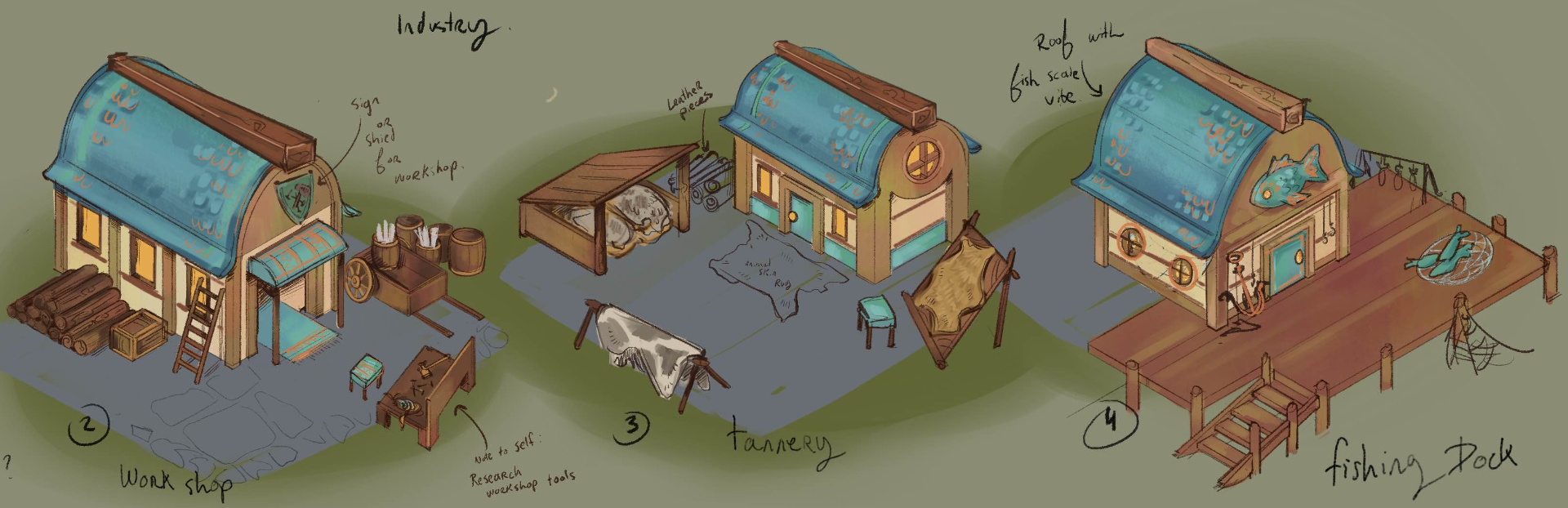
changedOn the art side: We've been unsatisfied with how our cities look like for a while now, as the current placement of buildings results in cities looking like an assembly of buildings rather than a cohesive whole. So our lead artist spent basically the whole month redesigning player-placeable improvements and buildings, and then sketching them together in much more organic ways. Have a look below! At the moment this remains on the conceptual side, but you can expect to see this in-game coming in the next 2-3 months!
Almanach: Of Empires and Sorcery changes
addedThis is the first of a series of monthly updates for Almanach, where we will keep you updated on our progress on the game. As this is the first time, the format might still need some work as we adjust to a new medium, so bear with us, and do let us know what you think! Too long, too dry, would like to hear about something specific? Let us know in the comments!
addedMulti-tile cities: It was one of our long-term goals that cities in Almanach should be able to expand to adjacent tiles when space gets tight (or when you want an early access to that sweet mana node on the other tile maybe...?). This is now done! You can exchange influence to buy tiles that you control and add them to your cities.
addedCity UI and UX: New systems are only ever so good as the UI the players need to use to navigate them. In parallel to the development of new systems for multi-tile cities, we also designed and implemented interfaces to be able to properly inspect and interact with the various tiles of your cities (80% done). We also did a first design pass on the UI for our next system, the internal empire-wide market which will allow you to exchange resources from one city to the next (for a fee... of course).
changedMachine Learning (ML) AI: We are developing an innovative ML-based AI to control the tactical decisions of various units on the battlefield. We had already started to work on this over the summer, but had to pause development on the ramp-up to MIGS. AI development is a lengthy process, and we are mostly always working on it a little bit on the background or on the side, so expect to hear about it often. This month, we re-actualized our training setup, and notably massively increased the map awareness of our bots by giving them access to much larger regions of the map, which seems to improve their ability to navigate complex terrain.
changedOn the art side: We've been unsatisfied with how our cities look like for a while now, as the current placement of buildings results in cities looking like an assembly of buildings rather than a cohesive whole. So our lead artist spent basically the whole month redesigning player-placeable improvements and buildings, and then sketching them together in much more organic ways. Have a look below! At the moment this remains on the conceptual side, but you can expect to see this in-game coming in the next 2-3 months!
This is the first of a series of monthly updates for Almanach, where we will keep you updated on our progress on the game. As this is the first time, the format might still need some work as we adjust to a new medium, so bear with us, and do let us know what you think! Too long, too dry, would like to hear about something specific? Let us know in the comments!
As a bit of background, we had a pretty intense October, where we basically made sure our demo was as polished as possible in the ramp-up leading to us holding a booth (thanks Loto-Quebec for the opportunity, by the way!) at the Montreal International Games Summit (MIGS), and showing the game off to many potential partners in the games industry. After a week of follow-ups in early november, we went back to the development of game systems and visuals.
So here goes for the November changelog:
-Multi-tile cities: It was one of our long-term goals that cities in Almanach should be able to expand to adjacent tiles when space gets tight (or when you want an early access to that sweet mana node on the other tile maybe...?). This is now done! You can exchange influence to buy tiles that you control and add them to your cities.
-City UI and UX: New systems are only ever so good as the UI the players need to use to navigate them. In parallel to the development of new systems for multi-tile cities, we also designed and implemented interfaces to be able to properly inspect and interact with the various tiles of your cities (80% done). We also did a first design pass on the UI for our next system, the internal empire-wide market which will allow you to exchange resources from one city to the next (for a fee... of course).
-Machine Learning (ML) AI: We are developing an innovative ML-based AI to control the tactical decisions of various units on the battlefield. We had already started to work on this over the summer, but had to pause development on the ramp-up to MIGS. AI development is a lengthy process, and we are mostly always working on it a little bit on the background or on the side, so expect to hear about it often. This month, we re-actualized our training setup, and notably massively increased the map awareness of our bots by giving them access to much larger regions of the map, which seems to improve their ability to navigate complex terrain.
-On the art side: We've been unsatisfied with how our cities look like for a while now, as the current placement of buildings results in cities looking like an assembly of buildings rather than a cohesive whole. So our lead artist spent basically the whole month redesigning player-placeable improvements and buildings, and then sketching them together in much more organic ways. Have a look below! At the moment this remains on the conceptual side, but you can expect to see this in-game coming in the next 2-3 months!