
In this update14
Full notes
Full 命运游戏3:王者棋局 update
Read the full published notes in a cleaner layout. The original post stays linked below.
Repeated intro
Hello everyone,
What changed
- Gameplay
- Events
- Balance
- Maps
- Security
- Server
命运游戏3:王者棋局 changes
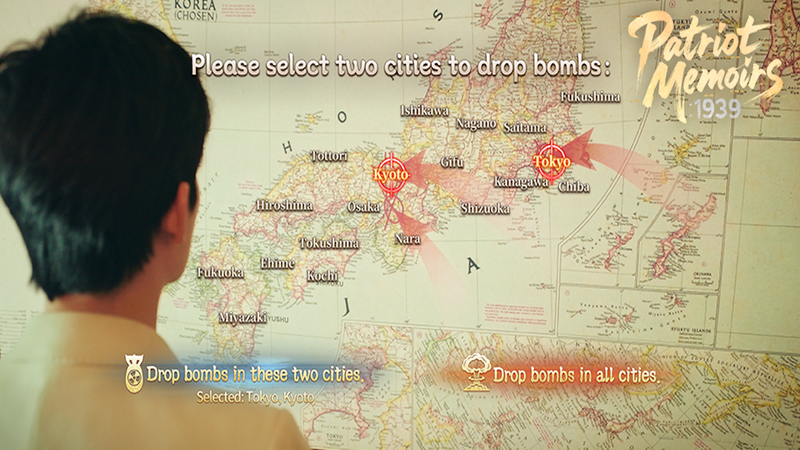
As July 7th approaches, our anti-Japanese espionage drama game PatriotMemoirs – Today, We Also Work Hard to Kill Traitors is being polished with full effort. We are striving to refine the work to a sufficiently good level in these final days, to present it to the veteran players and new players who have been eagerly awaiting our work.
As a work with a mainstream, positive energy theme, although our plot and characters are fictional interpretations, many of the deeds and historical figures are based on real historical prototypes – which is a common creative technique for this type of work. We hope the work fits the aesthetic tastes of contemporary users, while also staying true to the core of history. Through this work, we want to help people understand that era, those people, and even personally participate in completing those events! The Tokyo Trial ultimately missed some key culprits.
During the past year of developing Kamikawa Past, we have consulted a vast amount of historical materials, newspapers, and documents, striving to improve the level of detail and authenticity in the creation of many stories. In the coming period, this official account will periodically serialize true historical accounts and information from around 1939 in the occupied areas. These articles are collected from enthusiastic players. Although the content may not be strongly directly related to our work, understanding these background events will greatly help players better appreciate PatriotMemoirs.
We also welcome other players to submit their own writings. If we find them suitable and well-written, we will republish them.Email:
First installment: [Den of Spies No. 76: The Cancer of Traitors in Shanghai during the War of Resistance] – Author: Anonymous Submission
second installment: [Pushing Open the Gate of History – Marking the 80th Anniversary of the Tokyo ] Author: Doki
Third installment: [Why Shanghai Became the Key Battlefield Behind Enemy Lines During the War of Resistance Against Japan] Author: LiuN_刘念
Forth installment:[Decoding the Shanghai Spy War Archives] Author: LiuN_刘念
Fifth installment: [Shanghai Undercover: The Infamous No. 76]- Author: LiuN_刘念
Sixth installment:[The Real Undercover Work – Excerpts] -Author: Anonymous Submission
Main text:
During the raging flames of the War of Resistance against Japanese Aggression, while artillery fire lit up the frontlines and soldiers fought bloody battles, another invisible battlefront was equally fraught with danger. It was occupied by fighters without military uniforms, unit designations, or even real names. They lurked deep inside puppet enemy dens, navigated treacherous surroundings, wielded wisdom as their blade, and upheld faith as their armor. They danced on the edge of a knife and fought in complete silence. They were intelligence officers, underground couriers, radio technicians, and deep-cover agents. Some were farmers, some prominent social figures, others humble servants. Yet ordinary men and women they were, they accomplished extraordinary feats. With blood, loyalty and resolve, they brought light through the darkness, carving indelible meritorious deeds for the nation’s liberation and final victory.
Names such as Ji Cheng, Huang Hao, Tang Shengming, Zhan Changlin, Zhu Shengyuan and Tu Zuochao stand for breathtaking undercover legends and stirring heroic epics. Though they set off from disparate paths, they converged on the same battlefield: the hidden enemy rear. Under vastly different disguises, they clung to one unwavering creed: resist Japan and save the nation. Let us retrace the footsteps of history, step into that tempestuous era of shadow warfare, and feel the iron resolve and loyal hearts of these unsung heroes.
Ji Cheng: Intelligence Hero Who Lurked Behind Enemy Lines for Five Years and Helped Slay the Japanese "Famous General Flower"
On the hidden battlefront of the War of Resistance, there was an unsung hero born to a farming family with no prominent family background. Disguised as a bathhouse handyman, he infiltrated the core puppet Japanese intelligence compound for five years. Through extraordinary courage and meticulous reconnaissance, he obtained top-secret military intelligence that directly enabled our troops to kill Japanese Lieutenant General Abe Noriyuki. His loyalty and bravery forged a legendary chapter in underground intelligence work: his name was Ji Cheng.
A Loyal Son of Farmers Answers the Nation’s Call to Lurk in the Tiger’s Den
Ji Cheng was born in 1916 to a poor peasant household in Xiaobeiguan Village, Laiyuan County. Poverty forged his hardworking character and sharp wit. Though he received no formal higher education, he understood national righteousness from an early age, burning with sincere devotion to defend his homeland.
The full-scale War of Resistance erupted in 1937, and North China fell under Japanese occupation. Filled with patriotic fervor, Ji Cheng rushed to join the resistance movement. His outstanding execution skills and quick thinking made him rise rapidly within the revolutionary ranks. In March 1938, Ji Cheng joined the Communist Party of China, becoming a steadfast revolutionary fighter.
In December 1938, the Enemy Work Department of the Jincha Ji Military Region dispatched Ji Cheng to infiltrate the core Japanese puppet intelligence agency in Laiyuan on a top-secret intelligence-gathering mission.
Crafting a Disguise to Embed Himself Deep in Enemy Ranks and Win Trust
After accepting his undercover assignment, Ji Cheng set up a street stall selling daily necessities outside the Japanese intelligence office. He took the initiative to befriend Japanese spies Nakada Mio and Dōzen Yoshio, gaining their initial trust. When Yamamoto Keifu, head of Japanese intelligence, recruited a bathhouse handyman, Nakada recommended Ji Cheng, granting him the perfect opening to embed himself within the heart of the puppet Japanese intelligence apparatus.
Throughout his undercover tenure, Ji Cheng maintained the facade of an illiterate, docile, hardworking laborer who would respond to any summons at once. His seemingly slow-witted demeanor dulled the vigilance of all Japanese and puppet troops. His dexterous hands renovated and improved Yamamoto’s bathhouse, earning favor from the intelligence chief. Meanwhile, he socialized with Japanese translators and puppet soldiers to build hidden intelligence channels. Working closely with other undercover comrades, he continuously delivered enemy intelligence to the base areas, providing solid support for the counter-sweep campaigns.
Life-or-Death Espionage: One Intelligence Report Turned the Tide of Battle
On October 24, 1939, security tightened drastically across Laiyuan city, with strict curfews enforced everywhere. While performing routine chores, Ji Cheng secretly investigated and learned a senior Japanese military officer would arrive in Laiyuan to coordinate military operations.
At that time, Abe Noriyuki was marching his troops from Zhangjiakou to Laiyuan. Arrogant and overconfident, he sought to achieve outstanding military exploits before his transfer to serve as an imperial aide-de-camp, planning a large-scale mountain sweep operation.
Sensing an imminent major enemy offensive, Ji Cheng exploited the Japanese troops’ fondness for alcohol to strike up private conversations. Leveraging the simple, unassuming persona he had cultivated over months, he smoothly extracted core classified information including troop marching routes, force deployments, and combat plans. He memorized hand-drawn route maps while drinking, piecing together the full sweep blueprint. He quickly organized the intelligence, marked Abe Noriyuki’s main troop movements, and sent the urgent report to the frontline headquarters via secret underground couriers. The vital intelligence safely reached our military commanders.
Based on this accurate information, our troops formulated targeted battle plans. During the fierce engagement, our artillery precisely locked onto the Japanese command post and killed Abe Noriyuki on the spot. This marked a legendary victory in the rear resistance, where our troops eliminated a Japanese lieutenant general.
The Detailed Combat Report of the Huangtuling Battle explicitly cited "accurate intelligence" as the key factor behind the victory.
The Huangtuling Battle completely shattered the Japanese sweep attempt, stabilized the Jincha Ji Anti-Japanese Base Area, and greatly boosted the morale of resistance troops nationwide, lifting the gloom hanging over the frontlines. Japan’s Asahi Shimbun lamented that the death of a lieutenant general in combat was unprecedented, mourning that the so-called "Famous General Flower" of the Japanese army had withered amid the towering Taihang Mountains.
(当时的日本报纸报道)
Penetrating the Gendarmerie to Eliminate Traitors
By 1941, the Japanese and puppet authorities reinforced their rule over occupied Laiyuan, deploying multiple enemy spy units and expanding the gendarmerie, with city-wide security reaching unprecedented levels. Having earned deep Japanese trust, Ji Cheng seized the opportunity to infiltrate the puppet gendarmerie as an informant, penetrating even deeper into the enemy’s core power structure.
Following Party instructions, he skillfully stoked internal conflicts between Japanese and puppet forces. While collecting critical military and political intelligence, he also carried out traitor elimination missions. He manipulated Japanese forces to execute two turncoats, severely dampening enemy morale.
After this operation, Ji Cheng arranged for six or seven underground Party members to embed themselves within enemy ranks, while he himself steadily rose in rank, pushing his undercover work deeper into the heart of the puppet regime.
Ji Cheng continued to deliver precise intelligence, supporting our troops’ victories in ambushes at Houbao Village, Laohutou and Shangzhuang. Without firing a single shot, our side also seized three Japanese puppet strongholds at Yandun Mountain, Shuiyun Township and Nansipo Slope, making invaluable contributions to consolidating and expanding the base area. In July 1944, the secret intelligence station at Chajian Ridge was raided and confidential documents stolen, exposing Ji Cheng’s identity. He was forced to end his five years and nine months of undercover work and withdraw to rejoin the Party organization.
A humble farmer by birth, he performed extraordinary deeds to save his nation. Walking constantly on the knife’s edge and fighting silently, his five-year undercover career embodied the loyalty and sense of duty of intelligence operatives. Though he never stood on the battlefield wielding swords, he fought with wisdom as his blade and faith as his armor, achieving unparalleled feats on the hidden battlefront. His name remained buried in the dust of history for decades, yet his lifelong perseverance made him a shining symbol of the unsung heroes behind enemy lines.
Huang Hao: Shadow Warfare Deep in "Hundred Flowers Lane"
During the flames of the War of Resistance, the bloody battles on the open frontlines were praiseworthy, yet the life-or-death struggles on the hidden battlefront were equally breathtaking. Huang Hao, a revolutionary publicly known as a Presbyterian elder and embroidery factory owner, built an impenetrable intelligence and underground courier network deep within the heart of Japanese-occupied Beiping. With wisdom and bravery, he crafted a legendary undercover career, becoming the most reliable hidden anchor of the Jincha Ji Base Area covering the Beiping-Tianjin region.
Born Huang Chongxi in Jieyang, Guangdong, Huang Hao studied at Guangzhou Guanghua Medical College before moving to Beiping to practice medicine. He later founded a embroidery factory. His charitable work and donations to repair church school buildings earned him the position of elder at Xinjiekou Presbyterian Church.
(黄浩(左))
Before the full-scale War of Resistance broke out in 1937, he planned to travel to Yan’an. Upon the advice of Party leaders, he returned to Beiping to conduct underground work and was appointed Director of the Pingjin Special Committee under the Jizhong Military Region of the Eighth Route Army, tasked with intelligence gathering, material transportation and sheltering underground comrades. At that time, Beiping swarmed with Japanese military police and spies, and mortal danger lurked on every street corner; a single misstep meant imprisonment. Huang Hao’s undercover journey began walking the tightrope between life and death.
During the war, the Jincha Ji Base Area suffered an acute shortage of medicine, and wounded soldiers in field hospitals were in urgent need of treatment. Huang Hao mobilized core underground members, leveraging their identities as doctors and factory owners to secretly purchase scarce supplies such as antibiotics, bandages and first-aid kits across Beiping, Tianjin and Shanghai under the guise of disaster relief and church medical outreach.
The transportation routes were fraught with peril, lined with Japanese checkpoints conducting rigorous searches. To facilitate supply deliveries, Huang Hao secured assistance from French physician Dr. Bussière. Drawing on his dual identity as a foreign national and doctor, medical supplies were hidden in automobiles and bicycles to cross countless blockades en route to the resistance base areas. Countless late nights, Huang Hao and his comrades disguised themselves, stitching medicine into clothing and concealing supplies within cargo, carving a lifeline connecting Beiping city to the anti-Japanese base areas with their own footsteps.
(用自行车运药的贝熙业)
In 1943, Japanese secret police cracked one underground radio station operated by the Beiping underground Party, exposing Huang Hao’s identity. Puppet military police launched a city-wide manhunt, placing him in mortal danger. With cover from comrades and Dr. Bussière, Huang Hao remained calm, skillfully evading Japanese blockades and searches. He secretly evacuated from the Bussière Garden and endured countless hardships to reach the Jincha Ji Anti-Japanese Base Area, completing a breathtaking escape from death.
Huang Hao’s legend encapsulates countless underground workers. Ordinary men and women all, they accomplished extraordinary feats, holding fast to light amid darkness and carving out paths to survival in desperate straits. Their names may remain little-known, yet their faith and sense of duty have merged into the nation’s blood, forming a spiritual torch inspiring future generations. This undercover legend will forever be recorded in history, and an unmarked monument stands eternal in the hearts of the people.
Anti-Japanese Patriots on the Kuomintang Hidden Battlefront: Lurking in Puppet Regimes to Assassinate Traitors
On the hidden battlefront of China’s War of Resistance against Japanese Aggression, alongside underground Communist operatives, Kuomintang agents from the Military Statistics Bureau (Juntong), Central Statistics Bureau (Zhongtong) and patriotic volunteers infiltrated puppet Japanese strongholds. Betting their lives on undercover infiltration, they passed top-secret military intelligence, assassinated collaborators, and subverted puppet enemy forces, penning stirring anti-Japanese legends with blood and loyalty. Enduring humiliation and sneaking along knife-edge paths within the puppet government’s core, they formed a vital anti-Japanese force beyond the open frontlines.
Tang Shengming: High-Ranking Kuomintang Undercover Agent Embedded Deep in the Wang Jingwei Puppet Regime
Tang Shengming (1906–1987), born in Dong’an, Hunan, was a Kuomintang Army Lieutenant General and the younger brother of Tang Shengzhi. He was the highest-ranking Kuomintang agent embedded within the Wang Jingwei puppet regime during the stalemate phase of the war. As the puppet Nanjing government, Japan’s chief puppet collaborator, took power, national government leaders personally devised a top-secret infiltration mission in 1940, selecting the well-connected, seemingly idle Tang Shengming for the assignment. To convince the Japanese puppet authorities of his "defection," the Kuomintang publicly expelled him from the party, and Tang Shengzhi published a newspaper announcement severing all ties with him, fabricating the pretense that he was a disillusioned politician who had surrendered to the enemy.
(唐生明(二排左二)与其他领导人合影)
Upon arriving in Nanjing, Tang Shengming leveraged his social connections and status to swiftly win the trust of top puppet officials including Wang Jingwei, Zhou Fohai and Li Shiqun. He held successive posts as Member of the Puppet Military Commission and Director of Military Affairs under the Pacification Committee, granting him free access to core puppet-Japanese decision-making venues. Outwardly, he indulged in extravagant leisure and pretended indifference to politics, while secretly relaying top-secret intelligence on puppet-Japanese troop deployments, pacification campaigns, sweep routes and spy operations to the Juntong headquarters in Chongqing, providing critical support for frontline troops and rear resistance armed forces.
In 1943, Li Shiqun, head of the puppet 76th Spy Compound, seized total control over puppet secret police rule, frantically arresting and executing Communist and Kuomintang resistance fighters and patriotic civilians. Tang Shengming received a top-secret order from Chongqing Juntong to lead the mission to eliminate Li Shiqun.
(极司菲尔路76号)
Drawing on his position within the puppet elite, Tang Shengming masterfully mediated between the Japanese Special Higher Police, Zhou Fohai’s faction and Li Shiqun, deliberately amplifying internal divisions and escalating friction between the Japanese Special Higher Police and Li Shiqun. He assisted Japanese authorities in plotting the assassination: the Japanese military police special unit invited Li Shiqun to a poisoned banquet. Though inherently suspicious, Li Shiqun was lulled into complacency by Tang Shengming’s long-maintained obedient, subservient facade, consuming poisoned food that killed him within days. This meticulously planned traitor elimination operation decapitated the core leader of the 76th spy compound, dismantling the reign of terror imposed by puppet secret police and drastically easing the survival crisis for underground resistance forces in occupied territories.
(李士群被日方毒杀)
Throughout his undercover tenure, Tang Shengming upheld unwavering national integrity. Drawing on his positions as Puppet Military Commission Member and Director of Pacification Military Affairs, he built hidden safe passages for resistance fighters. Whenever Juntong agents and patriots were arrested by Japanese puppet forces, he secured their release by claiming questionable evidence or unresolved case details, secretly transferring them to safe zones. He also maintained close contact with puppet military and administrative officials, persuading over a dozen puppet military commanders and civil servants to switch sides by appealing to national justice. These defectors later secretly transmitted military intelligence and sheltered underground courier lines, becoming vital allies on the hidden anti-Japanese battlefront. Throughout his infiltration, he firmly refused to participate in any traitorous acts, rendering exceptional meritorious service to the resistance from his high-level undercover position deep within the Japanese puppet heartland.
After Japan’s surrender, Tang Shengming’s true identity was revealed. His five years of high-level undercover infiltration became one of the most legendary feats on the Kuomintang hidden battlefront, making extraordinary contributions to final victory in the War of Resistance.
Zhan Changlin: Hero of the Nanjing Poisoned Wine Incident Who Crippled Top Japanese Puppet Officials
Zhan Changlin (1913–2008), born in Nanjing, Jiangsu, was a Juntong undercover agent disguised as a servant at the Japanese Consulate, masterminding the world-famous Nanjing Poisoned Wine Incident, a legendary covert traitor elimination operation.
(詹长麟)
After Nanjing fell in 1937, Japan established its General Consulate in the city, serving as the core intelligence and military command hub for Japanese forces invading East China. Dispatched by Juntong, Zhan Changlin infiltrated the consulate as a handyman, responsible for serving tea, wine and banquets. He quietly remained undercover, memorizing the movements of Japanese puppet personnel and the layout of the compound.
(当时日本驻南京总领馆)
On the evening of June 10, 1939, Japanese puppet officials hosted a banquet for Shimizu Ryuzaburo, Japanese Vice Minister of Foreign Affairs, attended by dozens of senior Japanese puppet officials. Dressed as a waiter, Zhan Changlin seized a moment when kitchen cooks and other attendants were distracted, rapidly and discreetly mixing lethal poison into the sake, white wine and signature dishes prepared for the main table. After poisoning the food and drink, he calmly served the banquet and remained in attendance to observe enemy movements and gather additional intelligence.
Shortly after the banquet ended, senior Japanese officials who had attended collapsed with severe abdominal pain, foaming at the mouth and convulsing. The Japanese Consul General Hanawa Yoshihiro and other officials suffered critical poisoning, while two consulate secretaries Miyashita and Funayama died instantly. Multiple Japanese puppet personnel fell ill, paralyzing Japanese intelligence transmission, military command and administrative operations in Nanjing for a time.
(案件当时的相关报道)
Following the operation, Zhan Changlin escaped Nanjing safely with Juntong’s assistance. The Nanjing Poisoned Wine Incident dealt a heavy blow to Japanese arrogance, greatly lifting the morale of resistance civilians in occupied territories, emerging as a classic covert traitor elimination operation on the hidden battlefront. Disguised as a humble servant, Zhan Changlin accomplished an earth-shattering feat, defending national dignity with courage and wisdom.
Zhu Shengyuan: Fearless Patriot Who Assassinated Puppet Mayor with His Own Hands
Zhu Shengyuan, born into poverty in Anhui, worked as chef and personal servant for Fu Xiao’an, puppet mayor of Shanghai. Persuaded by Juntong agents to uphold national justice, he single-handedly assassinated the top traitor, becoming a legendary representative of civilian anti-Japanese patriots.
After surrendering to Japan, Fu Xiao’an took office as Special Mayor of Shanghai, wholeheartedly serving Japanese forces by plundering resources and suppressing resistance movements, staining his hands with compatriots’ blood. His mansion was heavily guarded by Japanese military police and private bodyguards, and multiple Juntong assassination attempts had failed.
(傅筱庵)
Though taken in by Fu Xiao’an in his youth, Zhu Shengyuan fully understood national righteousness and seethed with hatred for his master’s traitorous conduct. When Juntong agents approached him to explain the gravity of the national crisis, Zhu Shengyuan resolutely accepted the assassination mission.
Late on the night of October 11, 1940, Fu Xiao’an returned to his mansion heavily intoxicated after attending a Japanese puppet victory banquet. Overwhelmed with exhaustion, he fell asleep without any attendants in his bedroom. Recognizing his once-in-a-lifetime chance, Zhu Shengyuan quietly grabbed a sharp kitchen cleaver (some historical accounts record an axe, though most primary sources cite a cleaver). Holding his breath, he silently pushed open Fu Xiao’an’s bedroom door and stepped inside.
Filled with rage at the traitor sleeping before him, he raised the cleaver and struck repeatedly at vital organs, killing Fu Xiao’an instantly. After confirming the traitor’s death, he fled Shanghai safely with Juntong’s aid and lived the rest of his life under an assumed name. An ordinary commoner with a heart full of devotion to his country, he punished a top collaborator with the simplest weapon, striking fear into Japanese puppet traitors and demonstrating the unyielding integrity of Chinese people who would rather die than become slaves under foreign occupation.
These Kuomintang anti-Japanese operatives on the hidden battlefront, regardless of rank or social standing, prioritized the nation above all, risking their lives and enduring public scorn to fight alone within Japanese puppet dens. Some maneuvered from lofty positions, some carried out silent ambushes from the lowest rungs of society, ordinary civilians boldly slaying top traitors. With blood and lives, they forged an iron Great Wall on the hidden battlefield for victory in the War of Resistance. Their patriotic feats and national integrity shall be inscribed eternally in history, shining through the ages.
Tu Zuochao: Codenamed "Carpenter" – Founding Pioneer of Covert Communications
In the history of the Communist Party’s hidden battlefront and red radio communications during the War of Resistance, there stood an unsung hero who grew from a carpenter into a top radio specialist. Codenamed "Carpenter," he was a confidential elite named personally by central leaders and the mentor of Li Bai, the prototype protagonist of the classic film The Eternal Radio Wave. With skilled hands, he assembled secret radio stations and built air lifelines, operating under constant danger in isolated Shanghai to connect the Party Central Committee and base areas through unbroken red radio signals. With loyalty and technical expertise, he forged an iron shield for rear resistance communications: his name was Tu Zuochao.
A Carpenter Turns Revolutionary, Forging His Skills into a Communications Expert
Tu Zuochao (1903–1984), born Tu Baosheng to a poor farming family in Changsha, Hunan, dropped out of school at age thirteen to apprentice as a carpenter, becoming renowned locally for his meticulous craftsmanship.
(“木匠”涂作潮)
He joined the Communist Party of China in 1924, driven by a sincere aspiration to save the nation and its people. At age twenty-one, he formally renamed himself Tu Zuochao, vowing to dismantle the darkness of old China through revolution. In 1925, he participated in revolutionary movements against imperialist aggression and was arrested. After release, the Party sent him to the Soviet Union for advanced training. He studied radio communications intensively at Moscow Oriental University and the Frunze Military Communications School in Leningrad, transforming himself from a village carpenter into a military communications expert from scratch. In 1928, he attended the 6th National Congress of the Communist Party of China as a formal delegate and met numerous central leaders. His background as a carpenter earned him the codename "Carpenter," cementing his status as a core confidential communications specialist within the Party. Returning to China after completing his studies in 1930, he joined the Central Special Branch, serving successively as an instructor for the Red Army Radio Training Class, Radio Station Political Commissar and Director of the Military Commission Communications Materials Factory. He personally trained generations of radio professionals, providing vital communications support for the Red Army to break enemy blockades and guarantee battlefield command. He was a foundational figure in China’s revolutionary radio communications industry.
(1927年6月8日涂作潮的共产国际调令)
Lurking in Isolated Shanghai to Build Air Lifelines
After the Battle of Shanghai in 1937, Shanghai became an "isolated island" surrounded by Japanese forces. Japanese military police, Wang Jingwei’s 76th spy compound and surveillance networks blanketed the city, with radio direction-finding vehicles and secret checkpoints conducting all-round searches for underground radio stations, pushing underground communications to the brink of collapse. Faced with this mortal crisis, Tu Zuochao received secret Party orders to settle in isolated Shanghai under direct leadership from central cadres, becoming the "guardian of radio waves" linking East China’s rear resistance forces to the Party Central Committee in Yan’an.
As teacher and comrade of underground radio operator Li Bai (the prototype of Li Xia in The Eternal Radio Wave), Tu Zuochao passed on all his core expertise in radio assembly, circuit maintenance and concealed transmission. He guided Li Bai to build and repair radio equipment. Li Bai handled radio transmission and reception with Yan’an, while Tu Zuochao maintained and repaired the stations. He personally assembled stable, clear 10-watt secret radio stations capable of direct communication with Yan’an. Through this radio link, intelligence ranging from Japanese pacification and sweep deployments, Wang puppet spy arrest plans, underground cadre evacuation routes, critical supply requirements for base areas and strategic directives from the Central Committee was transmitted safely, accurately and promptly. The radio network provided irreplaceable communications support for resistance decision-making, forming an invisible air lifeline for our intelligence operations.
(李白,电影《永不消逝的电波》李侠的原型)
In autumn 1942, disaster struck: Japanese puppet direction-finding equipment locked onto Li Bai’s secret radio station, which was seized, exposing Li Bai’s identity. Japanese puppet authorities launched a city-wide manhunt, tracing clues from the radio to the entire Shanghai underground communications network, placing all undercover operatives under mortal threat. Drawing on decades of experience in underground struggle, Tu Zuochao detected warning signs of danger at once and activated the highest emergency response protocol without waiting for higher orders. He rapidly destroyed or concealed core cipher books, arranged staged evacuation routes for his family to avoid Japanese checkpoints and spy patrols, and stayed behind to cover their escape. Only after confirming all personnel and critical materials had been safely evacuated did he flee Shanghai alone.
(李白烈士曾使用过的发报机)
Throughout his long undercover struggle, Tu Zuochao strictly abided by Party discipline and upheld revolutionary principles, navigating constant risks with the steady composure of a carpenter and perfecting communications technology with craftsman-like precision. Every radio station he built was reliable and highly concealable, and none of the communications links under his leadership suffered major leaks or prolonged outages due to enemy sabotage, recording a perfect record of zero core intelligence losses and forging a legend on the covert communications battlefront.
Epilogue
From Ji Cheng’s five years of steadfast concealment in a Laiyuan bathhouse to Huang Hao’s elaborate intelligence network hidden deep in Beiping’s Hundred Flowers Lane; from Tang Shengming’s high-level infiltration of the Wang Jingwei puppet regime to Zhan Changlin’s low-profile undercover work inside the Japanese Consulate; from Zhu Shengyuan’s fearless slaying of a top traitor to Tu Zuochao’s quiet guardianship of red radio waves in isolated Shanghai — these undercover fighters from disparate factions and backgrounds fought on the same battlefield, united by identical loyalty and dedication.
History will never forget those who burned their lives away on the hidden battlefront, souls who carved their loyalty into silence. Their deeds embody the national integrity of Chinese people who fear no foreign aggression and swear to defend their homeland with their lives; their spirit encapsulates the unwavering faith and sense of duty of covert operatives. Their entire lives embodied the creed "Resist Japan and save the nation," and their actions defined what it means to be an unsung hero.
Today, as we look back on that era of flames, we must remember: on that invisible battlefield, countless souls held faith as their lamp and life as their torch, illuminating the nation’s path forward through its darkest hours. Their legends shall be forever inscribed in the annals of the War of Resistance against Japanese Aggression, and their spirit will always inspire future generations to remember history and forge ahead with resolve.
Reference Materials
Stories of the Hidden Battlefront in Hebei – Hebei Daily
Slaying Japan’s "Famous General Flower": The Huangtuling Encirclement Campaign – Official Website of the Ministry of National Defense of the People’s Republic of China
The Japanese Invasion of China 1931–1945, Volume IV
The Huangtuling Campaign: Revealing the True Story of a Laiyuan Underground Intelligence Agent – Hebei Daily
Seventy-Eight Years After Victory in the War of Resistance: Those Who Made Quiet, Extraordinary Contributions – Official WeChat Account of the Ministry of State Security, September 3, 2023
The Underground Beiping-Western Hebei Courier Lines – Confidential Work Magazine, August 2019, republished on the State Secrets Bureau official website
Minor Honors I Earned Over My Long Years in China – Beijing Daily, republished on the Standing Committee of Beijing Municipal People’s Congress official website
Lurking Deep in Hundred Flowers Lane – Datong Evening News, May 16, 2021
Hidden Battlefronts Deep in Hutongs – Relics and Memorial Sites of the Anti-Japanese Struggle in Beiping, Beijing Publishing House, 2023, compiled by the Beijing Municipal Party Committee Party History Research Office and Beijing Local Chronicles Compilation Committee
People’s Political Consultative Conference News, October 6, 2014, Page 6
Tu Zuochao: Legendary Carpenter Who Built Radio Stations
Tu Zuochao: Unwavering Integrity, Unchanging Principles – China Military Network
Anti-Japanese Espionage Series: The Story of the Radio Operators – China War of Resistance Victory Network
Commemorating the 120th Anniversary of Tu Zuochao’s Birth: The "Carpenter" Who Mentored Li Bai and Turned Radio Stations into Radios – Xidian University History Archive
Li Bai: The Eternal Radio Wave – People’s Digest, Issue 11, 2010, by Wen Xiang
Versatile Craftsmen on the Hidden Battlefront – Official WeChat Account of the Ministry of State Security
Founding the CPC’s Radio Communications Undertaking – Institute of Party History and Literature of the CPC Central Committee
Official Website for Party History Education
War of Resistance Against Japanese Aggression Library Website
Baidu Encyclopedia
Source
Changelog.gg summarizes and formats this update. How we read updates.