
In this update15
Full notes
Full 命运游戏3:王者棋局 update
Read the full published notes in a cleaner layout. The original post stays linked below.
Repeated intro
Hello everyone,
What changed
- Gameplay
- Events
- Balance
- Maps
- Security
- Server
命运游戏3:王者棋局 changes
As July 7th approaches, our anti-Japanese espionage drama game PatriotMemoirs – Today, We Also Work Hard to Kill Traitors is being polished with full effort. We are striving to refine the work to a sufficiently good level in these final days, to present it to the veteran players and new players who have been eagerly awaiting our work.
As a work with a mainstream, positive energy theme, although our plot and characters are fictional interpretations, many of the deeds and historical figures are based on real historical prototypes – which is a common creative technique for this type of work. We hope the work fits the aesthetic tastes of contemporary users, while also staying true to the core of history. Through this work, we want to help people understand that era, those people, and even personally participate in completing those events! The Tokyo Trial ultimately missed some key culprits.
During the past year of developing Kamikawa Past, we have consulted a vast amount of historical materials, newspapers, and documents, striving to improve the level of detail and authenticity in the creation of many stories. In the coming period, this official account will periodically serialize true historical accounts and information from around 1939 in the occupied areas. These articles are collected from enthusiastic players. Although the content may not be strongly directly related to our work, understanding these background events will greatly help players better appreciate PatriotMemoirs.
We also welcome other players to submit their own writings. If we find them suitable and well-written, we will republish them.Email:
First installment: [Den of Spies No. 76: The Cancer of Traitors in Shanghai during the War of Resistance] – Author: Anonymous Submission
second installment: [Pushing Open the Gate of History – Marking the 80th Anniversary of the Tokyo ] Author: Doki
Third installment: [Why Shanghai Became the Key Battlefield Behind Enemy Lines During the War of Resistance Against Japan] Author: LiuN_刘念
Forth installment:[Decoding the Shanghai Spy War Archives] Author: LiuN_刘念
Fifth installment: [Shanghai Undercover: The Infamous No. 76]- Author: LiuN_刘念
Main text:
Shadows on the Isolated Island
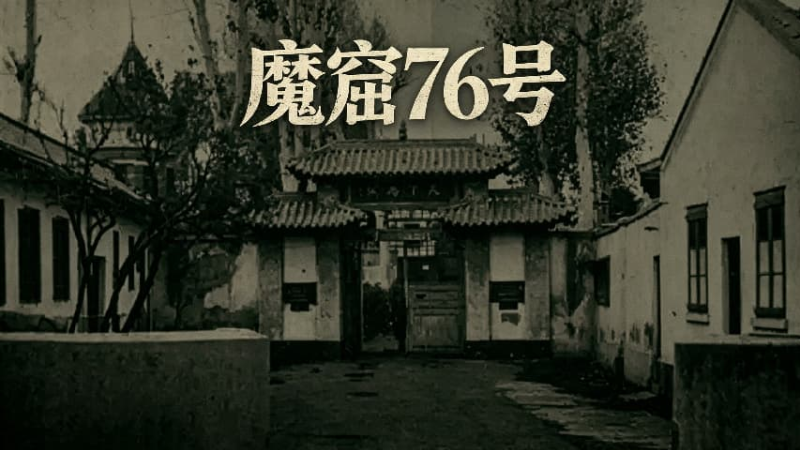
Anyone who has played The Battle of Shanghai Beach will likely remember its final stage: armed with a machine gun, you storm a gloomy garden villa, cut down countless collaborators and secret agents, and ultimately eliminate the fictional Japanese commander Hasegawa Kiyoshi in his second-floor office. The real-life inspiration for that villa was none other than Shanghai’s most notorious wartime den of terror—the infamous “No. 76 Hellhole.”
Likewise, in Lust, Caution, the heavily guarded residence frequented by Mr. Yee, portrayed by Tony Leung, was also based on No. 76. Yet neither the game nor the film fully captures the true horror of the place. In reality, No. 76 was one of the darkest corners of occupied China. Over six years, it was responsible for more than 4,000 murders, kidnappings, and acts of terror. Countless anti-Japanese patriots were tortured there, many disappearing without a trace. Today, we revisit the rise and fall of this “devil’s lair” and uncover the shadow war hidden beneath the dust of history.
Chapter One: The Birth of No. 76 Jessfield Road
1. Why No. 76?
The choice of location was no accident. The headquarters stood on Jessfield Road in western Shanghai (today’s 435 Wanhangdu Road). The road was a classic example of an “extra-settlement road”—built outside the boundaries of the International Settlement but administered by the Settlement authorities. Although nominally Chinese territory, it effectively fell under Settlement police jurisdiction, creating a legal gray zone.
This unique geography provided almost perfect conditions for covert operations:
Chinese authorities could not directly enforce the law there;
Settlement police lacked authority to conduct thorough searches inside the compound;
Japanese military police could arrive within minutes to provide support;
Agents could freely move in and out of the Settlement to carry out assassinations.
2. The Ambitions of Two Men
In late 1938, Wang Jingwei defected to Hanoi and issued the infamous “Yan Telegram,” openly declaring his collaboration with Japan. To establish a puppet regime in Shanghai, the Japanese urgently needed an intelligence and security force capable of combating both the Nationalist Government’s Military Statistics Bureau (Juntong) and the Central Statistics Bureau (Zhongtong).
Two key figures stepped forward: Li Shiqun and Ding Mocun.
Li Shiqun
A native of Suichang, Zhejiang, Li had participated in revolutionary activities in his youth and joined the Chinese Communist Party. He later defected to the Nationalists and became an important figure within Zhongtong intelligence. After losing internal power struggles following the outbreak of war, he grew resentful and sought new opportunities.
Ding Mocun
A native of Changde, Hunan, Ding also began his career as a Communist underground operative. Captured by Zhongtong, he defected and became an intelligence agent in Shanghai. Witnessing the Nationalist setbacks during the war, he proactively contacted Japanese intelligence agencies and chose the path of collaboration.
(左)丁默邨;(右)李士群
In 1938, Li formally entered the service of Japanese intelligence while in Hong Kong. Returning to Shanghai, he established the “Li Mansion” spy organization at 67 Daxi Road. However, his limited seniority prevented him from commanding widespread loyalty. He therefore invited his former superior, Ding Mocun, to join him, promising that Ding would be in charge while he himself would serve as deputy.
With support from the Japanese intelligence organization known as the “Mei Agency,” the two men officially established the Special Operations Headquarters in 1939—the organization that would become infamous as “No. 76.”
Chapter Two: The Leaders and Their Masters
The nature of an organization is often defined by its leaders, and No. 76’s brutality stemmed directly from those at its helm.
1. Li Shiqun: The Pragmatic Traitor
Li Shiqun was the true power behind No. 76. Fully aware of his reputation as a collaborator, he worked tirelessly to please his Japanese patrons while simultaneously maintaining potential escape routes with forces in Chongqing.
He built an extensive intelligence network whose influence reportedly reached even into the Settlement police. According to legend, a copy of Romance of the Three Kingdoms always sat on his desk. Li admired Zhuge Liang and believed he needed similar wisdom to survive among competing factions. Yet despite all his calculations, he ultimately met his end at Japanese hands.
2. Ding Mocun: The Silent Blade
Compared with Li’s aggressive style, Ding was cold and calculating. He oversaw administration and external liaison work. Having previously served within Zhongtong, he understood Nationalist and underground Communist operations intimately, making him a formidable adversary.
Yet despite their cooperation, Ding and Li constantly schemed against one another. Internal rivalry never ceased.
3. Two More Key Figures
Wu Sibao – The Executioner
Nicknamed “Wu Sibao,” he served as No. 76’s sharpest weapon. Responsible for kidnappings, assassinations, and extortion, many notorious crimes against bankers, journalists, and businessmen were carried out under his direction.
Haruki Yoshitane – The Mastermind
Often described as the “Emperor Behind No. 76,” Haruki directly supervised major operations and was a dedicated executor of Japan’s strategy of “using Chinese to govern Chinese.”
Chapter Three: Six Years of Terror in Shanghai
The mission of No. 76 was simple: eliminate anti-Japanese forces and protect the Wang Jingwei regime.
From 1939 to 1945, the organization carried out over 4,000 assassinations and kidnappings—averaging nearly two incidents every day. Its primary targets included:
Communist members and progressive intellectuals;
Nationalist intelligence operatives;
Settlement officials;
Financial professionals linked to the Chongqing government.
1. The Financial Massacres
In January 1941, the Wang regime established the Central Reserve Bank and introduced the Central Reserve Currency in an attempt to replace the Nationalist legal tender in occupied territories.
Shanghai’s major banks refused to cooperate, while Dai Li’s intelligence network assassinated several senior officials associated with the puppet bank. Enraged, Zhou Fohai ordered Li Shiqun to retaliate.
(中储券)
In July 1941, Li and Wu Sibao launched a campaign of targeted terror against employees of Shanghai’s major banking institutions, including the Central Bank, Bank of China, Bank of Communications, and Farmers Bank.
The resulting killings and injuries created widespread panic. Banks temporarily shut down, and Shanghai’s financial system was pushed to the brink of collapse.
2. The Massacre of Journalists
Before the outbreak of the Pacific War, Shanghai’s foreign concessions still maintained a degree of neutrality. Many patriotic journalists used newspapers to promote resistance against Japan.No. 76 considered them enemies.
On July 22, 1939, Zhu Xinggong, editor of the Night Light supplement of Ta Mei Evening News, was assassinated after publishing a series condemning collaborators. According to contemporary accounts, his final words were:
“I die for my country. My death is honorable.”
Dozens of journalists met similar fates, including Zhang Sixu, Li Boying, Shao Xubai, and Cheng Zhenzhang.
No. 76 also attacked newspaper offices directly. Grenade attacks, beatings, and intimidation campaigns eventually forced some publications to alter their editorial stance in favor of Japanese and collaborationist interests.
3. Assassinating Patriots
To suppress anti-Japanese activism, No. 76 infiltrated the concessions and systematically targeted patriotic figures.
(爱国法官郁华与其夫人陈碧岑)
Among the victims were:
Yu Hua, a patriotic judge who insisted on prosecuting agents responsible for attacks on newspapers. He was assassinated on November 23, 1939.
Mao Liying, leader of the Shanghai Women’s Anti-Japanese Club, murdered on Nanjing Road on December 12, 1939, at age twenty-nine.
Xu Amei, a Communist labor leader, kidnapped and killed on December 30, 1939.
Ma Yuanfang, a senior Nationalist Party official in Jiangsu, who died under torture after his arrest in 1940.
These killings devastated Shanghai’s resistance networks, yet they failed to extinguish the determination of those who continued fighting.
4. Infiltration and Counter-Infiltration
No. 76 excelled at intelligence warfare.
Wang Tianmu’s Defection
In 1939, Wang Tianmu, head of the Military Statistics Bureau’s Shanghai branch, was captured by No. 76 after organizing an assassination attempt against puppet official Chen Lu.
Under pressure, Wang defected and revealed extensive intelligence regarding Nationalist networks. The resulting crackdown crippled the Shanghai branch and damaged intelligence operations across northern China.
(王天木)
The “CP Section”
In late 1939, No. 76 established a dedicated anti-Communist department known as the “CP Section.” Agents infiltrated Communist bases disguised as fishermen and merchants, gathering information through coercion and torture.
Many Communist operatives and New Fourth Army intelligence personnel were captured and killed.
The “Tangyuan Incident”
In 1943, Japanese forces and No. 76 attempted to infiltrate Communist bases during anti-guerrilla operations. However, Communist agent Li Shiyu successfully penetrated No. 76 itself, obtaining critical intelligence and enabling the New Fourth Army to thwart the planned offensive.
Chapter Four: Zheng Pingru and the Honey Trap Assassination
The atrocities of No. 76 provoked fierce resistance from Chongqing.
One of the most famous operations involved Zheng Pingru, the woman whose story later inspired Lust, Caution.
A celebrated Shanghai socialite of mixed Chinese and Japanese heritage, Zheng was also a magazine cover model. Secretly recruited by Zhongtong, she was tasked with approaching Ding Mocun.
According to intelligence records, Ding’s weakness for attractive women made him vulnerable. Zheng quickly gained his trust.
On December 21, 1939, she lured Ding to a fur shop on Jing’an Temple Road (today’s West Nanjing Road), where Nationalist agents lay in wait.
Yet Ding’s instincts saved him. Sensing danger upon arrival, he fled through the back entrance and escaped in an armored vehicle from No. 76.
(丁默邨与郑苹如)
Three days later, Zheng was arrested.
Despite interrogation and attempts to persuade her to defect, she remained defiant. In January 1940, she was taken to an execution ground in western Shanghai.
Her final request was simple:
“Aim carefully. Don’t ruin my face.”
She was only twenty-two years old.
Chapter Five: When Wolves Turn on Each Other
Internal conflicts eventually consumed No. 76 itself.
1. The Death of Wu Sibao
Protected by Li Shiqun, Wu became increasingly arrogant. His involvement in stealing gold even angered Japanese authorities.
In 1941, Japanese military police invited him to a banquet, arrested him, and later poisoned him in custody.
The feared enforcer died at the hands of his own masters.
2. Li Shiqun’s Last Supper
By 1943, Li had accumulated countless enemies, including influential figures within the Wang regime itself.
Japanese authorities also viewed him as increasingly difficult to control.
During a banquet hosted by Japanese intelligence officer Okamura, Li consumed food allegedly laced with disease-causing agents. Shortly afterward, he suffered severe illness and agonizing pain.
Despite medical treatment, he died days later.
According to popular accounts, his final lament was:
“I spent my whole life as a spy. I never imagined I would die at the hands of spies.”
Chapter Six: The Fall and Judgment of No. 76
Following Li’s death, No. 76 descended into chaos.
The Wang regime reorganized the intelligence apparatus, replacing the Special Operations Headquarters with a new Political Security Bureau. Though some offices remained at the original site, the organization never regained its former influence.
In November 1944, Wang Jingwei died in Japan.
On August 15, 1945, Japan announced its unconditional surrender.
The following day, the Wang regime collapsed.
No. 76 disappeared with it.
After the war, the Nationalist government prosecuted many surviving collaborators. Ding Mocun was sentenced to death and executed in Nanjing’s Laohuqiao Prison in 1947. Other senior members met similar fates.
Chapter Seven: Legacy and Remembrance
Following the war, the No. 76 organization was dismantled. The original buildings were eventually demolished in 1990.
However, the site remains historically significant as a witness to China’s War of Resistance. In March 2026, the location was officially recognized as a martyrdom site connected to Shanghai’s anti-Japanese resistance and was designated a protected cultural heritage location by Jing’an District authorities.
Yet official recognition is only part of the story.
The greater importance lies in remembrance, understanding, and transmission to future generations. Local authorities and heritage organizations have proposed transforming the site into a patriotic education base so that the lessons of history will not be forgotten.
Conclusion: A Warning from History
In only a few years, No. 76 became one of Shanghai’s darkest nightmares.
It served not only as a tool of Japan’s “rule Chinese through Chinese” strategy, but also as a stark example of how greed, ambition, and cruelty can flourish in times of chaos.
Looking back, we should remember heroes such as Zheng Pingru, who sacrificed everything in the darkness, while also recognizing that those who betray their nation rarely escape judgment forever.
The story of No. 76 reminds us that in troubled times, principles and conviction may matter even more than life itself.
P.S. This article is based on publicly available historical materials and the author’s own research. As historical interpretation is complex, there may be inaccuracies or omissions. Readers are welcome to offer corrections and additional information.
Source
Changelog.gg summarizes and formats this update. How we read updates.