What changed
0 fixes1 addition2 changes0 removals
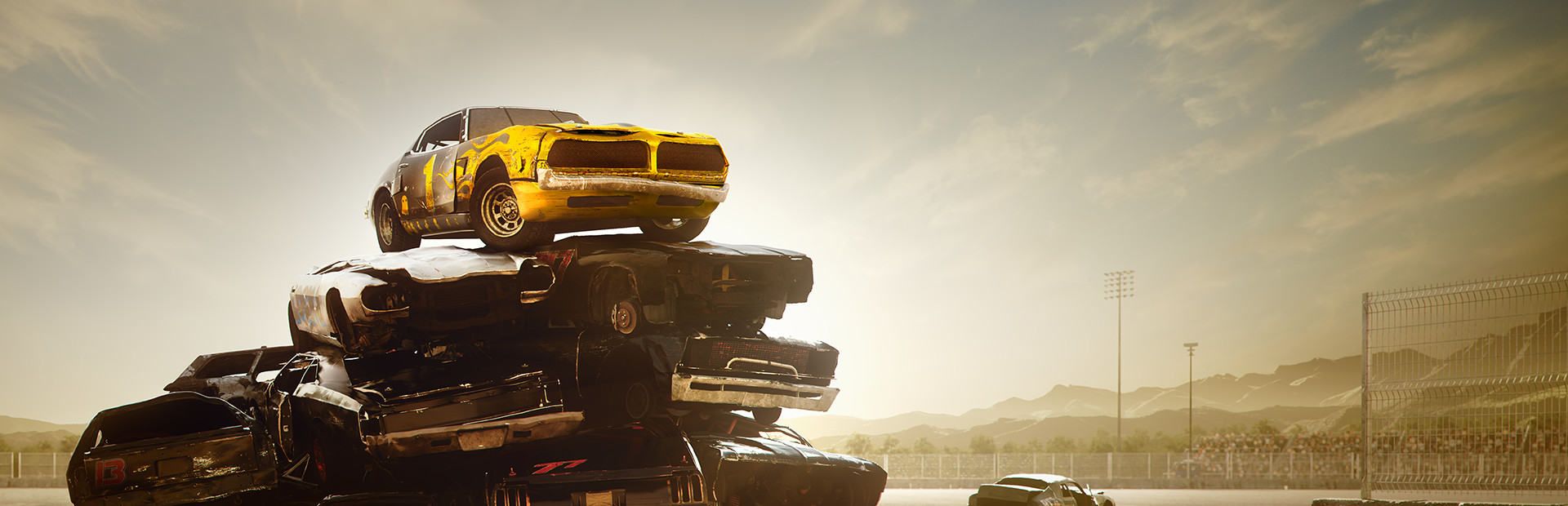
addedA community screenshot by ETD. As you might remember we’ve been talking about how we want to involve the community in the development of Next Car Game, and for a good reason too. In the end, the game is being built for you (that’s not to say we’re not going to enjoy it, though!), and it only makes sense that we’ll be integrating some of your ideas into game. This week we’re finally moving on to discussing the game beyond the in-game racing experience and giving you a chance to have your say on an extremely important aspect of the meta game and core loop: gameplay damage. It might be a bit technical from now on, but try to hang on, we’ll give a hand. By gameplay damage we mean the damage that is used to determine whether your car is still running or not, currently represented by the little damage meter in the lower left corner of the in-game HUD. The damage allocation logic that we currently use is pretty rudimentary, and like most of you have come to notice, it often ends up allocating damage to the wrong part of the car (currently the body sectors and the engine). The good news is that this week we’ve been testing a new implementation of the gameplay damage that has yielded very promising results. In short, in the new system the damage is determined by tracking the deform displacement of predetermined dummies, i.e. key points that our vehicle artists have set up that represent the various components of the car such as the engine. Taking the engine as an example, basically the more the engine moves due to collisions, the more damage it receives. When the engine reaches the maximum distance it is allowed to move, it gets destroyed and the car is wrecked. Likewise we can track the dislocation of a radiator, a front fender, or actually anything that we like. Thanks to this the damage should always match the visual deformation of the car, and we have a flexible system that we can tailor to our gameplay needs. This is of course all very nice and dandy, but now comes the tricky part that we need your input on: what kind of components should we track, and what kind of consequences should the damage have when the player returns to the garage? One obvious option is of course to make the damage reset after each race, but that is perhaps a bit too simple since we’d very much want to make upgrading and car maintenance a significant part of the game experience. To give you some ideas what’s possible, here are some of our own:
changedEach upgrade part is represented by a node, with some of them like the engine being crucial, while others would have a negative impact on the car handling or performance when damaged – for example, with a damaged suspension the car could sway more, handling would be impaired, and so on. A damaged engine would give off smoke and reduce the performance.
changedAll upgrade parts would have their lifetime durability (i.e. strength) tracked, and the player could repair a given percentage of the part. In other words, the parts would actually wear from use, but by repairing the part, the player could increase the performance of the part – perhaps just not to the initial level. Non-repaired parts would have a lower performance, but the player could still use them: for example, the damaged suspension mentioned above would still work for a derby
Wreckfest changes
addedA community screenshot by ETD. As you might remember we’ve been talking about how we want to involve the community in the development of Next Car Game, and for a good reason too. In the end, the game is being built for you (that’s not to say we’re not going to enjoy it, though!), and it only makes sense that we’ll be integrating some of your ideas into game. This week we’re finally moving on to discussing the game beyond the in-game racing experience and giving you a chance to have your say on an extremely important aspect of the meta game and core loop: gameplay damage. It might be a bit technical from now on, but try to hang on, we’ll give a hand. By gameplay damage we mean the damage that is used to determine whether your car is still running or not, currently represented by the little damage meter in the lower left corner of the in-game HUD. The damage allocation logic that we currently use is pretty rudimentary, and like most of you have come to notice, it often ends up allocating damage to the wrong part of the car (currently the body sectors and the engine). The good news is that this week we’ve been testing a new implementation of the gameplay damage that has yielded very promising results. In short, in the new system the damage is determined by tracking the deform displacement of predetermined dummies, i.e. key points that our vehicle artists have set up that represent the various components of the car such as the engine. Taking the engine as an example, basically the more the engine moves due to collisions, the more damage it receives. When the engine reaches the maximum distance it is allowed to move, it gets destroyed and the car is wrecked. Likewise we can track the dislocation of a radiator, a front fender, or actually anything that we like. Thanks to this the damage should always match the visual deformation of the car, and we have a flexible system that we can tailor to our gameplay needs. This is of course all very nice and dandy, but now comes the tricky part that we need your input on: what kind of components should we track, and what kind of consequences should the damage have when the player returns to the garage? One obvious option is of course to make the damage reset after each race, but that is perhaps a bit too simple since we’d very much want to make upgrading and car maintenance a significant part of the game experience. To give you some ideas what’s possible, here are some of our own:
changedEach upgrade part is represented by a node, with some of them like the engine being crucial, while others would have a negative impact on the car handling or performance when damaged – for example, with a damaged suspension the car could sway more, handling would be impaired, and so on. A damaged engine would give off smoke and reduce the performance.
changedAll upgrade parts would have their lifetime durability (i.e. strength) tracked, and the player could repair a given percentage of the part. In other words, the parts would actually wear from use, but by repairing the part, the player could increase the performance of the part – perhaps just not to the initial level. Non-repaired parts would have a lower performance, but the player could still use them: for example, the damaged suspension mentioned above would still work for a derby
A community screenshot by ETD. As you might remember we’ve been talking about how we want to involve the community in the development of Next Car Game, and for a good reason too. In the end, the game is being built for you (that’s not to say we’re not going to enjoy it, though!), and it only makes sense that we’ll be integrating some of your ideas into game. This week we’re finally moving on to discussing the game beyond the in-game racing experience and giving you a chance to have your say on an extremely important aspect of the meta game and core loop: gameplay damage. It might be a bit technical from now on, but try to hang on, we’ll give a hand. By gameplay damage we mean the damage that is used to determine whether your car is still running or not, currently represented by the little damage meter in the lower left corner of the in-game HUD. The damage allocation logic that we currently use is pretty rudimentary, and like most of you have come to notice, it often ends up allocating damage to the wrong part of the car (currently the body sectors and the engine). The good news is that this week we’ve been testing a new implementation of the gameplay damage that has yielded very promising results. In short, in the new system the damage is determined by tracking the deform displacement of predetermined dummies, i.e. key points that our vehicle artists have set up that represent the various components of the car such as the engine. Taking the engine as an example, basically the more the engine moves due to collisions, the more damage it receives. When the engine reaches the maximum distance it is allowed to move, it gets destroyed and the car is wrecked. Likewise we can track the dislocation of a radiator, a front fender, or actually anything that we like. Thanks to this the damage should always match the visual deformation of the car, and we have a flexible system that we can tailor to our gameplay needs. This is of course all very nice and dandy, but now comes the tricky part that we need your input on: what kind of components should we track, and what kind of consequences should the damage have when the player returns to the garage? One obvious option is of course to make the damage reset after each race, but that is perhaps a bit too simple since we’d very much want to make upgrading and car maintenance a significant part of the game experience. To give you some ideas what’s possible, here are some of our own:
Each upgrade part is represented by a node, with some of them like the engine being crucial, while others would have a negative impact on the car handling or performance when damaged – for example, with a damaged suspension the car could sway more, handling would be impaired, and so on. A damaged engine would give off smoke and reduce the performance.
All upgrade parts would have their lifetime durability (i.e. strength) tracked, and the player could repair a given percentage of the part. In other words, the parts would actually wear from use, but by repairing the part, the player could increase the performance of the part – perhaps just not to the initial level. Non-repaired parts would have a lower performance, but the player could still use them: for example, the damaged suspension mentioned above would still work for a derby