
In this update5
Full notes
Full Veterans: Napoleonic Wars update
Read the full published notes in a cleaner layout. The original post stays linked below.
What changed
- Maps
- Store
- Performance
- Gameplay
Veterans: Napoleonic Wars changes
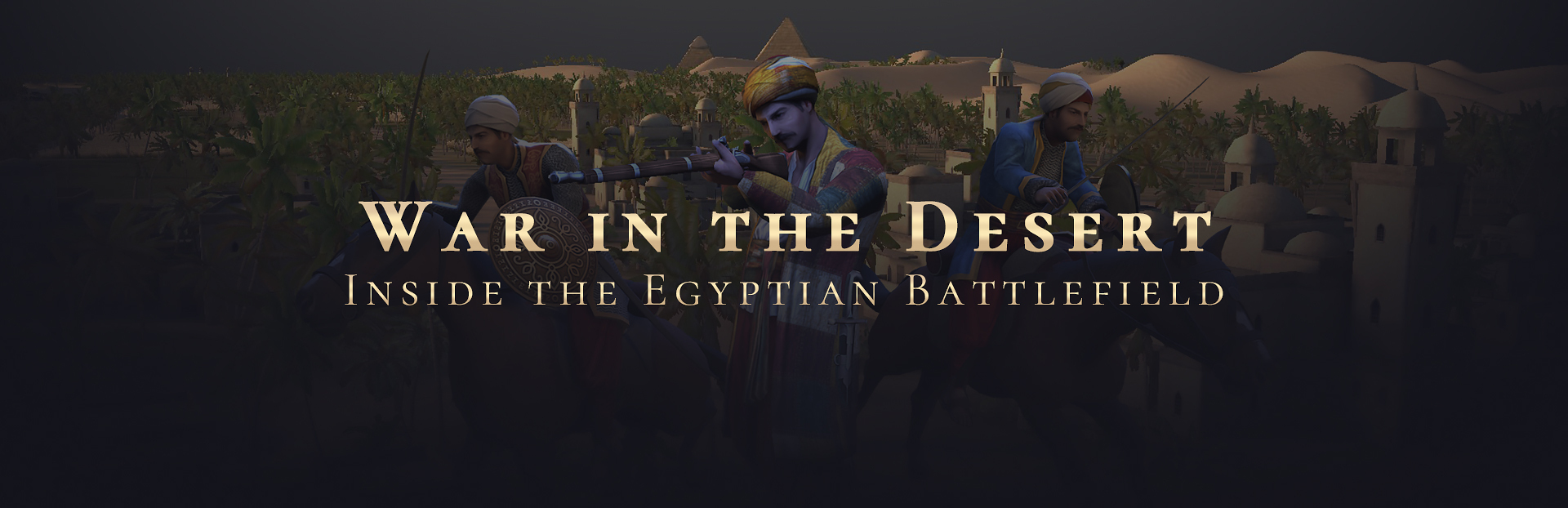
Today we're giving you a closer look at the Egyptian battlefield: how we build the desert, how the heat will test your army, and who you will face there.
Terrain That Shapes the Battle
The environment is not just a backdrop - it plays a tactical role. Dunes slow down unit movement, forcing you to think carefully about your approach routes.
And then there is the heat. The scorching Egyptian sun is represented by an air distortion effect - a shimmering heat haze implemented as post-processing. It adds a real sense of the desert to every battle: the air itself seems to tremble above the sand.
But in this campaign, heat is more than a visual effect.
Heat Fatigue: A New Campaign Mechanic
The campaign introduces a heat fatigue mechanic, reflecting the unfamiliar climate your soldiers have to endure. Units accumulate heat fatigue as they take part in missions, and the more exhausted they are, the less effective they become in battle. Pushing worn-out men past their limit will also cost you reputation.
There are two ways to deal with heat fatigue:
Send the unit to the reserve. Time away from the front lets your soldiers fully recover.
Issue an increased water ration. Water rations gradually restore a unit's condition - but water is a resource you will have to manage. It is earned by taking part in battles, can be purchased with reputation or money, and is also rewarded for completing side objectives.
And one more thing: camel units do not suffer from the heat - a natural advantage of a mount born for the desert.
New Factions: The Mamluks and the Ottoman Empire
The Egyptian battlefield brings two new forces, each with its own roster and character.
The Mamluks. Their backbone is cavalry, and it comes in three weights - light, regular, and heavy Mamluk horsemen. They are supported by Fellahin peasant infantry, camel riders, and their own artillery with guns and crews. Officers and generals lead them into battle.
The Ottoman Empire. A more structured army: infantry ranges from Arnaut irregulars through regular Nizam troops to the famed Janissaries. Their cavalry includes Deli light horsemen and Sipahi. Ottoman artillery, officers, generals, and supply units complete the force.
Riding Into Battle on Camelback
The dromedary camel units deserve a closer look. Each camel carries a two-man crew: one soldier controls the mount while the other fires, and in melee both fight. Functionally they fill the role of cavalry, but with their own unique animations that set them apart on the battlefield.
The dromedary units also differ in appearance - from the familiar French uniforms to variants incorporating elements of traditional desert clothing.
The Technical Side
Our environment is built entirely on low-poly objects - this is the foundation of our optimization approach. We do not use Unity's standard terrain system: every element of the battlefield is a low-poly asset, which gives us full control over both performance and visual style.
To keep that rich, detailed look, we sculpt high-detail source models in ZBrush (a heavy, resource-intensive process) and then bake all that detail into normal map textures. The result: in-game assets stay lightweight, but the surfaces still read as fully detailed.
More to come - stay tuned!
Source
Changelog.gg summarizes and formats this update. How we read updates.