
Full notes
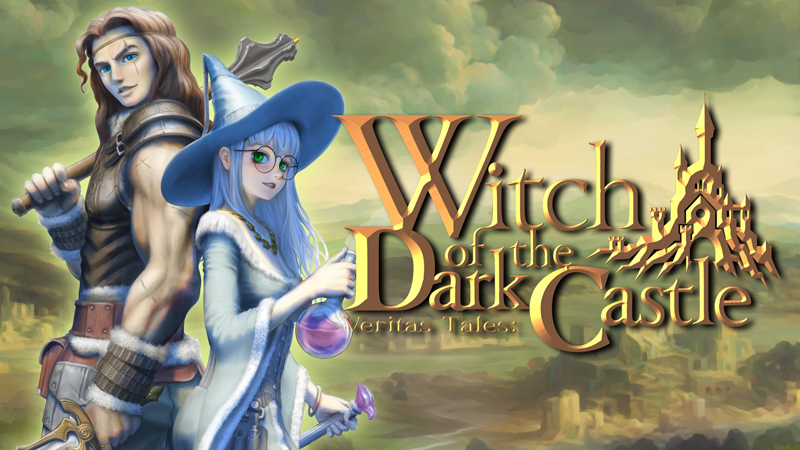
Full Veritas Tales: Witch of the Dark Castle update
Read the full published notes in a cleaner layout. The original post stays linked below.
What changed
- UI and audio
- Store
Veritas Tales: Witch of the Dark Castle changes
This article is about “words.” It’s a topic that extends beyond gamebooks.
While working on this project, I came to realize once again just how challenging—and wonderful—words can be.
Misinterpretations of meaning, incorrect usage, or failing to notice my own unusual, made-up words… I felt quite embarrassed when others tested this game.
On the flip side, when people enjoyed or laughed at the words I’d written, I felt like I was on top of the world. A single word can make you feel embarrassed or happy… For better or worse, I think the power of words is truly amazing.
In Japan, there is a concept called “kotodama” (the spirit of words). It’s the belief that “words possess spiritual power.” It’s also said that the words we speak become reality.
In a previous column, I wrote about “the word ‘thank you’” and how “the brain has no mechanism to distinguish between ‘self’ and ‘others.’”
Even if used casually, hurtful words can wound both the other person and yourself at the same time. It’s best to avoid using such words altogether.
Ideally, I hope the world will be filled with words that bring joy and happiness.
Japanese, English, and Chinese each have their own distinct characteristics.
I feel that “Japanese has more words for self-deprecation than for praise.” This stems from modesty and humility—a virtue born of consideration for others.
However, this is a tradition rooted in ancient Japanese culture, and things are starting to change now. Furthermore, when modesty goes too far, it can lead to a loss of confidence and self-restraint.
Since language is culture itself, I don’t think we should change it lightly, but it would be good if we could use it in a way that suits the present era.
Let’s change the subject. I absolutely love “metaphors” in language. One of my favorite passages from this work is the line: “The red sunset clings to the horizon, resisting like a child who doesn’t want to go home.” It compares the sun, which refuses to set, to a child. What first sparked my love for metaphors was hearing a line spoken by Tatsuya Shiro in the opening of the TOKYO FM radio program “Jet Stream” (if you’re interested, please look it up).
Also, in Kobo Abe’s novel *The Woman in the Dunes*,
-----------------------------
The sea was dull, coated with an anodized sheen, and rippled with fine wrinkles like the skin of boiled milk. Crushed by clouds resembling edible frog eggs, the sun seemed to be throwing a tantrum, reluctant to drown.
-----------------------------
There is this striking metaphor. When I first read this passage, my hands began to tremble. Another example:
In the song “The Moon Was Watching” by Toshiyaki Chiku, a former member of Tama,
-----------------------------
Even though the moon is already dead, it blinks very slowly
---- -------------------------
I felt this was a beautiful metaphor as well.
The way these passages and lyrics are used is something I truly admire.
This will be the final installment of the “Witch of the Dark Castle” production column. Thank you so much for following along!!
Digitalis Publishing Yoshio Nishimura
Source
Changelog.gg summarizes and formats this update. How we read updates.