
Full notes
Full Usual June update
Read the full published notes in a cleaner layout. The original post stays linked below.
What changed
- Gameplay
- Maps
Usual June changes
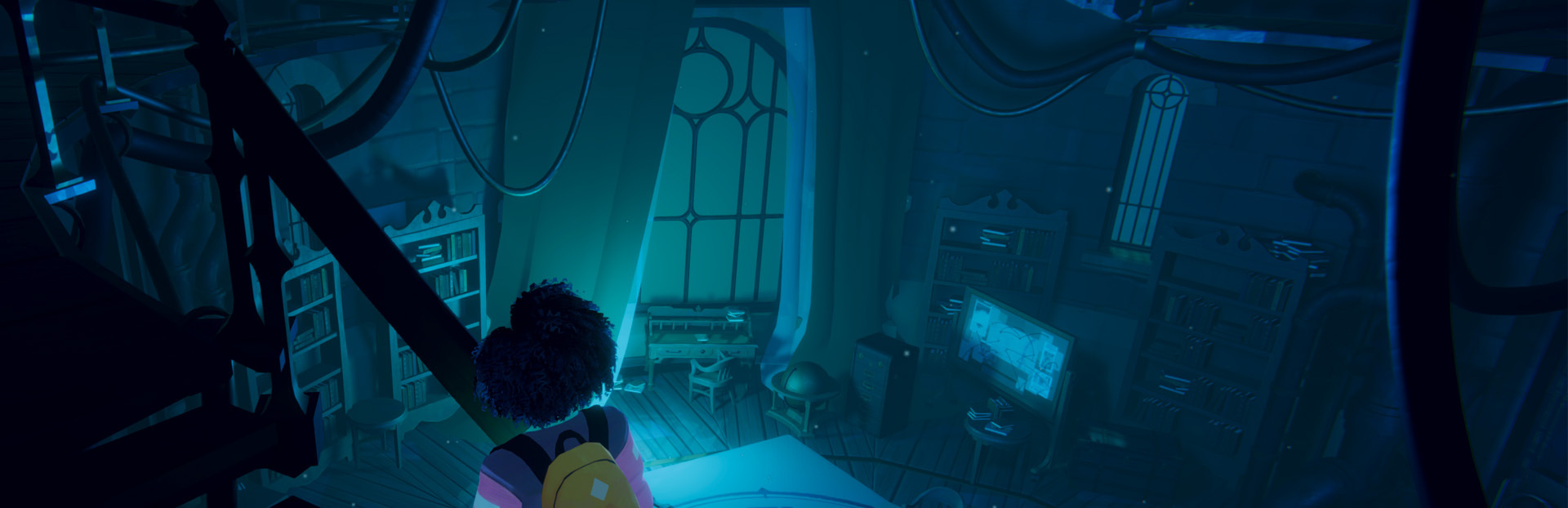
Some of you may have seen the, well, weirder areas of Usual June in our early demo, but the team has been working on them a lot since then! Part of that work was bringing on the incredibly talented Concept and 3D Environmental Artist Beatriz de Abreu. Social Media & Community Director Aster Wright had a chat with Bea about her work on Usual June:
ASTER: Since joining Finji, you’ve been working on both concept art and level design for the weirder areas of Usual June. Can you talk about what first drew you to the project and how your work has evolved since your earliest sketches?
BEA: On a personal level, I always wanted to work with an indie studio. Most of my past work was in AAA, but I mostly play indie games these days, and have worked on little indie projects and game jams in my free time. I was also always a big fan of Finji’s games as well, so being able to contribute to a Finji project was super exciting.
The setting for the game also seemed very fun, and being allowed to do a lot of weird experimental art is always very nice. I like that the project doesn’t quite fit neatly into the general aesthetics of sci-fi or fantasy. I think with concept art, everything is kind of changing all the time, and a big part of the process is making images to see what sticks, which ideas are most evocative and then leaning into those. You’re sometimes just making images until something just feels right, and you try to make everything else fit into that vision. Then, the next big challenge is making sure you retain that vision as much as possible on the way to the final product, which is probably the hardest part and where I see a lot of projects lose their vibe. The nice (and scary) thing about doing both concept and 3D is that I can be in charge of both sections of that process for the maps that I make.
ASTER
I know I speak for everyone when I say we can’t wait to explore these beautiful and eerie spaces you’ve been building. From where have you been drawing inspiration? What goes through your head as you’re designing this kind of place?
BEA
There was a big internal idea for not drawing from direct references in general - these areas are meant to feel eerie and outerworldly (but not actually like an alien planet), alive and lush but intentionally avoiding any real world foliage. This led me to draw from references that are not really directly related to what I’m doing.
For instance, if I’m designing something that roughly has the shape and size of a “weird plant,” instead of looking up weird plants, I’ll look at deep sea creatures, amoebas, mushrooms, jellyfish, close up images of bacteria, etc. Sometimes just interesting patterns that don’t really map to anything specific in nature. For some of the maps, I was looking at these fine art installations of black tar dipping down on surfaces, weird stuff like that. I found that tends to create more interesting and strange results than drawing from “literal” reference, while still feeling natural and not like you’re doing weird things for the sake of being weird. I’ve also drawn inspiration from other projects too, though. I think some major ones are Jusant, Scavenger’s Reign, and Nausicaä.
ASTER: What has your creative process been like? Have you run into any challenges?
BEA: When it comes to early exploratory paintings, my process has always been very chaotic. I don’t exactly know what a painting will look like when I start it, and there’s a lot of natural exploration involved, it’s a very gestural process of letting my personal taste guide me, and finding specific shapes and colors and moments in the chaos that seem interesting and unique.
After I have a general idea of what I’m going for in an area, I get increasingly more specific, designing individual props or painting what a single walkway or room in the game might look like. At this point I’m essentially making visual mockups of how I want the final game to look.
I think the most difficult part is translating the specific vibes my paintings have into designs that can be turned into 3d spaces you can walk around and play in. It’s super difficult, and takes a lot of creative problem-solving to achieve that look in a way that is still walkable, performant, and visually clear to the player. Coming up with an aesthetic that is unique is hard, but translating that to a game, without compromising what made it interesting in the first place, is even harder.
What are you most excited to see in Usual June? 👀 Let us know in the Finji Discord and we just might do an Dev Update on it!
Source
Changelog.gg summarizes and formats this update. How we read updates.