What changed
0 fixes2 additions3 changes0 removals
changedIntroduction"In the late '80s and early '90s it was very clear cut," he says. "Now you could attribute the dialogue trees in Mass Effect to adventure games. A lot of the scripted storytelling in Valve's games comes from adventure games. I think adventure games went out and permeated every single genre because they've always remained the best way to interact with characters in a world and to interact with an environment."
changedIntroductionOthers view adventures in more exclusive terms. "Stories in games need to mould themselves around what gameplay a game is trying to deliver," says Charles Cecil, founder of Broken Sword developer Revolution Software. "Uncharted is absolutely not an adventure game as I would define it, same with Heavy Rain. Both require considerable expertise with a joypad and an adventure is a cerebral experience rather than one requiring manual dexterity."
addedIntroductionA lack of violence or death is also a common trait of adventures, he adds. But even then Cecil's definition has grey areas thanks to the likes of L.A. Noire, which lets players skip the action and focus on its adventure-inspired detective work.
addedA Brief HistoryWithin a few months a Stanford University student called Don Woods had rejigged the game, adding more puzzles, locations and fantasy elements. Woods' version became a sensation in the mainframe-computing scene of the late 1970s. Other computer users began creating their own adventures and it went on to inspire MUD, the first MMO - but that's another story.
changedA Brief HistoryBy the time the first mass-produced home computers began rolling off the production lines adventures were an obvious choice for making the leap out of the labs and into our homes. In 1978 the first commercial adventure game - Adventureland for the TRS-80 - reached the shops. Its success established the genre as a mainstay of computer gaming and its creator Scott Adams formed one of the world's earliest game publishers Adventure International to feed the growing demand for adventure games.
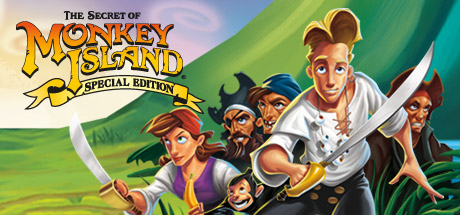
The Secret of Monkey Island: Special Edition changes
changed"In the late '80s and early '90s it was very clear cut," he says. "Now you could attribute the dialogue trees in Mass Effect to adventure games. A lot of the scripted storytelling in Valve's games comes from adventure games. I think adventure games went out and permeated every single genre because they've always remained the best way to interact with characters in a world and to interact with an environment."
changedOthers view adventures in more exclusive terms. "Stories in games need to mould themselves around what gameplay a game is trying to deliver," says Charles Cecil, founder of Broken Sword developer Revolution Software. "Uncharted is absolutely not an adventure game as I would define it, same with Heavy Rain. Both require considerable expertise with a joypad and an adventure is a cerebral experience rather than one requiring manual dexterity."
addedA lack of violence or death is also a common trait of adventures, he adds. But even then Cecil's definition has grey areas thanks to the likes of L.A. Noire, which lets players skip the action and focus on its adventure-inspired detective work.
addedWithin a few months a Stanford University student called Don Woods had rejigged the game, adding more puzzles, locations and fantasy elements. Woods' version became a sensation in the mainframe-computing scene of the late 1970s. Other computer users began creating their own adventures and it went on to inspire MUD, the first MMO - but that's another story.
changedBy the time the first mass-produced home computers began rolling off the production lines adventures were an obvious choice for making the leap out of the labs and into our homes. In 1978 the first commercial adventure game - Adventureland for the TRS-80 - reached the shops. Its success established the genre as a mainstay of computer gaming and its creator Scott Adams formed one of the world's earliest game publishers Adventure International to feed the growing demand for adventure games.
Introduction
Once upon a time it was easy. Just 15 years ago most games slotted into their categories with librarian-pleasing snugness. Take the adventure game.
In 1985 they were text games with a focus on storytelling and puzzle solving. Five years later it was the same but with animated graphics and mouse clicks replacing the typing.
But defining the genre now is like hugging fog. The once firm borders of adventures have crumbled and their ideas have diffused out into the wider gaming ocean. Today the definition of an adventure game depends on what school of thought you embrace.
Dan Connors, head of adventure specialists Telltale Games, sees the genre as a broad church. His definition is inclusive not exclusive. It includes Heavy Rain and Uncharted as well as his company's more traditional efforts such as the Back to the Future adventures.
"In the late '80s and early '90s it was very clear cut," he says. "Now you could attribute the dialogue trees in Mass Effect to adventure games. A lot of the scripted storytelling in Valve's games comes from adventure games. I think adventure games went out and permeated every single genre because they've always remained the best way to interact with characters in a world and to interact with an environment."
Others view adventures in more exclusive terms. "Stories in games need to mould themselves around what gameplay a game is trying to deliver," says Charles Cecil, founder of Broken Sword developer Revolution Software. "Uncharted is absolutely not an adventure game as I would define it, same with Heavy Rain. Both require considerable expertise with a joypad and an adventure is a cerebral experience rather than one requiring manual dexterity."
A lack of violence or death is also a common trait of adventures, he adds. But even then Cecil's definition has grey areas thanks to the likes of L.A. Noire, which lets players skip the action and focus on its adventure-inspired detective work.
A Brief History
While the exact definition may be debatable, the origin of the adventure game isn't. The first adventure is the aptly named Adventure, a 1976 text game created by Will Crowther on his workplace's PDP-10 mainframe computer. It let players explore a world described in text by inputting verb-noun commands such as 'go north' or 'get torch'. As well as exploring there were puzzles to solve and monsters to encounter.
Within a few months a Stanford University student called Don Woods had rejigged the game, adding more puzzles, locations and fantasy elements. Woods' version became a sensation in the mainframe-computing scene of the late 1970s. Other computer users began creating their own adventures and it went on to inspire MUD, the first MMO - but that's another story.
By the time the first mass-produced home computers began rolling off the production lines adventures were an obvious choice for making the leap out of the labs and into our homes. In 1978 the first commercial adventure game - Adventureland for the TRS-80 - reached the shops. Its success established the genre as a mainstay of computer gaming and its creator Scott Adams formed one of the world's earliest game publishers Adventure International to feed the growing demand for adventure games.
Adams wasn't alone for long. The following year the MIT students who created the Adventure-inspired Zork! formed Infocom to bring their adventure to home computer users. Around the same time