What changed
0 fixes1 addition0 changes0 removals
addedArchive Notice: BOB Orderly Unit Test Documents Archive Reference: AR-ENG-0004 Newly stabilised engineering fragments appear to document the BOB Orderly, an early Malin ward-service machine introduced as nursing numbers declined. Initial accounts describe tray and drink distribution between kitchens and wards, but later testimony records speech playback, autonomous navigation, and roving patrol behaviour near restricted thresholds. The documents suggest that groups of six units may have operated with limited shared prioritisation, allowing movement, warning, and restraint tasks to be coordinated without constant staff direction. Later BOB variants, including Spotters, Restrainers, and Gatherers, remain poorly understood, though recovered fragments imply that the term non-lethal did not always mean harmless. Steam post imageSteam post imageSteam post image Short Notice The recovered material suggests the BOB Orderly began as a practical ward-service device: a large wheeled cabinet designed to move trays, drinks, and routine supplies between kitchens and patient areas. Within a short period, patient accounts describe additional behaviours: recorded speech, autonomous route correction, and patrol use near ward thresholds, stairwells, and service corridors. The most significant fragments concern group operation. A cluster of six BOB units may have been able to prioritise movement and restraint tasks as a rudimentary linked system. Field Note This record has been cross-referenced with material relating to the Malin Failsafes and the 1958 Shepherd investigation of the sealed hospital levels.
The Outer Islands changes
addedArchive Notice: BOB Orderly Unit Test Documents Archive Reference: AR-ENG-0004 Newly stabilised engineering fragments appear to document the BOB Orderly, an early Malin ward-service machine introduced as nursing numbers declined. Initial accounts describe tray and drink distribution between kitchens and wards, but later testimony records speech playback, autonomous navigation, and roving patrol behaviour near restricted thresholds. The documents suggest that groups of six units may have operated with limited shared prioritisation, allowing movement, warning, and restraint tasks to be coordinated without constant staff direction. Later BOB variants, including Spotters, Restrainers, and Gatherers, remain poorly understood, though recovered fragments imply that the term non-lethal did not always mean harmless. Steam post imageSteam post imageSteam post image Short Notice The recovered material suggests the BOB Orderly began as a practical ward-service device: a large wheeled cabinet designed to move trays, drinks, and routine supplies between kitchens and patient areas. Within a short period, patient accounts describe additional behaviours: recorded speech, autonomous route correction, and patrol use near ward thresholds, stairwells, and service corridors. The most significant fragments concern group operation. A cluster of six BOB units may have been able to prioritise movement and restraint tasks as a rudimentary linked system. Field Note This record has been cross-referenced with material relating to the Malin Failsafes and the 1958 Shepherd investigation of the sealed hospital levels.
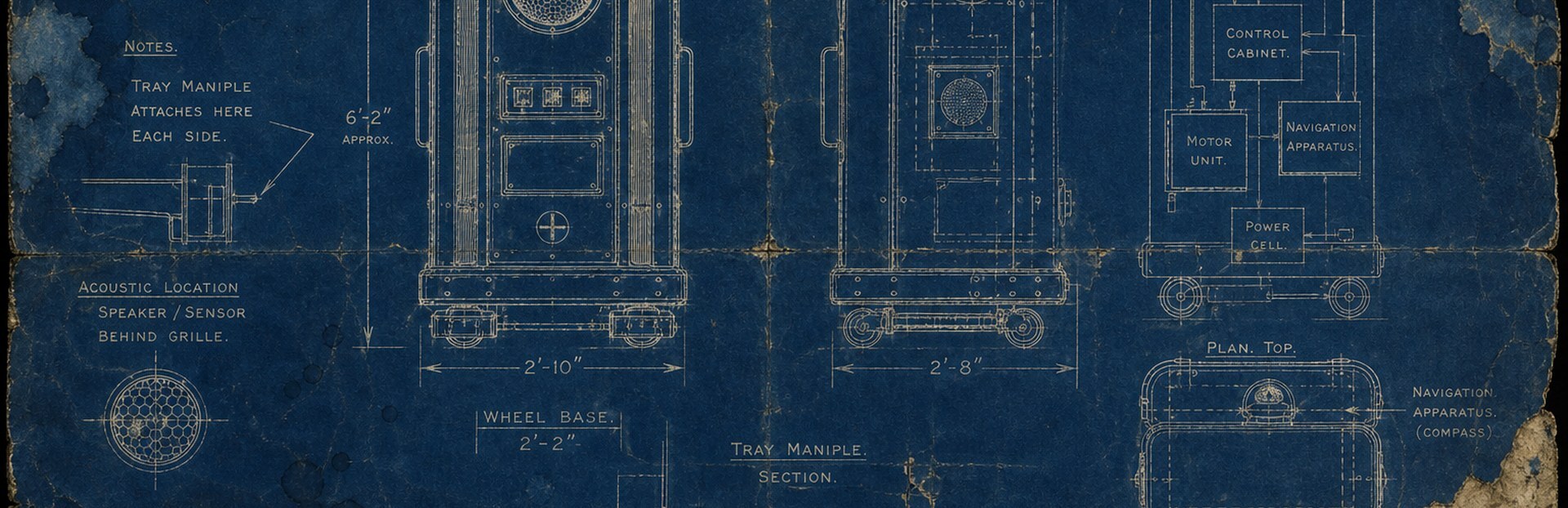
Archive Notice: BOB Orderly Unit Test Documents Archive Reference: AR-ENG-0004 Newly stabilised engineering fragments appear to document the BOB Orderly, an early Malin ward-service machine introduced as nursing numbers declined. Initial accounts describe tray and drink distribution between kitchens and wards, but later testimony records speech playback, autonomous navigation, and roving patrol behaviour near restricted thresholds. The documents suggest that groups of six units may have operated with limited shared prioritisation, allowing movement, warning, and restraint tasks to be coordinated without constant staff direction. Later BOB variants, including Spotters, Restrainers, and Gatherers, remain poorly understood, though recovered fragments imply that the term non-lethal did not always mean harmless. Steam post imageSteam post imageSteam post image Short Notice The recovered material suggests the BOB Orderly began as a practical ward-service device: a large wheeled cabinet designed to move trays, drinks, and routine supplies between kitchens and patient areas. Within a short period, patient accounts describe additional behaviours: recorded speech, autonomous route correction, and patrol use near ward thresholds, stairwells, and service corridors. The most significant fragments concern group operation. A cluster of six BOB units may have been able to prioritise movement and restraint tasks as a rudimentary linked system. Field Note This record has been cross-referenced with material relating to the Malin Failsafes and the 1958 Shepherd investigation of the sealed hospital levels.
Full archive record