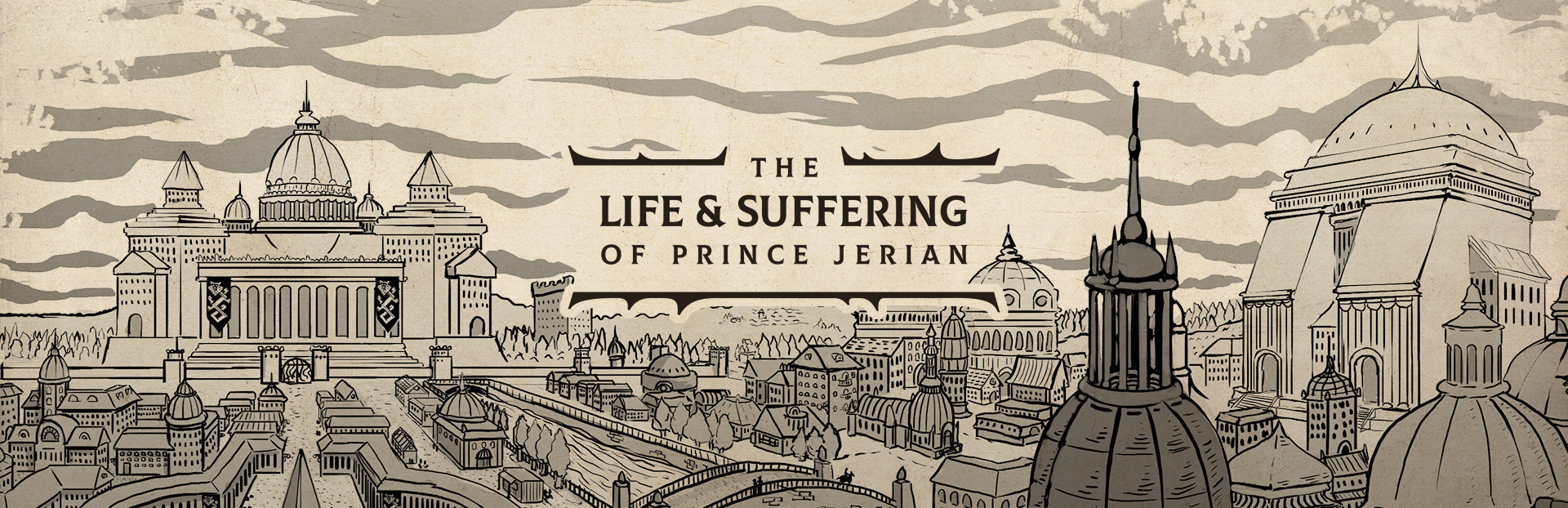
Last time, we spoke about the core principles that guided us during the development of the first game — principles we have carefully preserved in our second project.
Full notes
Full The Life and Suffering of Prince Jerian update
Read the full published notes in a cleaner layout. The original post stays linked below.
What changed
0 fixes3 additions2 changes0 removals
Events
Balance
Gameplay
addedAs you already know, the new game takes place in the same world and at the same time as the events of The Life and Suffering of Sir Brante. Today, we’d like to talk about the key differences between the second game and the first — though, of course, not all of them.
changedSteam post imageIn The Life and Suffering of Sir Brante, our protagonist grows up, and his limitations are a natural part of maturation: lack of skills, fatigue, or the consequences of past decisions. It is a story of personal formation, in which a boy becomes a man, gains strength, and attempts to challenge the world and its laws.
changedIn Prince Jerian, however, the hero possesses power and privilege by birthright, yet his limitations stem from social status and internal principles that are difficult to cross. If Brante is a story about growth and resistance to external circumstances, then Jerian is about the search for identity and the attempt to remain true both to one’s newly discovered self and to the system in which one was raised.
addedThe Arknian perspective: The new story is told through the lens of a character with a very different social status. Brante focused on people of the middle strata — those without the power to reshape the Empire on a global scale, yet capable of changing the lives around them. In Jerian, you will experience the perspective of high politics, ideological clashes, intrigue, and betrayal.
addedThe Leitmotif: In our games, it is important for us to find an emotional core and preserve it until the very end. This time, that core is “the powerlessness of the powerful.” We explore how those who possess authority and influence can nonetheless be bound by circumstances, obligations, their own decisions, and their inheritance. This theme will stand at the center of the new hero’s extraordinary life.
The Life and Suffering of Prince Jerian changes
addedAs you already know, the new game takes place in the same world and at the same time as the events of The Life and Suffering of Sir Brante. Today, we’d like to talk about the key differences between the second game and the first — though, of course, not all of them.
changedSteam post imageIn The Life and Suffering of Sir Brante, our protagonist grows up, and his limitations are a natural part of maturation: lack of skills, fatigue, or the consequences of past decisions. It is a story of personal formation, in which a boy becomes a man, gains strength, and attempts to challenge the world and its laws.
changedIn Prince Jerian, however, the hero possesses power and privilege by birthright, yet his limitations stem from social status and internal principles that are difficult to cross. If Brante is a story about growth and resistance to external circumstances, then Jerian is about the search for identity and the attempt to remain true both to one’s newly discovered self and to the system in which one was raised.
addedThe Arknian perspective: The new story is told through the lens of a character with a very different social status. Brante focused on people of the middle strata — those without the power to reshape the Empire on a global scale, yet capable of changing the lives around them. In Jerian, you will experience the perspective of high politics, ideological clashes, intrigue, and betrayal.
addedThe Leitmotif: In our games, it is important for us to find an emotional core and preserve it until the very end. This time, that core is “the powerlessness of the powerful.” We explore how those who possess authority and influence can nonetheless be bound by circumstances, obligations, their own decisions, and their inheritance. This theme will stand at the center of the new hero’s extraordinary life.
Last time, we spoke about the core principles that guided us during the development of the first game — principles we have carefully preserved in our second project.
As you already know, the new game takes place in the same world and at the same time as the events of The Life and Suffering of Sir Brante. Today, we’d like to talk about the key differences between the second game and the first — though, of course, not all of them.
The primary distinction lies in the mechanics of limitations that shape the hero’s path.
Steam post imageIn The Life and Suffering of Sir Brante, our protagonist grows up, and his limitations are a natural part of maturation: lack of skills, fatigue, or the consequences of past decisions. It is a story of personal formation, in which a boy becomes a man, gains strength, and attempts to challenge the world and its laws.
In Prince Jerian, however, the hero possesses power and privilege by birthright, yet his limitations stem from social status and internal principles that are difficult to cross. If Brante is a story about growth and resistance to external circumstances, then Jerian is about the search for identity and the attempt to remain true both to one’s newly discovered self and to the system in which one was raised.
But the differences do not end there. The Life and Suffering of Prince Jerian rests on three additional pillars:
Immersion in the setting: We explore the world of the game more deeply, so that you can truly understand the roots of the conflicts unfolding before your eyes. This time, players will dive much deeper into the history of the world and come far closer to the summit of the Shining Pillar.
AddedThe Arknian perspectiveThe new story is told through the lens of a character with a very different social status. Brante focused on people of the middle strata — those without the power to reshape the Empire on a global scale, yet capable of changing the lives around them. In Jerian, you will experience the perspective of high politics, ideological clashes, intrigue, and betrayal.
AddedThe LeitmotifIn our games, it is important for us to find an emotional core and preserve it until the very end. This time, that core is “the powerlessness of the powerful.” We explore how those who possess authority and influence can nonetheless be bound by circumstances, obligations, their own decisions, and their inheritance. This theme will stand at the center of the new hero’s extraordinary life.
Leave your questions in our social media channels, in the dedicated threads, or send them via private messages — we’ll select the most interesting ones and do our best to answer them in upcoming posts!