Repeated intro
What changed
0 fixes0 additions2 changes0 removals
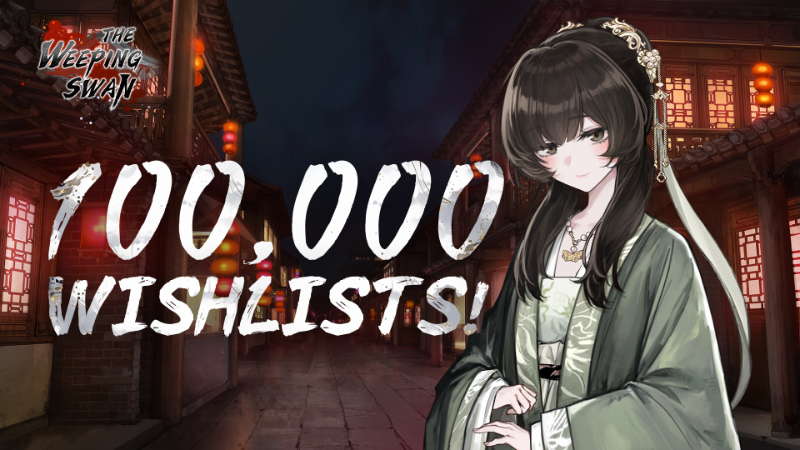
changedIt's been a while. We are happy to report that the script for The Weeping Swan: Ten Days of the City's Fall is now fully complete, and our wishlists have surpassed the 100,000 milestone. The game has now entered the voice acting and art production stages. Preparations for the Japanese voice-over are also underway. We expect all production work to be completed by March of next year. If everything goes smoothly, the game will officially launch in Early 2026.
changedA while back, I argued that our characters possess their own souls. Some in the community challenged this: "How can a fictional character have a soul?" Doesn't the author's word dictate everything? Can they truly defy their creator's intent and act autonomously? Would they ever seize the pen from the writer and forge their own destiny? Here's my perspective: Most of the time, an author has full command over their creations. But there are those rare, defining moments when control slips away. When writing within an established world, be it as a fan or licensed creator, one must honor the core essence of its characters. In my own original works, I have free reign over the fates of minor, background characters. But pivotal characters, particularly those born from real-life accounts, historical records, or classic literature, demand a different respect. To force my own will upon them would render their actions hollow and break their credibility. These are the characters that slip from an author's grasp, as if guided by a soul of their own. In truth, "Rebel Leader Li" was absent from the original outline for "The Hungry Lamb". He stormed into the narrative as I immersed myself in period music and historical texts during writing. I could never have made Li show mercy to the reviled "Swine Demon" of Luoyang, nor alter the ending history had decreed for him. The Weeping Swan: Ten Days of the City's Fall is filled with such spirits, none more so than its second heroine, Lin Pianpian. She evolved beyond my control, almost seizing the pen herself to continually reshape her own tale. The initial draft of "The Weeping Swan" featured only one leading lady: Su Lianyan, the renowned courtesan of Yangzhou. Then, during development, an unexpected thing happened: a minor NPC caught my fancy. I promoted her to a supporting role, but the more I wrote, the more she seemed to guide the narrative... She soon ascended from a tertiary character to the second lead, and finally, to a co-protagonist... By the end, Lin Pianpian had blossomed from a fleeting extra with just five lines into a second heroine boasting over five hundred, transforming the Weeping Swan into a dual-female-led narrative. ... What follows is a detailed, yet largely spoiler-free, account of how this transformation unfolded. For those who wish to go in completely blind, I invite you to revisit this dev log after the game launches in April. That said, I believe the details shared here will do little to diminish the actual experience— ... Initially, Lin Pianpian was conceived as a direct homage to the source text of Ten Days of Yangzhou, a "shameless" prostitute surviving in the fallen city's ruins. Her character was born from this very passage in Ten Days of Yangzhou: "A native of this commandery, she was heavily painted and finely adorned, resplendent in her attire. Holding court amid talk and laughter, she glowed with self-satisfaction." In this scene,
The Hungry Lamb: Traveling in the Late Ming Dynasty changes
changedIt's been a while. We are happy to report that the script for The Weeping Swan: Ten Days of the City's Fall is now fully complete, and our wishlists have surpassed the 100,000 milestone. The game has now entered the voice acting and art production stages. Preparations for the Japanese voice-over are also underway. We expect all production work to be completed by March of next year. If everything goes smoothly, the game will officially launch in Early 2026.
changedA while back, I argued that our characters possess their own souls. Some in the community challenged this: "How can a fictional character have a soul?" Doesn't the author's word dictate everything? Can they truly defy their creator's intent and act autonomously? Would they ever seize the pen from the writer and forge their own destiny? Here's my perspective: Most of the time, an author has full command over their creations. But there are those rare, defining moments when control slips away. When writing within an established world, be it as a fan or licensed creator, one must honor the core essence of its characters. In my own original works, I have free reign over the fates of minor, background characters. But pivotal characters, particularly those born from real-life accounts, historical records, or classic literature, demand a different respect. To force my own will upon them would render their actions hollow and break their credibility. These are the characters that slip from an author's grasp, as if guided by a soul of their own. In truth, "Rebel Leader Li" was absent from the original outline for "The Hungry Lamb". He stormed into the narrative as I immersed myself in period music and historical texts during writing. I could never have made Li show mercy to the reviled "Swine Demon" of Luoyang, nor alter the ending history had decreed for him. The Weeping Swan: Ten Days of the City's Fall is filled with such spirits, none more so than its second heroine, Lin Pianpian. She evolved beyond my control, almost seizing the pen herself to continually reshape her own tale. The initial draft of "The Weeping Swan" featured only one leading lady: Su Lianyan, the renowned courtesan of Yangzhou. Then, during development, an unexpected thing happened: a minor NPC caught my fancy. I promoted her to a supporting role, but the more I wrote, the more she seemed to guide the narrative... She soon ascended from a tertiary character to the second lead, and finally, to a co-protagonist... By the end, Lin Pianpian had blossomed from a fleeting extra with just five lines into a second heroine boasting over five hundred, transforming the Weeping Swan into a dual-female-led narrative. ... What follows is a detailed, yet largely spoiler-free, account of how this transformation unfolded. For those who wish to go in completely blind, I invite you to revisit this dev log after the game launches in April. That said, I believe the details shared here will do little to diminish the actual experience— ... Initially, Lin Pianpian was conceived as a direct homage to the source text of Ten Days of Yangzhou, a "shameless" prostitute surviving in the fallen city's ruins. Her character was born from this very passage in Ten Days of Yangzhou: "A native of this commandery, she was heavily painted and finely adorned, resplendent in her attire. Holding court amid talk and laughter, she glowed with self-satisfaction." In this scene,
It's been a while. We are happy to report that the script for The Weeping Swan: Ten Days of the City's Fall is now fully complete, and our wishlists have surpassed the 100,000 milestone. The game has now entered the voice acting and art production stages. Preparations for the Japanese voice-over are also underway. We expect all production work to be completed by March of next year. If everything goes smoothly, the game will officially launch in Early 2026.
Below are some notes and thoughts from our creative process during this period:
A while back, I argued that our characters possess their own souls.
Some in the community challenged this
"How can a fictional character have a soul?" Doesn't the author's word dictate everything? Can they truly defy their creator's intent and act autonomously? Would they ever seize the pen from the writer and forge their own destiny?
Here's my perspective
Most of the time, an author has full command over their creations. But there are those rare, defining moments when control slips away. When writing within an established world, be it as a fan or licensed creator, one must honor the core essence of its characters. In my own original works, I have free reign over the fates of minor, background characters. But pivotal characters, particularly those born from real-life accounts, historical records, or classic literature, demand a different respect. To force my own will upon them would render their actions hollow and break their credibility. These are the characters that slip from an author's grasp, as if guided by a soul of their own. In truth, "Rebel Leader Li" was absent from the original outline for "The Hungry Lamb". He stormed into the narrative as I immersed myself in period music and historical texts during writing. I could never have made Li show mercy to the reviled "Swine Demon" of Luoyang, nor alter the ending history had decreed for him.
The Weeping Swan
Ten Days of the City's Fall is filled with such spirits, none more so than its second heroine, Lin Pianpian. She evolved beyond my control, almost seizing the pen herself to continually reshape her own tale. The initial draft of "The Weeping Swan" featured only one leading lady: Su Lianyan, the renowned courtesan of Yangzhou. Then, during development, an unexpected thing happened: a minor NPC caught my fancy. I promoted her to a supporting role, but the more I wrote, the more she seemed to guide the narrative... She soon ascended from a tertiary character to the second lead, and finally, to a co-protagonist... By the end, Lin Pianpian had blossomed from a fleeting extra with just five lines into a second heroine boasting over five hundred, transforming the Weeping Swan into a dual-female-led narrative. ... What follows is a detailed, yet largely spoiler-free, account of how this transformation unfolded. For those who wish to go in completely blind, I invite you to revisit this dev log after the game launches in April. That said, I believe the details shared here will do little to diminish the actual experience— ... Initially, Lin Pianpian was conceived as a direct homage to the source text of Ten Days of Yangzhou, a "shameless" prostitute surviving in the fallen city's ruins. Her character was born from this very passage in Ten Days of Yangzhou: "A native of this commandery, she was heavily painted and finely adorned, resplendent in her attire. Holding court amid talk and laughter, she glowed with self-satisfaction." In this scene,