
In this update6
Full notes
Full The Guild 3 update
Read the full published notes in a cleaner layout. The original post stays linked below.
What changed
- Gameplay
- Server
- Workshop
- Balance
The Guild 3 changes
Greetings, Citizens!
In The Guild - Europa 1410, as you work towards your business ambitions and political manoeuvres, every move you make will play out in the city of your choosing. With this dev diary, we’re going to dive into the cities that you can build your legacy in.
In this dev diary, we want to introduce the first four cities in The Guild - Europa 1410, namely Kuttenberg (Kutná Hora), Nuremberg (Nürnberg), Graz, and Wrocław. The cities are set in the Holy Roman Empire, and each city has its own perks and qualities that can affect your playthrough.
Though some of the characteristics and descriptions of the cities are subject to change, we would like to share what we’ve been working on so far!
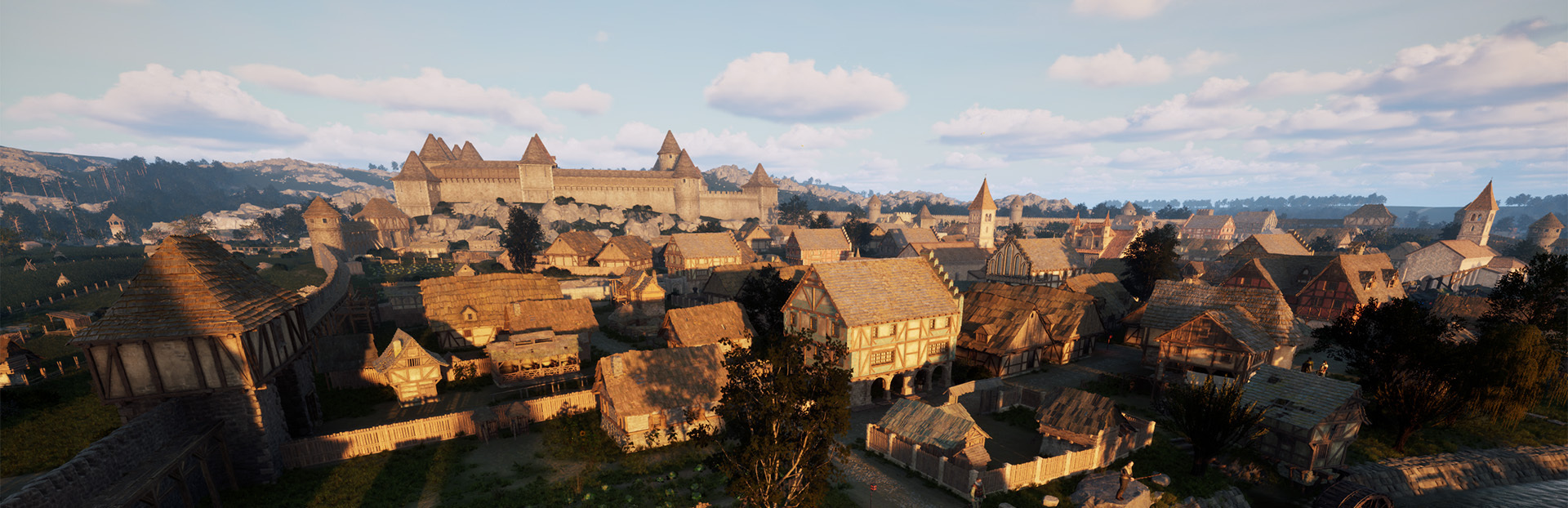
In The Guild - Europa 1410, all cities are designed to mimic their 15th-century historic counterpart. This also affects which parts of the city are home to your business buildings and where your first humble residence is built. The quality of life in each district greatly affects the safety and reputation of the area and the buildings within, which, in combination with each city’s unique layout, allows your playthrough with different professions to feel new and different each time. Some factors to keep in mind are your business’ distance from the marketplace (the closer you are to the marketplace, the easier it is for you to sell your wares), the district your business is in (some districts are better maintained than others), or even whether or not your business is within the city walls (as being outside the city walls can prove to be more risky).
Kuttenberg
In medieval times, as with The Guild - Europa 1410, money shaped politics and people, which allowed Kuttenberg to be a vital city in the Holy Roman Empire. Known as Kutná Hora in Czech, the city is set in the region of Bohemia, and is known for its rich silver vein. Kuttenberg is home to the Italian Court, a part-time royal residence, but also Bohemia’s mint and source of the famous Prague groschen - one of the most influential coins minted in Medieval Europe. Kuttenberg’s central location within Bohemia made it well-connected to the Holy Roman Empire’s trading network, while being protected from external forces outside the Empire.
Kuttenberg is a mid-sized city in The Guild - Europa 1410, with four distinct districts. Aside from the Vrchlice stream flowing just outside the city’s outskirts, you’ll also see the foundations of the renowned St. Barbara’s Church.
Nuremberg
Another important aspect in the medieval times was manufacturing capabilities - this is where the city of Nuremberg shines. Known as Nürnberg in German, this Franconian city is known to be the Holy Roman Empire’s workshop, forging high-quality goods. Much like Kuttenberg, it was also a central location in the Empire, which made it a well-connected city in terms of trade routes, whilst being protected from external forces. With the city’s safety, Nuremberg also served as a meeting place for the Imperial Diet, which brought together the Holy Roman Empire’s noble decision-makers.
Nuremberg in The Guild - Europa 1410 is a bigger city, with the Pegnitz river and its waterways winding through the city’s six districts. Due to the city’s size, its bigger population is served by two marketplaces, which means double the chance for you to make or break business deals and profit.
Graz
Since its first mention in the 12th century, Graz served as the Holy Roman Empire’s bulwark in the East, both against the Hungarians and the Ottomans. As the capital of Inner Austria and a residence city of the Habsburg monarchy, Graz gained political influence and importance throughout the 14th and 15th centuries.
Graz in The Guild - Europa 1410 is a small city, with 5 districts and the Mur river flowing through the city. The city’s castle atop a hill overlooks its inhabitants, guarding the city from external threats.
Wrocław
Wrocław is the largest city in Silesia. Being under the Bohemian crown for a long period of time, Wrocław’s location on the outskirts of the Holy Roman Empire made it ideal to serve as the Empire’s bridge to Eastern Europe. Aside from being an administrative center for the Bohemian imperial lands, the city’s location and convenient access to water as a natural resource also made it a perfect trading hub.
Wrocław is a bigger city in The Guild - Europa 1410, with five districts and many well-protected islets on the Oder river. You may choose to construct your additional business workshops on some islets, though you need to make sure that there is enough space - some islets are more coveted than others due to their physical fortifications, while the lack of such protection in some islets makes it easier for crime and its consequences to be rampant.
City Layouts: Districts and Quarters
Each city in The Guild - Europa 1410 is divided into districts, and each district is further divided into quarters. A city district can be part of the city’s outskirts at the beginning of the game, but grow to be an integral part of the city over time, with its own walls and city gates. You can greatly influence the development of a district and quarters by holding the relevant office to build city walls, new fountains, marketplaces and pillories.
Everything that happens within the city has an impact on its citizens. The quarters' reputation, crime rate, zeal or ruin and filth change how easily people living there get sick, robbed or how certain actions are perceived by other inhabitants. Everyone living and working within a quarter can improve - or worsen - the conditions for all its inhabitants, changing how easy it is for thieves to scout out and break into buildings, or how many people visit the inn instead of attending mass in the evening.
City districts and quarters add a new layer of city management to The Guild - Europa 1410 that allows you to shape the city according to your business’ needs. You can develop a quarter from a run-down neighbourhood with a high crime rate to a bustling and respected community of devout believers; or, you can try and exact your influence to do the opposite and turn a respected, wealthy quarter into a hot spot for crimes, and a hunting ground for your thieves.
If you would like to immerse yourself in the various cities available in The Guild - Europa 1410, check out our latest video featuring the ambience and environment of our different cities:
For the next dev diary, we’ll be talking about the items that will be available for you to use in The Guild - Europa 1410. Would you like to hear more about items that can cause intrigue between you and your rivals? Or would you like to know more about items that you can use to charm your way through your political endeavors?
Source
Changelog.gg summarizes and formats this update. How we read updates.