
Full notes
Full The Bard's Tale ARPG: Remastered and Resnarkled update
Read the full published notes in a cleaner layout. The original post stays linked below.
What changed
- Store
- Gameplay
- UI and audio
The Bard's Tale ARPG: Remastered and Resnarkled changes
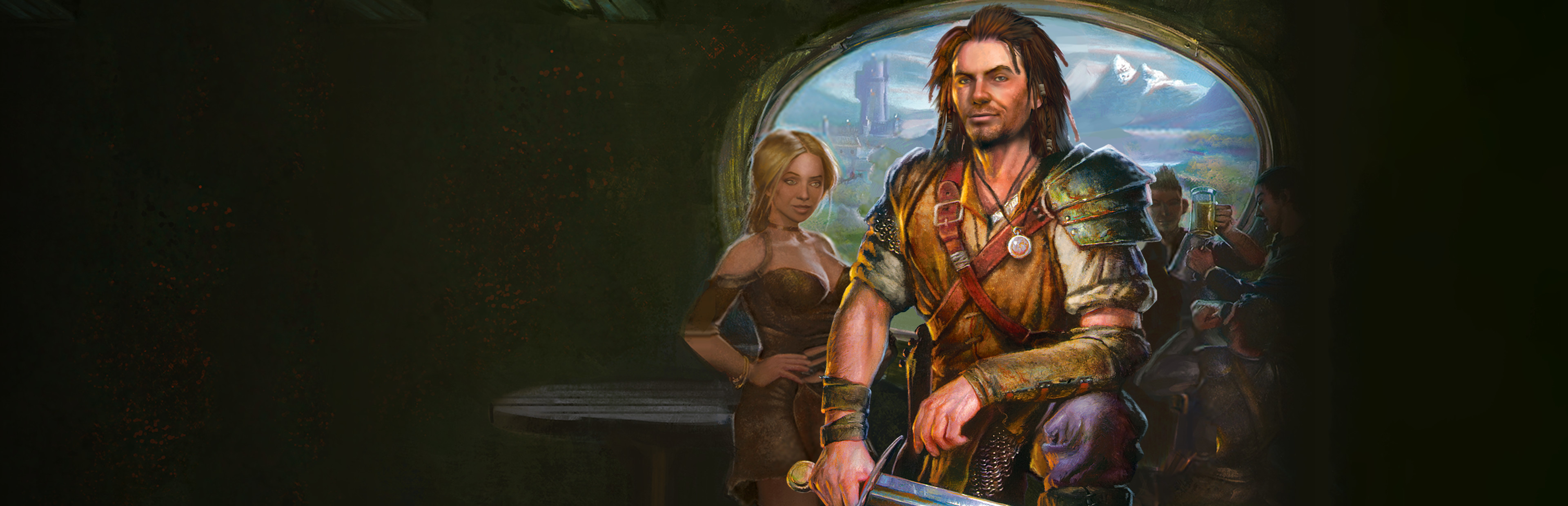
The Bard's Tale, the highly enjoyable action role-playing game that launches today at the App Store, has a long, storied history—far longer and storied-er than your average iOS game. The first Bard's Tale was a well-loved 1985 computer role-playing game , whose protagonist was, appropriately enough, a singing Bard. That alone set it apart from most other RPGs, which tend to feature protagonists in the more familiar warrior, thief, and mage molds.
In 2004, InXile Entertainment, under the guidance of one of the first game's creators Brian Fargo, resurrected The Bard's Tale as a top-down action-RPG for the Xbox and the PlayStation 2. This game was considerably different than its predecessor—in fact, it was a comedy, playing up RPG conventions as a bit of a self-aware spoof. That game has now been ported over to iOS devices entirely intact—it clocks in at 1.35 Gigabytes, one of if not the biggest iOS games ever released.<!-- %JUMP:More »% -->
The Bard's Tale's pompous, humorous narrator tells the tale of The Bard, a sardonic ne'er-do-well voiced by Cary Elwes (better known as the actor who played Wesley "As You Wish" Pirate Roberts in The Princes Bride). The Bard is a bit of a cad, and spends most of the game chasing ladies and gold rather than doing heroic things like, say, rescuing villagers and defeating evil. However, over the course of the game's lengthy story (it clocks in at 20-30 hours, just like the 2004 game), he is swept up on an epic adventure, facing off against huge monsters, deadly guardians, and of course, breakdancing zombies.
The game shared a lot of aspects with Peter Molyneux's Fable, which also came out in 2004 for the Xbox. Playing The Bard's Tale on iOS, I'm surprised at how much it feels like a Fable game. It shares Fable's dry british sensibility, and while it lacks that game's warm, original art style, it more than makes up for it by having a much more memorable protagonist.
The game itself is an isometric-view action RPG, which means that much of your time is spent exploring forests and dungeons, discovering new enemies, and thwaking them to death. Said thwacking is accomplished with a wide variety of weapons, from swords and other melee objects to bows and ranged weapons. In addition to standard weaponry, The Bard can fall back on his unique skill—singing songs.
Throughout the game, you'll learn all manner of songs that allow conjuration of enemies to fight alongside you. Between the close and ranged combat and the wide variety of summons (though I haven't unlocked nearly all of them), combat can be tackled in a lot of different ways. You'll also do a fair amount of simple conversation-making, which is handled by choosing either a "snarky" or "nice" button and having the Bard react accordingly. Decisions made throughout the game have repercussions (often unexpected or humorously illogical ones), and every person you please or piss off will most likely come back to haunt or reward you down the road.
The game's controls are a touch finicky, as is probably to be expected with any iOS port of a controller-based game (I've been playing it on an iPad2). Fortunately, it's not too annoying—navigation is handled via a single on-screen joystick, and the top-down view means that you won't have to move the camera around too much. Which is good, because the two-finger method for camera rotation is awkward.
But
Source
Changelog.gg summarizes and formats this update. How we read updates.