What changed
0 fixes2 additions3 changes0 removals
addedIn the early days of video gaming, when titles like Doom captivated players with their groundbreaking 3D environments and fast-paced action, key-door puzzles were a fundamental method of structuring gameplay. These puzzles required players to explore the game's environment in search of keys that would unlock doors, gating progress and adding a layer of exploration and problem-solving to the experience. The simplicity of the key-door mechanic belied its effectiveness in teaching players the rules of the game world, encouraging thorough exploration, and instilling a sense of achievement upon locating the necessary key.
changedAs video games evolved, so too did the complexity of the obstacles they presented. Developers began to craft puzzles that incorporated not just physical keys and locked doors but a variety of mechanisms, narrative clues, and environmental interactions. These puzzles demanded more from players than mere exploration, requiring logical reasoning, pattern recognition, and even teamwork in multiplayer settings. Games like the Legend of Zelda series and the Resident Evil franchise exemplified this trend, integrating puzzles as a core element of gameplay that challenged players' intellect as much as their reflexes.
addedModern game design has taken the concept of the obstacle to new heights, often eschewing physical keys and locked doors for obstacles that are more deeply woven into the game's narrative and world. Puzzles may now involve manipulating the environment, solving narrative conundrums, or interacting with characters in ways that unlock new paths forward. This evolution reflects a shift towards more immersive, story-driven gameplay, where obstacles are not just barriers to overcome but opportunities for deeper engagement with the game's world.
changedThe fragment "Obstacle" invites players to reflect on this progression from the simple key-door puzzles of yesteryear to the complex, multifaceted challenges of today's games. It serves as a microcosm of the journey of video game design, a reminder of the roots of gaming challenges, and a prompt to appreciate the depth and diversity of modern gameplay. By presenting players with the simplest of puzzles, "Obstacle" echoes the past while inviting contemplation on how far video gaming has come in creating engaging, thought-provoking experiences.
changedFrom the corridors of Doom to the intricate worlds of contemporary titles, the evolution of the key-door puzzle encapsulates the broader trajectory of video game development. "Obstacle" stands as both homage and challenge, a nod to the simplicity of early gaming and a testament to the endless creativity of game designers in crafting engaging puzzles.
The 52 Fragments changes
addedIn the early days of video gaming, when titles like Doom captivated players with their groundbreaking 3D environments and fast-paced action, key-door puzzles were a fundamental method of structuring gameplay. These puzzles required players to explore the game's environment in search of keys that would unlock doors, gating progress and adding a layer of exploration and problem-solving to the experience. The simplicity of the key-door mechanic belied its effectiveness in teaching players the rules of the game world, encouraging thorough exploration, and instilling a sense of achievement upon locating the necessary key.
changedAs video games evolved, so too did the complexity of the obstacles they presented. Developers began to craft puzzles that incorporated not just physical keys and locked doors but a variety of mechanisms, narrative clues, and environmental interactions. These puzzles demanded more from players than mere exploration, requiring logical reasoning, pattern recognition, and even teamwork in multiplayer settings. Games like the Legend of Zelda series and the Resident Evil franchise exemplified this trend, integrating puzzles as a core element of gameplay that challenged players' intellect as much as their reflexes.
addedModern game design has taken the concept of the obstacle to new heights, often eschewing physical keys and locked doors for obstacles that are more deeply woven into the game's narrative and world. Puzzles may now involve manipulating the environment, solving narrative conundrums, or interacting with characters in ways that unlock new paths forward. This evolution reflects a shift towards more immersive, story-driven gameplay, where obstacles are not just barriers to overcome but opportunities for deeper engagement with the game's world.
changedThe fragment "Obstacle" invites players to reflect on this progression from the simple key-door puzzles of yesteryear to the complex, multifaceted challenges of today's games. It serves as a microcosm of the journey of video game design, a reminder of the roots of gaming challenges, and a prompt to appreciate the depth and diversity of modern gameplay. By presenting players with the simplest of puzzles, "Obstacle" echoes the past while inviting contemplation on how far video gaming has come in creating engaging, thought-provoking experiences.
changedFrom the corridors of Doom to the intricate worlds of contemporary titles, the evolution of the key-door puzzle encapsulates the broader trajectory of video game development. "Obstacle" stands as both homage and challenge, a nod to the simplicity of early gaming and a testament to the endless creativity of game designers in crafting engaging puzzles.
In the early days of video gaming, when titles like Doom captivated players with their groundbreaking 3D environments and fast-paced action, key-door puzzles were a fundamental method of structuring gameplay. These puzzles required players to explore the game's environment in search of keys that would unlock doors, gating progress and adding a layer of exploration and problem-solving to the experience. The simplicity of the key-door mechanic belied its effectiveness in teaching players the rules of the game world, encouraging thorough exploration, and instilling a sense of achievement upon locating the necessary key.
As video games evolved, so too did the complexity of the obstacles they presented. Developers began to craft puzzles that incorporated not just physical keys and locked doors but a variety of mechanisms, narrative clues, and environmental interactions. These puzzles demanded more from players than mere exploration, requiring logical reasoning, pattern recognition, and even teamwork in multiplayer settings. Games like the Legend of Zelda series and the Resident Evil franchise exemplified this trend, integrating puzzles as a core element of gameplay that challenged players' intellect as much as their reflexes.
Modern game design has taken the concept of the obstacle to new heights, often eschewing physical keys and locked doors for obstacles that are more deeply woven into the game's narrative and world. Puzzles may now involve manipulating the environment, solving narrative conundrums, or interacting with characters in ways that unlock new paths forward. This evolution reflects a shift towards more immersive, story-driven gameplay, where obstacles are not just barriers to overcome but opportunities for deeper engagement with the game's world.
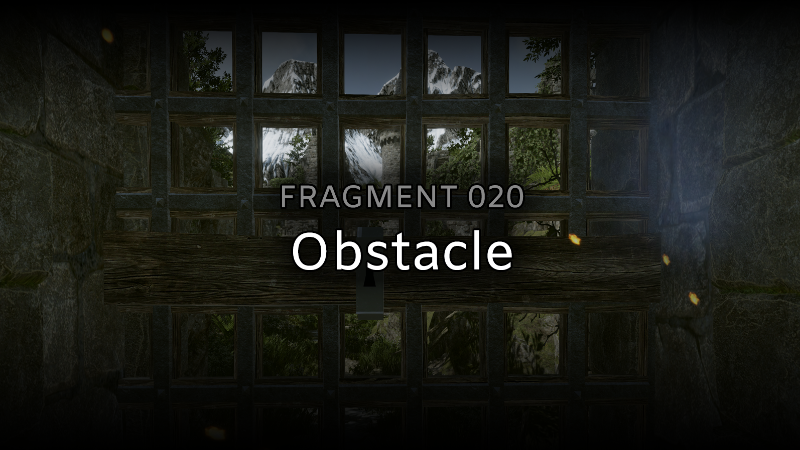
The fragment "Obstacle" invites players to reflect on this progression from the simple key-door puzzles of yesteryear to the complex, multifaceted challenges of today's games. It serves as a microcosm of the journey of video game design, a reminder of the roots of gaming challenges, and a prompt to appreciate the depth and diversity of modern gameplay. By presenting players with the simplest of puzzles, "Obstacle" echoes the past while inviting contemplation on how far video gaming has come in creating engaging, thought-provoking experiences.
From the corridors of Doom to the intricate worlds of contemporary titles, the evolution of the key-door puzzle encapsulates the broader trajectory of video game development. "Obstacle" stands as both homage and challenge, a nod to the simplicity of early gaming and a testament to the endless creativity of game designers in crafting engaging puzzles.