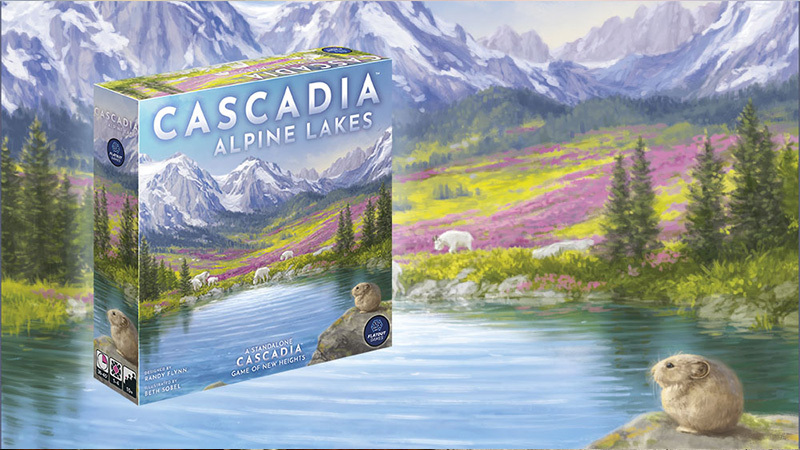
Cascadia: Alpine Lakes – an Alpine Chapter of a Beloved Puzzle Game
A New Chapter in the World of Cascadia Cascadia: Alpine Lakes is a standalone follow-up to the award-winning tile-laying puzzle game Cascadia from Flatout Games.
In this update4
Full notes
Full Tabletopia update
Read the full published notes in a cleaner layout. The original post stays linked below.
What changed
0 fixes10 additions1 change0 removals
Maps
Gameplay
Store
Events
addedA New Chapter in the World of CascadiaThe most notable change is the introduction of multi-layered gameplay. New habitat tiles come in a double-hex format and can now be stacked on top of existing tiles, introducing the concept of elevation. Alpine terrain types and unique lake tiles are also added, and their scoring depends on both level and surrounding elements.
addedA New Chapter in the World of CascadiaThe game includes five new types of wildlife, each inspired by high-altitude flora and fauna, along with a set of new scoring cards that account not only for habitat types and animal groupings, but also for elevation. The turn structure remains familiar: players take turns selecting a tile-and-token pair and placing them on their board — but now, placement requires considering verticality and long-term elevation planning for both animals and lakes.
addedNew Priorities: Height vs ConnectivityThe elevation mechanic adds a new layer of strategic decision-making. In the original game, the focus was on building wide, connected areas and optimizing animal patterns. In Alpine Lakes, height becomes a third variable. Animals placed at higher elevations and lakes that are fully surrounded score additional points. This forces players to decide between spreading out horizontally or investing in stacked formations.
addedNew Priorities: Height vs ConnectivityThe new double-hex tiles speed up board coverage but also impose tighter spatial constraints, as each tile affects two hexes at once. This emphasizes long-term planning: is it better to grab a few quick points now, or to build a plateau that will pay off later with elevated animals and surrounded lakes? The result is a more tactically dense experience, while the game still maintains its core simplicity — keeping it accessible to new players.
addedA View From AboveAlpine Lakes feels like a natural and thoughtful evolution of the original concept. It adds meaningful gameplay changes rather than cosmetic extras: height and lakes reshape the structure of decisions and increase the number of viable development paths.
addedA View From AboveVisual design and component quality remain strong points — in line with the series’ standards. For players looking for greater variability and new tactical challenges, this expansion significantly deepens the puzzle without overcomplicating its foundation.
Tabletopia changes
addedThe most notable change is the introduction of multi-layered gameplay. New habitat tiles come in a double-hex format and can now be stacked on top of existing tiles, introducing the concept of elevation. Alpine terrain types and unique lake tiles are also added, and their scoring depends on both level and surrounding elements.
addedThe game includes five new types of wildlife, each inspired by high-altitude flora and fauna, along with a set of new scoring cards that account not only for habitat types and animal groupings, but also for elevation. The turn structure remains familiar: players take turns selecting a tile-and-token pair and placing them on their board — but now, placement requires considering verticality and long-term elevation planning for both animals and lakes.
addedThe elevation mechanic adds a new layer of strategic decision-making. In the original game, the focus was on building wide, connected areas and optimizing animal patterns. In Alpine Lakes, height becomes a third variable. Animals placed at higher elevations and lakes that are fully surrounded score additional points. This forces players to decide between spreading out horizontally or investing in stacked formations.
addedThe new double-hex tiles speed up board coverage but also impose tighter spatial constraints, as each tile affects two hexes at once. This emphasizes long-term planning: is it better to grab a few quick points now, or to build a plateau that will pay off later with elevated animals and surrounded lakes? The result is a more tactically dense experience, while the game still maintains its core simplicity — keeping it accessible to new players.
addedAlpine Lakes feels like a natural and thoughtful evolution of the original concept. It adds meaningful gameplay changes rather than cosmetic extras: height and lakes reshape the structure of decisions and increase the number of viable development paths.
A New Chapter in the World of Cascadia
Cascadia: Alpine Lakes is a standalone follow-up to the award-winning tile-laying puzzle game Cascadia from Flatout Games. This time, the setting shifts upward — into the mountainous landscapes of the Pacific Northwest. While it retains the core principle of selecting and placing a pair of habitat tile and wildlife token, this expansion introduces several key innovations.
The most notable change is the introduction of multi-layered gameplay. New habitat tiles come in a double-hex format and can now be stacked on top of existing tiles, introducing the concept of elevation. Alpine terrain types and unique lake tiles are also added, and their scoring depends on both level and surrounding elements.
The game includes five new types of wildlife, each inspired by high-altitude flora and fauna, along with a set of new scoring cards that account not only for habitat types and animal groupings, but also for elevation. The turn structure remains familiar: players take turns selecting a tile-and-token pair and placing them on their board — but now, placement requires considering verticality and long-term elevation planning for both animals and lakes.
New Priorities: Height vs Connectivity
The elevation mechanic adds a new layer of strategic decision-making. In the original game, the focus was on building wide, connected areas and optimizing animal patterns. In Alpine Lakes, height becomes a third variable. Animals placed at higher elevations and lakes that are fully surrounded score additional points. This forces players to decide between spreading out horizontally or investing in stacked formations.
The new double-hex tiles speed up board coverage but also impose tighter spatial constraints, as each tile affects two hexes at once. This emphasizes long-term planning: is it better to grab a few quick points now, or to build a plateau that will pay off later with elevated animals and surrounded lakes? The result is a more tactically dense experience, while the game still maintains its core simplicity — keeping it accessible to new players.
A View From Above
Alpine Lakes feels like a natural and thoughtful evolution of the original concept. It adds meaningful gameplay changes rather than cosmetic extras: height and lakes reshape the structure of decisions and increase the number of viable development paths.
Visual design and component quality remain strong points — in line with the series’ standards. For players looking for greater variability and new tactical challenges, this expansion significantly deepens the puzzle without overcomplicating its foundation.
An Invitation to the Mountains: Is There Room for You?
Who is this new chapter of Cascadia for?
Collectors interested in standalone variations on beloved mechanics.
Aesthetic-focused players, who will appreciate the quality artwork, the alpine lakes, and the subtle transitions in terrain.
Family gamers looking to add a layer of strategy without overwhelming the ruleset.
Experienced Cascadia players, who may now need to rethink their usual approach to building ideal habitats.