
Full notes
Full Symphonia update
Read the full published notes in a cleaner layout. The original post stays linked below.
What changed
- Gameplay
- UI and audio
- Store
Symphonia changes
Musical greetings, dear friends!
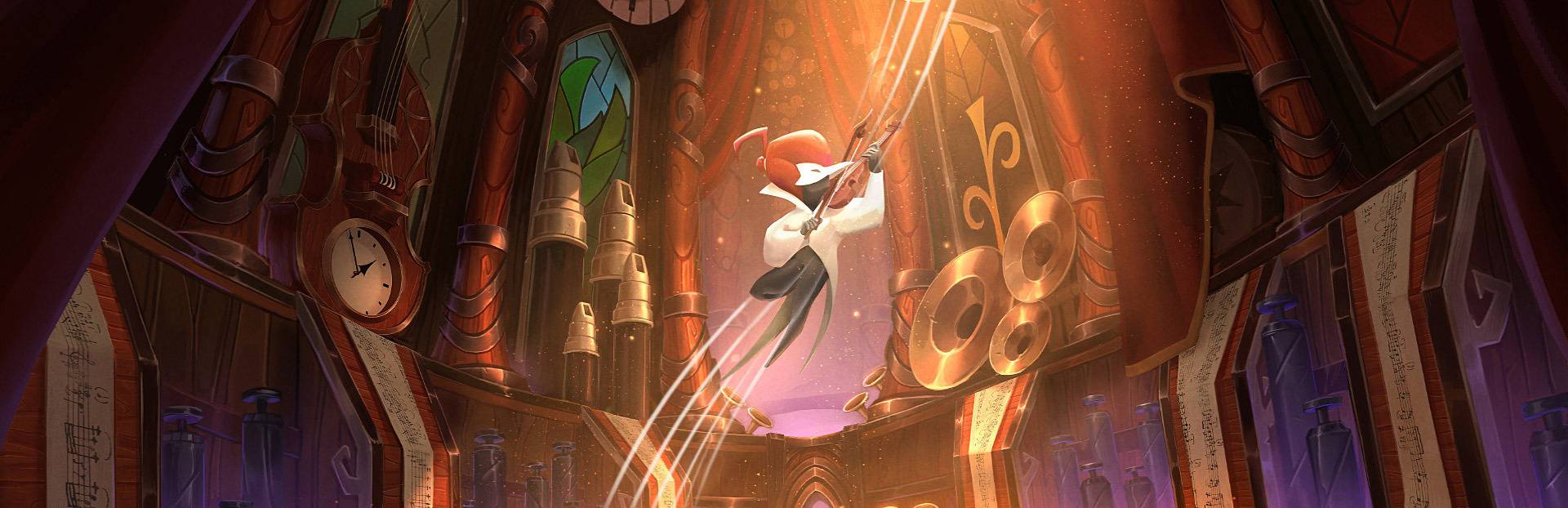
For today’s making-of, let’s talk about the music of Symphonia, and how pivotal it came to be. As you can imagine, making a game about symphonic music opened a lot of doors creatively speaking, but it also created heavy constraints.
Our first important constraint was, to be using the instruments of the symphonic orchestra throughout the OST of the game. Our composers Olivier and Alexandre opted for a style inspired by the romantic period of classical music, which was a perfect orientation to use the symphonic instruments. Together, they learnt how to compose by using those instruments, as they had no previous experience in writing classical tunes. Working on the romantic period of classical music also helped us to convey a lot of emotion and narration into our score, as it is one of the highlights of this period’s tunes (think Saint-Saens’ “Danse Macabre”, as an example!).
We also decided that some areas in the game would be heavily revolving around some instruments rather than others, which is an idea that affected both gameplay, art and music. As an example, the Woodwinds glasshouse, partially playable in the demo, is linked to the Woodwinds instruments of the orchestra, like the flutes, piccolo, bassoon…That is why we use wind as a gameplay element in this area, and why those instruments are predominant in this area’s tracks.
This logic has been followed throughout the game, with some notable exceptions! We also have evolutive tunes that come back in different variations the more you progress in the game and gather musicians, for instance. A good rule of thumb was to always use the correct instruments related to the place linked to the music, and taking into account the narrative progression in the game up to this point.
Our second important constraint was to compose tunes that would be recorded in real life, played by real musicians in a real orchestra! This meant composing music that would be actually playable by human hands (and mouths), but also taking into account the extra time and work for creating music sheets, booking the musicians, mixing the audio and all sorts of tasks related to a music recording. This is a lot for a first game as a studio!
We decided to contact Scoring Productions, a French company specialized in music recording, to act as our executive producer for our recording project. This new collaboration meant that we could mostly focus on the composition and creative aspect of the recording, while Scoring Productions took care of all the logistic, technical and administrative aspects of the recording. Together, we made sure that both the composition and its recording respected all our constraints and were up to par with the quality standard we hoped for Symphonia.
So, these were two of the main aspects of what working on the music of Symphonia was like. But as you can see, there are many layers when working on the music in a game like Symphonia, and many people to thank for making that adventure possible. We truly hope our hard work and sincerity can be heard in the OST, and that you will enjoy your time in the symphonic realm!
Release is only a few weeks away now… Until then take care, and see you soon for the next update! Sunny Peak
Source
Changelog.gg summarizes and formats this update. How we read updates.