
In this update6
Full notes
Full Stars Reach update
Read the full published notes in a cleaner layout. The original post stays linked below.
What changed
- UI and audio
- Store
Stars Reach changes
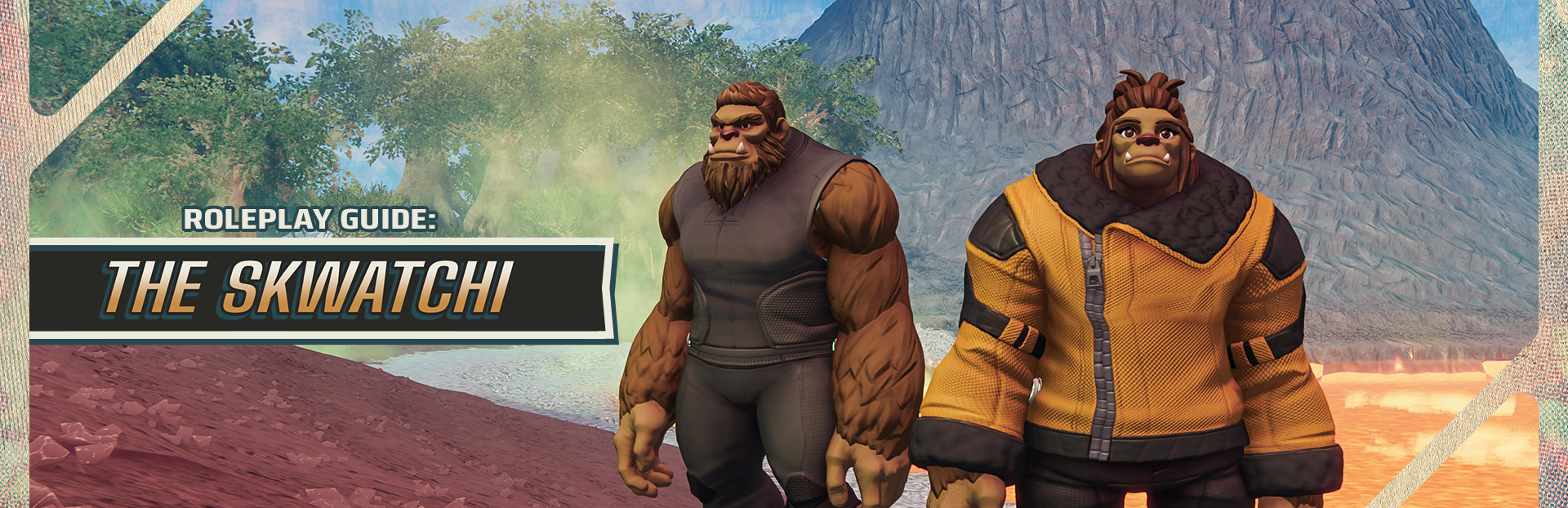
SKWATCHI PHYSICAL DESCRIPTION
Skwatchi are the “big friend shaped like a bear-shaped boulder” species: big, hairy, and built like they could carry a crate of ore up a mountain without breaking stride. They’re generally the tallest and bulkiest of the garden species, with a vibe that reads slow-and-strong rather than quick-and-slick. In play, sell them as heavy-footed (in a good way), warm-blooded, and physically confident—someone who looks like winter is just a minor inconvenience.
HOME PLANET, HISTORY, AND CULTURE
Skwatchi come from Chedderath, a mountainous, glaciated world with brutal weather and long distances between people. That environment hard-baked their whole social philosophy: small settlements survive only if everyone stays connected, so Skwatchi culture prizes “beneficial interactions”—checking on neighbors, doing favors, making sure nobody gets iced out socially or literally. A classic Skwatchi greeting tradition is “orchee martchar” (“making the rounds”), which comes from the real habit of walking miles after storms to see who needs food, help, or repairs. Offworld Skwatchi often leave because there’s “not a lot to do” back home beyond endurance living—so they lean hard into opportunity, adventure, and community-building, while still acting like cold, danger, and hardship are just… normal.
LANGUAGE: QHEZMAR, AND HOW TO “SOUND LIKE ONE”
Skwatchi speak Qhezmar. You don’t need grammar to RP it—just adopt the feel: talk slow, low, and sturdy, like you’re conserving heat and meaning. Qhezmar likes hard consonants and short, weighty chunks; it’s the kind of language where words feel like they were stacked like firewood. If you want the “accent filter” effect in plain English: drop “the” sometimes (“Got problem” instead of “I’ve got the problem”), and let “th” flatten toward “t” now and then (“dis”/“dat” vibes). Sprinkle in a couple Qhezmar anchors (“Zhar-esh…” as an opener, “Truk…” for leaving/going) and you’ll read as Skwatchi immediately.
NAMING YOUR AVATAR
Skwatchi names are meant to feel mountain-carved: short, tough, and a little crunchy. The easy template is Given + Clan, where the given name is usually 2–3 syllables and the clan name often ends in -ur meaning “people of” (think “people of the mountain,” “people of the pass,” etc.). So you get names that feel like Kragn Fjallur: a compact personal name followed by a clan tag that sounds like a place or lineage. If you’re converting an existing name to feel more Qhezmar-ish, keep it simple: bias toward a/o/u vowels, and steer toward k/g/kr/gr/tr/sh/gh type sounds so it doesn’t come out soft or sing-song.
ROLEPLAY TIPS FOR PLAYING A SKWATCHI
Be the social glue. You notice who’s alone, who’s struggling, who hasn’t spoken, who needs a hand.
“Making the rounds” is a whole personality. Drop in check-ins as greetings: you’re here to see how people are holding up.
Practical kindness first. You don’t emote sympathy; you deliver supplies, fix things, guide people home.
Slow to anger, scary when pushed. Default calm. If you snap, it’s memorable.
Comfort culture. Tea, warm food, thick clothes, good boots, and “we’ll get through it” energy.
Community rules matter. Fairness isn’t abstract—it’s survival math.
Use distance/weather metaphors. Trails, snow, storms, thaw, shelter, the long walk.
SKWATCHI PHRASEBOOK
Hello / Hey: Zhar-esh ik-an
Goodbye: Truk-esh dor-an
Yes: Ha
No: Nakh
“Please” (polite marker): dor-uk
Thanks / appreciation (polite): Kalth-an du-uk
I don’t know: Ik-an nirath-an-nakh
I mean no harm: Ik-an drak-an-nakh moran-im
I need help: Ik-an zhar-an aruk-uk
Follow me: Truk-an ik-esh
Wait here: Quah-an kel-ar
It is dangerous here: Krag moran kel-ar
Stop: Zim!
Run: Truk-an aruk!
I want to trade: Ik-an slam-an
“Making the rounds” (signature Skwatchi greeting): Orchee martchar
Disgust / annoyance (“cheese turds!”): Torgle borr!
“Something is wrong” (good all-purpose alarm): Ksu-an shunar
Source
Changelog.gg summarizes and formats this update. How we read updates.