What changed
0 fixes0 additions4 changes0 removals
- Balance
- UI and audio
- Gameplay
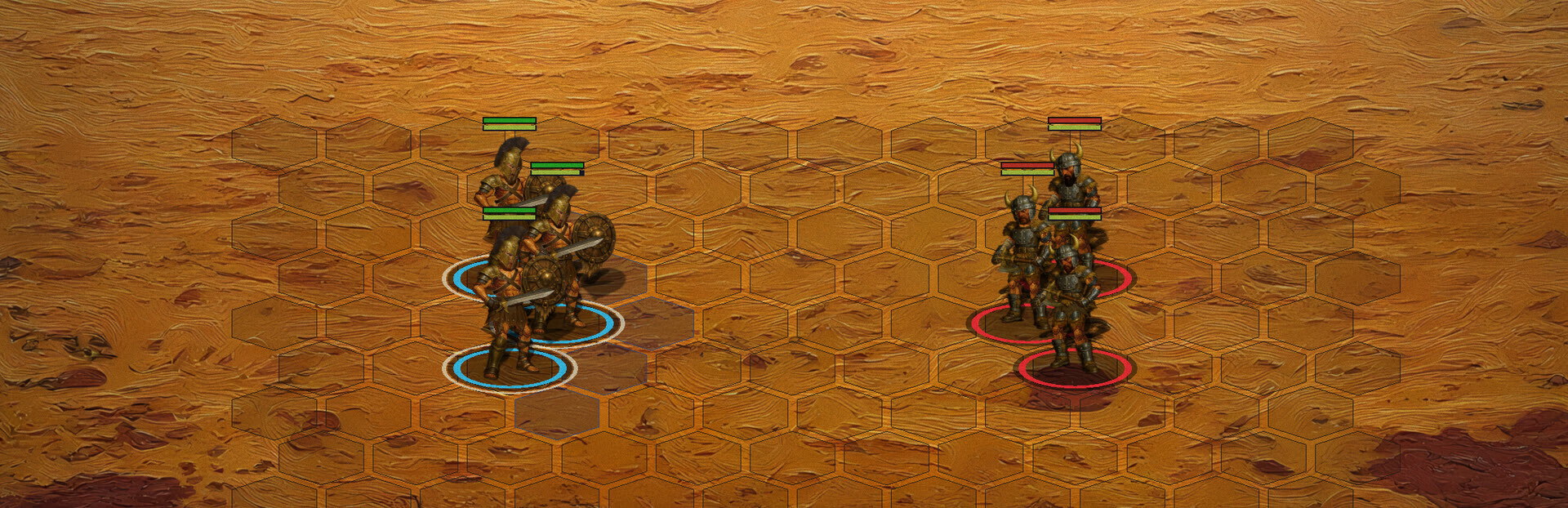
changedI'm porting XCOM's core into melee combat. Here's why.What always kept me in XCOM wasn't the aliens or the hit chances. It was one question, every single turn: "This tile gives me a perfect shot. But the cover is bad and I'm flanked. Where do I stand?" And there usually is no perfect tile. You pick the least bad one, knowingly accept a specific risk, and then build a turn order around it: this one moves first and eats the overwatch, that one flanks second, and the grenade stays in the pocket in case it all goes sideways. You don't just take a position. You place a bet and ride it for several turns, and then you pay up. That, to me, is XCOM's core. Not the squad, not turn-based. A chain of compromises you answer for later. Now look at turn-based melee games. That question is almost always dead, replaced by three things:
changedI'm porting XCOM's core into melee combat. Here's why.All three share one root. The interest in a fight is assigned in advance: the developer decides what will be curious about this particular scrap and hands it to the player. Here's a boss with a gimmick, here's a scripted ambush, here's a check on the build you assembled. Great games are made this way, no argument. But the approach has a price: every interesting fight has to be handcrafted. So those fights are rarely worth replaying for their own sake, and something else has to hold the player: the plot, the campaign, squad management, the economy. That works beautifully, no question. It just turns the fight into a pretext rather than the point. XCOM works the other way around. Its maps are built from templates too, but what makes a fight interesting isn't a writer, it's circumstance: how the cover fell, where the patrol wandered off to, who you winged two turns ago and therefore can't hold the flank now. The interest isn't assigned, it emerges. So you can have as many fights as you like and they never collapse into the same fight over and over. I lean towards the second path. Not because the first is bad, but because there tension comes out of the rules instead of being served on schedule, and it scales to any number of fights. Abilities, stats and economy don't go anywhere in that setup, they just stop being the main course and become a good side dish. That's the question I took into melee. I didn't want a set of prepared situations, I wanted combat you can safely randomize: squad composition, gear, terrain, headcount on both sides. So that every such roll tells its own story. For that, the rules have to be dense enough that position still means something even when everyone is already shoulder to shoulder. Here's how I translate the language of cover into the language of melee:
changedI'm porting XCOM's core into melee combat. Here's why.It reads like a simple rename, but this is exactly where melee usually breaks. The moment everyone closes in, distance stops being currency: position collapses into "who do we focus", "in what order do we swing" and "which ability do we spend". To make it work again, adjacency itself has to become a mechanic. What follows is what grew out of that. Steam post image Same fighter. The only difference is how many of you stand together. Steam post image A shove isn't damage. A shove is position. Sometimes it's a verdict. Steam post image
changedI'm porting XCOM's core into melee combat. Here's why.And when a formation picks up speed, it becomes a battering ram. Out of all this comes a rule that sinks in after a couple of fights. Walking apart is dangerous. A loner gets surrounded, crushed by numbers and finished off, and no stat block saves him: that's exactly what the first GIF is about. I think this is a case where the mechanic simply matches what everyone already knows. Nobody, however good they are, wants to end up alone against three: ask any coach what to do against a crowd and the answer is "run". And a knight in full plate usually wasn't pierced at all, he was dragged to the ground by a crowd and finished with a dagger through a gap in the armour. Numbers decide a melee not because a designer said so, but because that's how it goes. But huddling into a crowd is just as dangerous. A shapeless clump is a row of dominoes: one shove into the front rank and everyone goes down, and then you get cut while you're lying there. Standing in a crowd and standing in formation are very different things. The third option works. Build a formation where fighters cover each other's flanks, and place it with an eye on the arena. A pillar at your back turns an ordinary shove into a knockdown, so hugging one is dangerous, while driving the enemy into one is a gift. A formation isn't an animation, it's a weapon: a charging wedge cracks a line open, a wall holds the front and refuses to be pulled apart. So the XCOM question just changes its number here. Not "where do I stand", but "where do we stand". This layer keeps growing: formation TYPE will be defined by its composition. A wall of spearmen meets a charge very differently from a wall of shields, and gets countered differently too. That's the next big chunk; I'll show it when it lands. Animations are placeholder. I care about the approach more than polish right now. If you know a game where positional core in melee is a SYSTEM rather than a couple of features, link it, genuinely curious. Devlog(in Russian): t.me/SonsOfTheArena
Sons of the Arena: Pollice Verso changes
changedWhat always kept me in XCOM wasn't the aliens or the hit chances. It was one question, every single turn: "This tile gives me a perfect shot. But the cover is bad and I'm flanked. Where do I stand?" And there usually is no perfect tile. You pick the least bad one, knowingly accept a specific risk, and then build a turn order around it: this one moves first and eats the overwatch, that one flanks second, and the grenade stays in the pocket in case it all goes sideways. You don't just take a position. You place a bet and ride it for several turns, and then you pay up. That, to me, is XCOM's core. Not the squad, not turn-based. A chain of compromises you answer for later. Now look at turn-based melee games. That question is almost always dead, replaced by three things:
changedAll three share one root. The interest in a fight is assigned in advance: the developer decides what will be curious about this particular scrap and hands it to the player. Here's a boss with a gimmick, here's a scripted ambush, here's a check on the build you assembled. Great games are made this way, no argument. But the approach has a price: every interesting fight has to be handcrafted. So those fights are rarely worth replaying for their own sake, and something else has to hold the player: the plot, the campaign, squad management, the economy. That works beautifully, no question. It just turns the fight into a pretext rather than the point. XCOM works the other way around. Its maps are built from templates too, but what makes a fight interesting isn't a writer, it's circumstance: how the cover fell, where the patrol wandered off to, who you winged two turns ago and therefore can't hold the flank now. The interest isn't assigned, it emerges. So you can have as many fights as you like and they never collapse into the same fight over and over. I lean towards the second path. Not because the first is bad, but because there tension comes out of the rules instead of being served on schedule, and it scales to any number of fights. Abilities, stats and economy don't go anywhere in that setup, they just stop being the main course and become a good side dish. That's the question I took into melee. I didn't want a set of prepared situations, I wanted combat you can safely randomize: squad composition, gear, terrain, headcount on both sides. So that every such roll tells its own story. For that, the rules have to be dense enough that position still means something even when everyone is already shoulder to shoulder. Here's how I translate the language of cover into the language of melee:
changedIt reads like a simple rename, but this is exactly where melee usually breaks. The moment everyone closes in, distance stops being currency: position collapses into "who do we focus", "in what order do we swing" and "which ability do we spend". To make it work again, adjacency itself has to become a mechanic. What follows is what grew out of that. Steam post image Same fighter. The only difference is how many of you stand together. Steam post image A shove isn't damage. A shove is position. Sometimes it's a verdict. Steam post image
changedAnd when a formation picks up speed, it becomes a battering ram. Out of all this comes a rule that sinks in after a couple of fights. Walking apart is dangerous. A loner gets surrounded, crushed by numbers and finished off, and no stat block saves him: that's exactly what the first GIF is about. I think this is a case where the mechanic simply matches what everyone already knows. Nobody, however good they are, wants to end up alone against three: ask any coach what to do against a crowd and the answer is "run". And a knight in full plate usually wasn't pierced at all, he was dragged to the ground by a crowd and finished with a dagger through a gap in the armour. Numbers decide a melee not because a designer said so, but because that's how it goes. But huddling into a crowd is just as dangerous. A shapeless clump is a row of dominoes: one shove into the front rank and everyone goes down, and then you get cut while you're lying there. Standing in a crowd and standing in formation are very different things. The third option works. Build a formation where fighters cover each other's flanks, and place it with an eye on the arena. A pillar at your back turns an ordinary shove into a knockdown, so hugging one is dangerous, while driving the enemy into one is a gift. A formation isn't an animation, it's a weapon: a charging wedge cracks a line open, a wall holds the front and refuses to be pulled apart. So the XCOM question just changes its number here. Not "where do I stand", but "where do we stand". This layer keeps growing: formation TYPE will be defined by its composition. A wall of spearmen meets a charge very differently from a wall of shields, and gets countered differently too. That's the next big chunk; I'll show it when it lands. Animations are placeholder. I care about the approach more than polish right now. If you know a game where positional core in melee is a SYSTEM rather than a couple of features, link it, genuinely curious. Devlog(in Russian): t.me/SonsOfTheArena
What always kept me in XCOM wasn't the aliens or the hit chances. It was one question, every single turn: "This tile gives me a perfect shot. But the cover is bad and I'm flanked. Where do I stand?" And there usually is no perfect tile. You pick the least bad one, knowingly accept a specific risk, and then build a turn order around it: this one moves first and eats the overwatch, that one flanks second, and the grenade stays in the pocket in case it all goes sideways. You don't just take a position. You place a bet and ride it for several turns, and then you pay up. That, to me, is XCOM's core. Not the squad, not turn-based. A chain of compromises you answer for later. Now look at turn-based melee games. That question is almost always dead, replaced by three things:
Unique heroes. Tactics become abilities: this guy has an ult, that one a combo. Builds decide, not positions.
Stat checks. Units stand face to face and trade hits. Bigger numbers win. Tiles are just the distance to the enemy.
Macro layer. Earn more gold, get stronger warriors, win the fight before it starts.
All three share one root. The interest in a fight is assigned in advance: the developer decides what will be curious about this particular scrap and hands it to the player. Here's a boss with a gimmick, here's a scripted ambush, here's a check on the build you assembled. Great games are made this way, no argument. But the approach has a price: every interesting fight has to be handcrafted. So those fights are rarely worth replaying for their own sake, and something else has to hold the player: the plot, the campaign, squad management, the economy. That works beautifully, no question. It just turns the fight into a pretext rather than the point. XCOM works the other way around. Its maps are built from templates too, but what makes a fight interesting isn't a writer, it's circumstance: how the cover fell, where the patrol wandered off to, who you winged two turns ago and therefore can't hold the flank now. The interest isn't assigned, it emerges. So you can have as many fights as you like and they never collapse into the same fight over and over. I lean towards the second path. Not because the first is bad, but because there tension comes out of the rules instead of being served on schedule, and it scales to any number of fights. Abilities, stats and economy don't go anywhere in that setup, they just stop being the main course and become a good side dish. That's the question I took into melee. I didn't want a set of prepared situations, I wanted combat you can safely randomize: squad composition, gear, terrain, headcount on both sides. So that every such roll tells its own story. For that, the rules have to be dense enough that position still means something even when everyone is already shoulder to shoulder. Here's how I translate the language of cover into the language of melee:
| XCOM | Sons of the Arena |
|---|
| Half cover | Defensive stance |
| Full cover | Defense with a shield |
| Exposed to fire | Fighting 1v2+, eating heavy debuffs |
| Flanking | Getting hit where the shield can't help |
| Cost of bad position | Getting shoved: fall down, get finished |
| Advancing between covers | Moving in formation: wedge, shield wall |
It reads like a simple rename, but this is exactly where melee usually breaks. The moment everyone closes in, distance stops being currency: position collapses into "who do we focus", "in what order do we swing" and "which ability do we spend". To make it work again, adjacency itself has to become a mechanic. What follows is what grew out of that. Steam post image Same fighter. The only difference is how many of you stand together. Steam post image A shove isn't damage. A shove is position. Sometimes it's a verdict. Steam post image
You don't slip past a fighter: step into his zone and you stop. Getting through is possible, it just costs you turns. Steam post image A defensive stance is cover you carry with you. Steam post image Two men side by side are a crowd. Two men in formation are a wall. Steam post image
And when a formation picks up speed, it becomes a battering ram. Out of all this comes a rule that sinks in after a couple of fights. Walking apart is dangerous. A loner gets surrounded, crushed by numbers and finished off, and no stat block saves him: that's exactly what the first GIF is about. I think this is a case where the mechanic simply matches what everyone already knows. Nobody, however good they are, wants to end up alone against three: ask any coach what to do against a crowd and the answer is "run". And a knight in full plate usually wasn't pierced at all, he was dragged to the ground by a crowd and finished with a dagger through a gap in the armour. Numbers decide a melee not because a designer said so, but because that's how it goes. But huddling into a crowd is just as dangerous. A shapeless clump is a row of dominoes: one shove into the front rank and everyone goes down, and then you get cut while you're lying there. Standing in a crowd and standing in formation are very different things. The third option works. Build a formation where fighters cover each other's flanks, and place it with an eye on the arena. A pillar at your back turns an ordinary shove into a knockdown, so hugging one is dangerous, while driving the enemy into one is a gift. A formation isn't an animation, it's a weapon: a charging wedge cracks a line open, a wall holds the front and refuses to be pulled apart. So the XCOM question just changes its number here. Not "where do I stand", but "where do we stand". This layer keeps growing: formation TYPE will be defined by its composition. A wall of spearmen meets a charge very differently from a wall of shields, and gets countered differently too. That's the next big chunk; I'll show it when it lands. Animations are placeholder. I care about the approach more than polish right now. If you know a game where positional core in melee is a SYSTEM rather than a couple of features, link it, genuinely curious. Devlog(in Russian): t.me/SonsOfTheArena