
In this update5
Full notes
Full SkyRig update
Read the full published notes in a cleaner layout. The original post stays linked below.
What changed
- UI and audio
- Gameplay
- Store
- Performance
SkyRig changes
SkyRig: The Builder's Handbook
Hey everyone,
In our last post, we gave you a general overview of SkyRig and your mission with Thorne Industrial. Today, we're going to get into the nuts and bolts (quite literally) of one of the most crucial aspects of the game: the building system. This is where your engineering creativity comes to life, allowing you to construct the complex Rigs that will be key to your success.
Designing Your Rig: An Intuitive 3D Building System
Our aim for SkyRig's building system is to provide a unique yet intuitive 3D experience. We've focused heavily on ease of use and clear user experience (UX) to ensure that building feels natural and empowering, rather than cumbersome.
So, how does it work? You'll be attaching parts to other parts in three-dimensional space to construct your Rigs and processing factories. When you select a part from your UI menu, you enter a placement mode. In this mode, you can freely move the part around on a flat plane. To build vertically, you simply use the Q and E keys to move the part up or down a level, enabling full 3D construction.
Each part comes with a number of structural attachment points. The system is designed for flexibility: as long as any two parts are connected at at least one structural attachment point, it's considered a valid and stable placement. This allows for a great deal of freedom in how you design your structures.
The Role of Gases: A Flow of Innovation
Gaseous elements are fundamental to operations in SkyRig. You're not just collecting them; you're actively managing them within your Rigs:
Collection & Storage: You'll need to gather gases from the atmosphere and store them effectively.
Movement: Gases must be moved efficiently between different modules on your Rig.
- SynthesisA critical part of the game involves synthesising new compounds by combining different gases within your Rig.
To facilitate this, you'll be building pipes using a simple draggable tool. These pipes are essential for ensuring the smooth flow of gases throughout your intricate designs.
What exactly is a Rig?
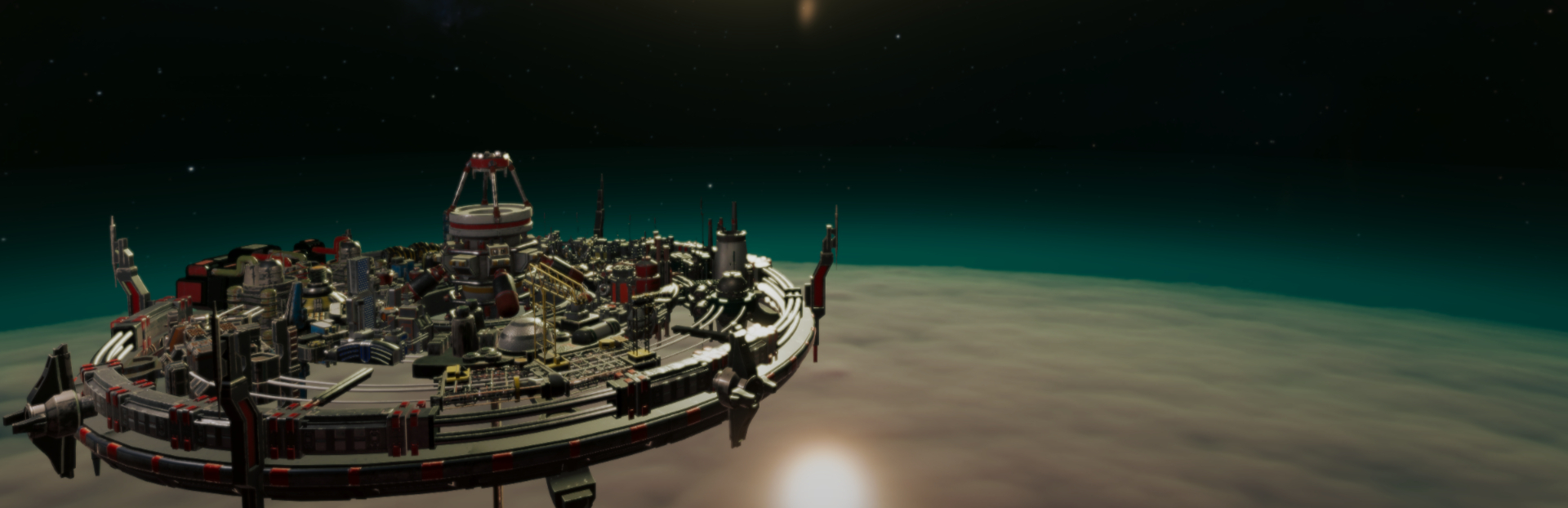
In SkyRig, a 'Rig' is your player-constructed factory, designed to operate in any sector you can access. The building process begins by selecting your chosen sector and entering 'build mode'. At the absolute heart of every Rig is the Rig Core. This central component comes with a balloon attached by default and provides multiple structural attachment points, giving you a solid foundation to expand from.
Once in Build Mode, you'll have access to a comprehensive menu detailing all available parts, including their associated information which is crucial for making informed design choices. As mentioned, parts connect at these attachment points, allowing you to expand your Rig in any direction.
Purpose of Rigs
Your Rigs serve multiple vital functions within the game:
Collect Gases: They are your primary means of extracting valuable gaseous elements from the planet's atmosphere.
Descend Deeper: By configuring them correctly with appropriate modules, Rigs allow you to venture further into the atmosphere's perilous lower layers.
- Create New CompoundsThey act as your on-board laboratories and factories for synthesising new gases and compounds from collected elements.
The Building Blocks: Understanding Parts
Parts are the fundamental building blocks you'll use to create your Rigs. The combination and layout of these parts will dictate your Rig's function and efficiency. There will be a set list of parts available for you to choose from as you design.
Working Ranges and Performance
A key aspect of each part is its optimal working range for both temperature and pressure. For instance, a Heater might perform best within certain temperature and pressure parameters.
- Impact on EfficiencyOperating outside a part's optimal range won't necessarily lead to immediate failure. Instead, its performance will degrade. This could mean reduced output, slower processing times, or increased resource consumption. This mechanic encourages thoughtful design for ideal conditions without overly punishing slight deviations, ensuring players must consider environmental factors when building.
While most parts are free to build, some specialty parts will require specific components that are only unlocked upon completing missions. For example, new Rig Cores might require Batteries to be available.
A Glimpse at Some Key Parts:
- Flotation ModulesEssential for lift, keeping your Rigs airborne. Each balloon module also expands your available build space.
Gas Intakes: Your primary tools for extracting elements directly from the atmosphere.
Power Sources: Generate the electricity needed to run most of your Rig's functions.
Heat Shields: Crucial for protecting your Rigs against the extreme temperatures found as you descend deeper.
Coolers: Used to cool down gases for processing.
Heaters: Used to heat gases to specific temperatures for reactions.
Pressurisers: Put gases under pressure, essential for many synthesising processes.
- FiltersAllow you to separate one specific gas type into a new pipe, while the rest continue along the original flow.
Rig Core: The central control component of your Rig.
Generators: Used to power the Rig and its various components.
Pipes: The circulatory system for moving gases around your Rig.
Conveyor Belts: Used to transport solid compounds and materials around your Rigs
Drone Platforms: Quick transfer of resources between separate Rigs
- CombinersModules used to combine different gases and other compounds to synthesise new materials.
Looking Ahead
We're incredibly excited about the depth and flexibility the building system brings to SkyRig. It's designed to let you truly innovate and adapt your designs to the challenges of the gas giant. We can't wait to see the ingenious Rigs you'll construct!
Stay tuned for more updates as we delve deeper into other aspects of SkyRig's development.
The SkyRig Development Team
Source
Changelog.gg summarizes and formats this update. How we read updates.