Repeated intro
Hello everyone! We’re Arlin and Elle at Yellow Tree Games. We're a husband-and-wife team united by our shared love for art, programming, and video games. Through this passion, we created Ryder, a creature-collecting puzzle adventure with a world brimming with unique, fantastical creatures.
What changed
0 fixes2 additions2 changes0 removals
changedCrafting a Vision for RyderThe idea for Ryder began with a simple goal: a low-poly creature-collecting game that felt as distinct as it was immersive. Elle’s love for drawing animals and our mutual appreciation for classic creature-collecting games steered us in this direction from the start. Our goal was to create a nostalgic visual experience with a high level of detail, striking a balance between retro charm and modern design. We chose a low-poly art style rendered through Unreal Engine’s Lumen system, achieving both technical and artistic goals. Being a small team, we needed designs that were detailed enough to feel unique yet manageable enough to develop within a realistic timeframe. By focusing on each creature’s essentials, we can build a diverse and vibrant world without overstretching.
addedShaping Ryder’s Core GameplayAt the heart of Ryder are two core principles: each creature should add something new and distinct to gameplay, and collecting creatures should involve not just collecting, but understanding their utility. We experimented with different gameplay loops—survival, mini-games, racing, resource gathering, and even creature farming—before realizing that creature-driven puzzles best reflected our vision. Puzzles became the perfect way to spotlight each creature’s unique traits and give players meaningful interactions. We also made a deliberate design choice to allow players to become the creatures themselves rather than just ride or mount them. This unique perspective lets players experience the world through each creature's eyes, with puzzles tailored to the physicality and abilities of every creature. This decision added depth to gameplay, letting players explore the world from different perspectives and engage with puzzles in a way that feels natural and satisfying.
addedBuilding a Creature-Rich Puzzle WorldIn Ryder, “distinct addition” means each creature offers unique trade-offs that shape the puzzle experience. For example, two creatures might share the same ability, but one might be as large as an elephant while the other is a small mouse. The elephant-sized creature can trigger weight-sensitive mechanisms, while the mouse can fit into narrow spaces. Ryder’s puzzles often require balancing these abilities, such as using a heavier creature to open a path and then switching to a smaller one to progress through tighter areas. While puzzles are central to Ryder, we wanted the game to feel like an open, exploratory world rather than a series of back-to-back challenges. Players are encouraged to venture off the main path, uncover new creatures, and experience the freedom of roaming in the woods with their favorites. Our bestiary system allows hardcore collectors to hunt down every puzzle and creature, while casual players can advance through organic exploration at their own pace.
changedThe Road to ReleaseWe’re thrilled to be working toward a 2025 release, with plans to include over 60 creatures and more than 100 puzzles. Designing puzzles that work seamlessly with each creature’s traits has been a fun challenge, and we can’t wait to share more details on how these mechanics will unfold. Thank you for following our journey with Ryder! We’ll dive deeper into the puzzle mechanics and other aspects of the game in upcoming dev logs. In the meantime, you can follow us on our social channels for sneak peeks and updates as we bring Ryder to life.
Ryder changes
changedThe idea for Ryder began with a simple goal: a low-poly creature-collecting game that felt as distinct as it was immersive. Elle’s love for drawing animals and our mutual appreciation for classic creature-collecting games steered us in this direction from the start. Our goal was to create a nostalgic visual experience with a high level of detail, striking a balance between retro charm and modern design. We chose a low-poly art style rendered through Unreal Engine’s Lumen system, achieving both technical and artistic goals. Being a small team, we needed designs that were detailed enough to feel unique yet manageable enough to develop within a realistic timeframe. By focusing on each creature’s essentials, we can build a diverse and vibrant world without overstretching.
addedAt the heart of Ryder are two core principles: each creature should add something new and distinct to gameplay, and collecting creatures should involve not just collecting, but understanding their utility. We experimented with different gameplay loops—survival, mini-games, racing, resource gathering, and even creature farming—before realizing that creature-driven puzzles best reflected our vision. Puzzles became the perfect way to spotlight each creature’s unique traits and give players meaningful interactions. We also made a deliberate design choice to allow players to become the creatures themselves rather than just ride or mount them. This unique perspective lets players experience the world through each creature's eyes, with puzzles tailored to the physicality and abilities of every creature. This decision added depth to gameplay, letting players explore the world from different perspectives and engage with puzzles in a way that feels natural and satisfying.
addedIn Ryder, “distinct addition” means each creature offers unique trade-offs that shape the puzzle experience. For example, two creatures might share the same ability, but one might be as large as an elephant while the other is a small mouse. The elephant-sized creature can trigger weight-sensitive mechanisms, while the mouse can fit into narrow spaces. Ryder’s puzzles often require balancing these abilities, such as using a heavier creature to open a path and then switching to a smaller one to progress through tighter areas. While puzzles are central to Ryder, we wanted the game to feel like an open, exploratory world rather than a series of back-to-back challenges. Players are encouraged to venture off the main path, uncover new creatures, and experience the freedom of roaming in the woods with their favorites. Our bestiary system allows hardcore collectors to hunt down every puzzle and creature, while casual players can advance through organic exploration at their own pace.
changedWe’re thrilled to be working toward a 2025 release, with plans to include over 60 creatures and more than 100 puzzles. Designing puzzles that work seamlessly with each creature’s traits has been a fun challenge, and we can’t wait to share more details on how these mechanics will unfold. Thank you for following our journey with Ryder! We’ll dive deeper into the puzzle mechanics and other aspects of the game in upcoming dev logs. In the meantime, you can follow us on our social channels for sneak peeks and updates as we bring Ryder to life.
Crafting a Vision for Ryder
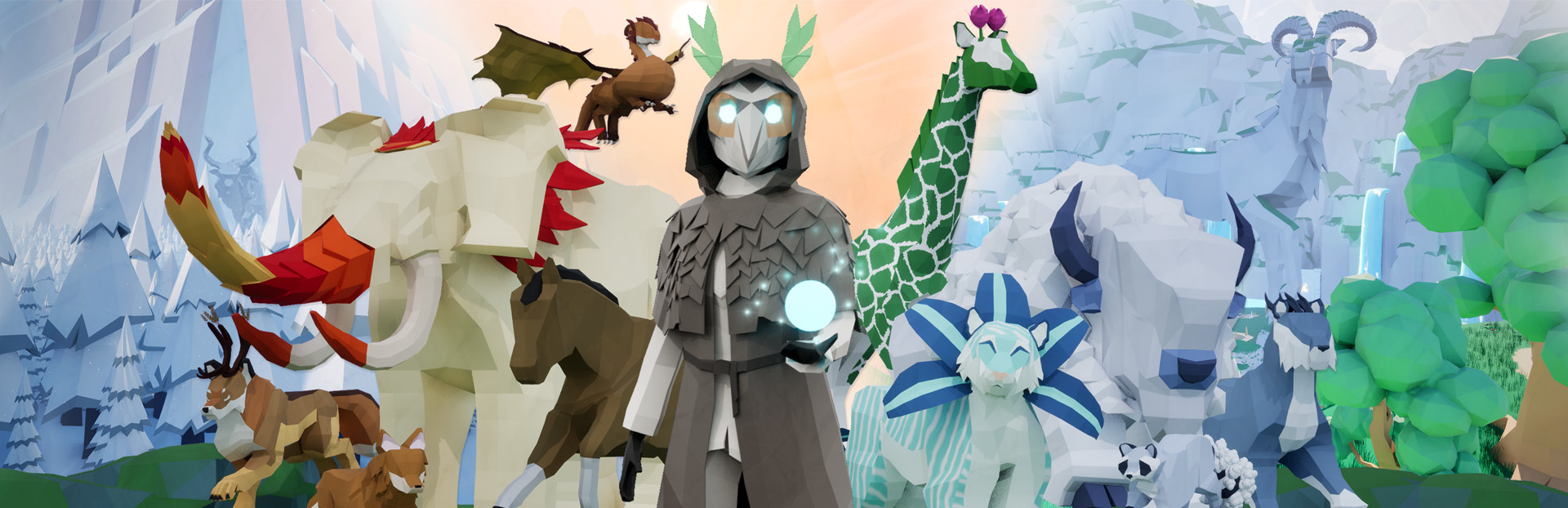
The idea for Ryder began with a simple goal: a low-poly creature-collecting game that felt as distinct as it was immersive. Elle’s love for drawing animals and our mutual appreciation for classic creature-collecting games steered us in this direction from the start. Our goal was to create a nostalgic visual experience with a high level of detail, striking a balance between retro charm and modern design. We chose a low-poly art style rendered through Unreal Engine’s Lumen system, achieving both technical and artistic goals. Being a small team, we needed designs that were detailed enough to feel unique yet manageable enough to develop within a realistic timeframe. By focusing on each creature’s essentials, we can build a diverse and vibrant world without overstretching.
Shaping Ryder’s Core Gameplay
At the heart of Ryder are two core principles: each creature should add something new and distinct to gameplay, and collecting creatures should involve not just collecting, but understanding their utility. We experimented with different gameplay loops—survival, mini-games, racing, resource gathering, and even creature farming—before realizing that creature-driven puzzles best reflected our vision. Puzzles became the perfect way to spotlight each creature’s unique traits and give players meaningful interactions. We also made a deliberate design choice to allow players to become the creatures themselves rather than just ride or mount them. This unique perspective lets players experience the world through each creature's eyes, with puzzles tailored to the physicality and abilities of every creature. This decision added depth to gameplay, letting players explore the world from different perspectives and engage with puzzles in a way that feels natural and satisfying.
Building a Creature-Rich Puzzle World
In Ryder, “distinct addition” means each creature offers unique trade-offs that shape the puzzle experience. For example, two creatures might share the same ability, but one might be as large as an elephant while the other is a small mouse. The elephant-sized creature can trigger weight-sensitive mechanisms, while the mouse can fit into narrow spaces. Ryder’s puzzles often require balancing these abilities, such as using a heavier creature to open a path and then switching to a smaller one to progress through tighter areas. While puzzles are central to Ryder, we wanted the game to feel like an open, exploratory world rather than a series of back-to-back challenges. Players are encouraged to venture off the main path, uncover new creatures, and experience the freedom of roaming in the woods with their favorites. Our bestiary system allows hardcore collectors to hunt down every puzzle and creature, while casual players can advance through organic exploration at their own pace.
The Road to Release
We’re thrilled to be working toward a 2025 release, with plans to include over 60 creatures and more than 100 puzzles. Designing puzzles that work seamlessly with each creature’s traits has been a fun challenge, and we can’t wait to share more details on how these mechanics will unfold. Thank you for following our journey with Ryder! We’ll dive deeper into the puzzle mechanics and other aspects of the game in upcoming dev logs. In the meantime, you can follow us on our social channels for sneak peeks and updates as we bring Ryder to life.