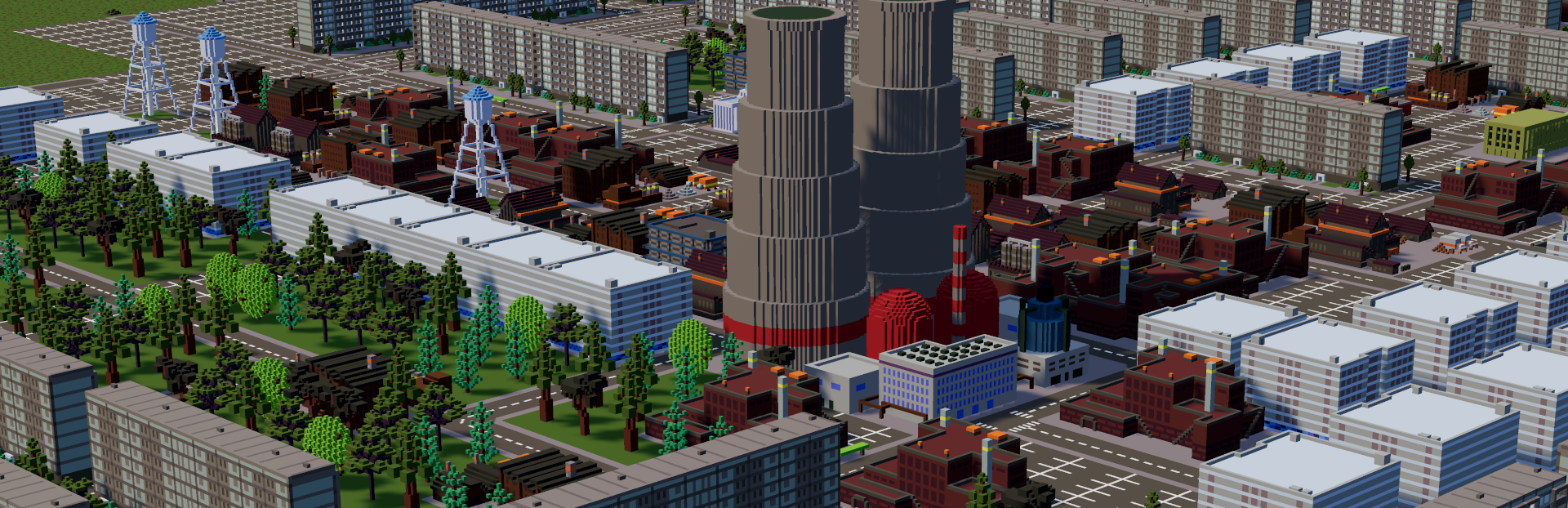
For this edition of Microlandia we looked at the deepest layers of how the city's economy works, both in businesses and in city treasury, adding the missing elements that it needed to feel like a real city.
In this update4
Full notes
Full Microlandia update
Read the full published notes in a cleaner layout. The original post stays linked below.
What changed
0 fixes3 additions2 changes0 removals
Balance
Performance
UI and audio
addedFor this edition of Microlandia we looked at the deepest layers of how the city's economy works, both in businesses and in city treasury, adding the missing elements that it needed to feel like a real city. And also, to reward the players who are good financial administrators, throwing in a bit of an extra challenge.
addedWho said debt spirals aren't fun?In past editions of the game, once city hall started losing money there wasn't much to do besides raising taxes or demolishing projects that cost a lot to operate. Now we've finally added a bank to the game, that you can borrow money from. By using this tool, you have the option to invest in changes that improve the city in the long term, and, through that, maybe also improve revenue and financial stability. So a problem with cash flow doesn't necessarily mean a lost game. Of course this carries additional risk, because borrowed money comes with interest. Even more so, when you borrow more than one time, your credit rating goes down and interests go up. That means you have to be very careful not to fall into a debt spiral.
changedUnit economicsThe economy changes aren't only about the public treasury. We also did deep work on revising how companies in the city operate. Previously all companies used a single algorithm to calculate their profits, and that algorithm was based on real-world statistics that, while a reasonable approximation of how businesses really work, didn't capture the true dynamics of money. So what we did was split companies into 12 different macro-sectors, and each with its own demand-curve algorithm. For example, retail companies depend on the number of residents and, to a lesser extent, on the number of tourists. Entertainment companies depend on the number of tourists and, to a lesser extent, on the number of residents. Construction companies depend on how much construction is going on in the city. And real estate companies depend on rental contracts. Each sector has different needs, different expenses and different sales dynamics. Which sector will end up prevailing in your city depends on your zoning: Some players will want to lean toward agriculture, others toward industrial capacity, and others will go for diversification. There's no single winning strategy here.
changedUser experienceOn top of all the economic changes, we also made many UI changes that give the game much better quality-of-life and make building the city, moving around and viewing information a better experience across the board. We also did a lot of rebalancing of our simulation on things that weren't quite perfect, and finally the long-awaited control to run the sim faster. Godspeed!!!
addedUser experienceWell friends, that's Microlandia 1.11. We hope you enjoy it as much as we enjoyed trying to recover from bank-debt spirals with hardcore gambling. We also hope you enjoy the new UI and the improved performance, especially in big cities. We have a lot of plans for the future of the game, and we can't wait to share them with you. Stay tuned for more updates!
Microlandia changes
addedFor this edition of Microlandia we looked at the deepest layers of how the city's economy works, both in businesses and in city treasury, adding the missing elements that it needed to feel like a real city. And also, to reward the players who are good financial administrators, throwing in a bit of an extra challenge.
addedIn past editions of the game, once city hall started losing money there wasn't much to do besides raising taxes or demolishing projects that cost a lot to operate. Now we've finally added a bank to the game, that you can borrow money from. By using this tool, you have the option to invest in changes that improve the city in the long term, and, through that, maybe also improve revenue and financial stability. So a problem with cash flow doesn't necessarily mean a lost game. Of course this carries additional risk, because borrowed money comes with interest. Even more so, when you borrow more than one time, your credit rating goes down and interests go up. That means you have to be very careful not to fall into a debt spiral.
changedThe economy changes aren't only about the public treasury. We also did deep work on revising how companies in the city operate. Previously all companies used a single algorithm to calculate their profits, and that algorithm was based on real-world statistics that, while a reasonable approximation of how businesses really work, didn't capture the true dynamics of money. So what we did was split companies into 12 different macro-sectors, and each with its own demand-curve algorithm. For example, retail companies depend on the number of residents and, to a lesser extent, on the number of tourists. Entertainment companies depend on the number of tourists and, to a lesser extent, on the number of residents. Construction companies depend on how much construction is going on in the city. And real estate companies depend on rental contracts. Each sector has different needs, different expenses and different sales dynamics. Which sector will end up prevailing in your city depends on your zoning: Some players will want to lean toward agriculture, others toward industrial capacity, and others will go for diversification. There's no single winning strategy here.
changedOn top of all the economic changes, we also made many UI changes that give the game much better quality-of-life and make building the city, moving around and viewing information a better experience across the board. We also did a lot of rebalancing of our simulation on things that weren't quite perfect, and finally the long-awaited control to run the sim faster. Godspeed!!!
addedWell friends, that's Microlandia 1.11. We hope you enjoy it as much as we enjoyed trying to recover from bank-debt spirals with hardcore gambling. We also hope you enjoy the new UI and the improved performance, especially in big cities. We have a lot of plans for the future of the game, and we can't wait to share them with you. Stay tuned for more updates!
For this edition of Microlandia we looked at the deepest layers of how the city's economy works, both in businesses and in city treasury, adding the missing elements that it needed to feel like a real city. And also, to reward the players who are good financial administrators, throwing in a bit of an extra challenge.
Who said debt spirals aren't fun?
In past editions of the game, once city hall started losing money there wasn't much to do besides raising taxes or demolishing projects that cost a lot to operate. Now we've finally added a bank to the game, that you can borrow money from. By using this tool, you have the option to invest in changes that improve the city in the long term, and, through that, maybe also improve revenue and financial stability. So a problem with cash flow doesn't necessarily mean a lost game. Of course this carries additional risk, because borrowed money comes with interest. Even more so, when you borrow more than one time, your credit rating goes down and interests go up. That means you have to be very careful not to fall into a debt spiral.
Is that the mayor at the blackjack table?
We didn't want the bank to be the only way to get more money for your city, so we also included a shady alternative and even riskier option: gambling. You can take the public treasury to the casino and use it to at the Blackjack minigame. Of course this being illegal, all winnings will be concealed as taxes and losses as Emergency Fund expenses. Yet, this won't fool the pesky reporters of the newspaper, so you're not only risking the taxpayers' hard-earned cash, your reputation is on the line. So, textbook corruption; but who are we to tell you how to run your city? You do you :)
Unit economics
The economy changes aren't only about the public treasury. We also did deep work on revising how companies in the city operate. Previously all companies used a single algorithm to calculate their profits, and that algorithm was based on real-world statistics that, while a reasonable approximation of how businesses really work, didn't capture the true dynamics of money. So what we did was split companies into 12 different macro-sectors, and each with its own demand-curve algorithm. For example, retail companies depend on the number of residents and, to a lesser extent, on the number of tourists. Entertainment companies depend on the number of tourists and, to a lesser extent, on the number of residents. Construction companies depend on how much construction is going on in the city. And real estate companies depend on rental contracts. Each sector has different needs, different expenses and different sales dynamics. Which sector will end up prevailing in your city depends on your zoning: Some players will want to lean toward agriculture, others toward industrial capacity, and others will go for diversification. There's no single winning strategy here.
User experience
On top of all the economic changes, we also made many UI changes that give the game much better quality-of-life and make building the city, moving around and viewing information a better experience across the board. We also did a lot of rebalancing of our simulation on things that weren't quite perfect, and finally the long-awaited control to run the sim faster. Godspeed!!!
Well friends, that's Microlandia 1.11. We hope you enjoy it as much as we enjoyed trying to recover from bank-debt spirals with hardcore gambling. We also hope you enjoy the new UI and the improved performance, especially in big cities. We have a lot of plans for the future of the game, and we can't wait to share them with you. Stay tuned for more updates!