
Full notes
Full Maestro VR update
Read the full published notes in a cleaner layout. The original post stays linked below.
What changed
- Gameplay
Maestro VR Development Diary
Greetings to all lovers of music and virtual reality!
It has been several months since our last update on Maestro VR, and during this time, we have been working diligently on a series of significant improvements, many of which were requested by our passionate community. We sincerely want to thank everyone who has actively participated in the Early Access of Maestro VR; your feedback has been crucial in defining the direction of our project, which has been in development for several years.
Gameplay Evolution
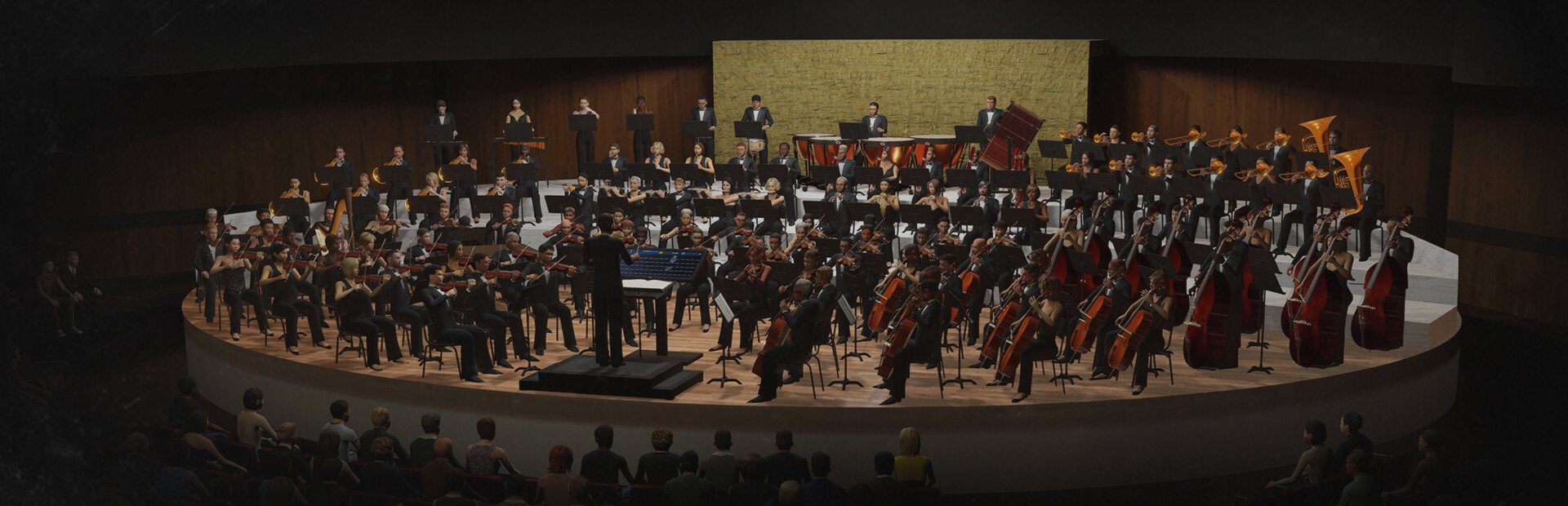
From the very beginning of Maestro VR's development, we were clear about our goal: to create an authentic simulation of the experience of conducting a symphony orchestra. Virtual reality presented itself as the ideal platform to represent the work of an orchestra conductor from a first-person perspective, offering an immersive and unique view. However, during development, we realized that some aspects of the gameplay, especially the system based on spheres and pyramids to guide movements, were static and limited. This led to frustration among many players, who struggled to fully understand the conducting system.
Initially, we used geometric figures like spheres and pyramids so players could visualize conducting patterns. While this solution worked for teaching the basic movements, over time it became too rigid. To address this limitation, we added power-ups and different batons, aiming to offer more freedom in conducting. However, only a small portion of players reached this level of mastery, and even then, the system remained static and not very intuitive.
In response to player feedback, we decided that a complete redesign of the core gameplay system was necessary. The original Spheres and Pyramids system has been replaced with a more intuitive and natural movement detection system, based on hand gestures. Now, hand gestures play a central role in the gameplay, allowing for a much smoother and more realistic conducting experience.
Some of the key changes include:
Crescendo: Previously, players had to follow a pyramid with their hand to achieve a crescendo. Now, simply raising the palm and making upward movements is sufficient, which feels more intuitive and natural.
- CueBefore, it was necessary to press the trigger and point to the instrument at the exact moment. With the new system, you only need to point at the instrument, hold the trigger, and make a small inviting gesture, which better reflects the reality of conducting.
- DynamicsThe previous system used spheres that changed position and size to indicate dynamics. Now, these are controlled by detecting the softness or abruptness of the movements, as well as whether they are performed with one or both hands.
Fermata: In the old system, the fermata only served to resume the music after a pause. Now, to stop the orchestra, you need to close your fist with the grip and make a sharp movement; to resume, simply open the fist by releasing the grip. This change offers a much more authentic conducting experience.
These changes provide greater freedom in conducting and make the experience much more immersive. Additionally, we have decided to remove Casual Mode, as with the introduced improvements, the new Normal Mode offers a similar but much more refined and deeper experience.
New Game Modes
The implementation of the new gesture and movement system also led us to reorganize and redefine the game modes to better suit the different skills and expectations of players. Our goal has been to create an experience that is accessible to beginners while also challenging for more advanced players.
Source
Changelog.gg summarizes and formats this update. How we read updates.