
In this update9
Full notes
Full Highland Keep update
Read the full published notes in a cleaner layout. The original post stays linked below.
Repeated intro
Hey! I’m Kacper.
What changed
- Gameplay
- Balance
- Fixes
- Maps
- Performance
Highland Keep changes
The first teaser for Highland Keep is out! This post is basically: what the game is, who’s behind it, and what we’re focusing on.
What is Highland Keep?
It’s a third-person survival strategy set in a dark, misty “medieval Scotland” kind of world.
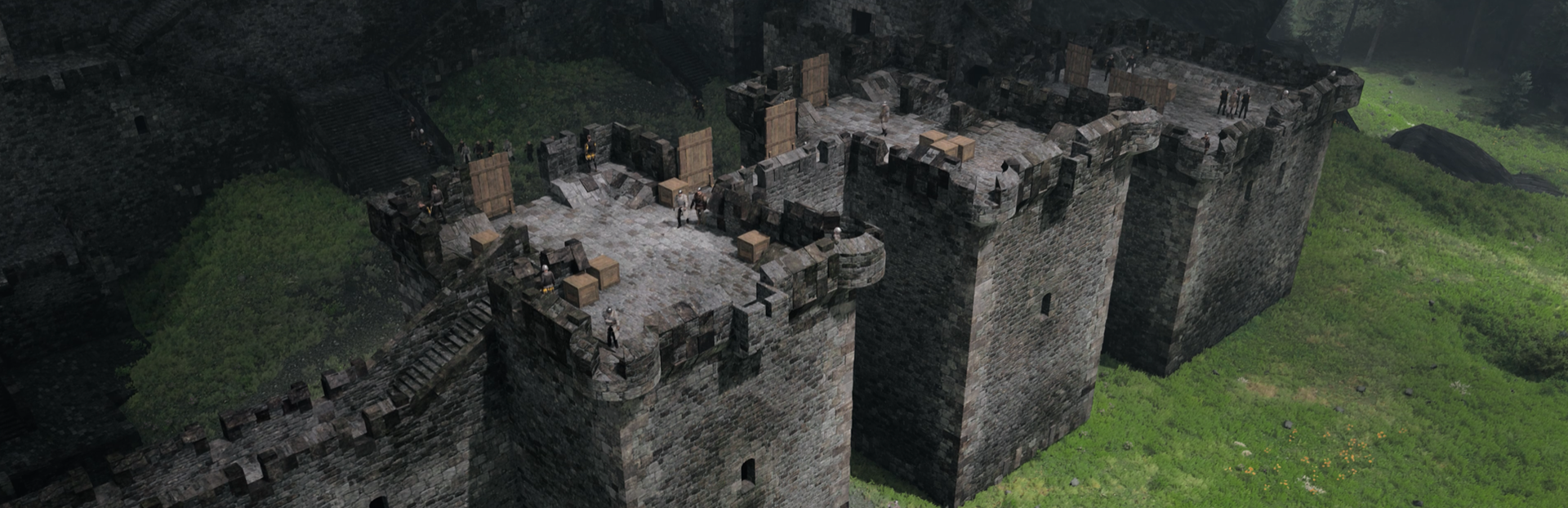
You’ll build a keep piece by piece, grow a small clan, deal with weather/survival pressure, and when trouble comes… You defend what you built. Not just a house - an actual castle you planned.
The short version of the pillars is:
Castle building + defense (the main thing)
A living world with clans doing their own stuff
Third-person combat + leadership/management
Mood and inspirations
I’m aiming for a gritty, heavy medieval atmosphere: mud, fog, harsh weather, and that grounded “fight to survive” feeling.
Scotland is a huge inspiration for me (the weather, architecture, landscapes, culture), but to be clear: Highland Keep is not a historical simulator. We’re focusing on gameplay first, with inspirations more in the direction of Stronghold, The Forest, or Mount & Blade.
So yes — we know nobody wore kilts in medieval Scotland 😅
Castle building
We’re putting a lot of work into building, because we feel many survival games limit your freedom: you place pre-made “blocks” (an entire house, etc.), but meaningful planning and multi-level fortress construction can be tough.
In Highland Keep, there are two building modes:
Large structural pieces — foundations, walls, roofs, etc. (RTS-style view)
Smaller functional items — doors, chests, furniture, defenses, etc. (placed in third-person / player view)
The larger building system works in such a way that modules on higher levels must fit into those on the bottom, so you cannot build sideways. Also, each module has its own load capacity, so building upwards has realistic limitations.
Clan system and character relationships
This isn’t a fixed “you vs. everyone” kind of world. You create your own clan and decide:
who you keep peace with,
who you go to war with,
how you shape relationships with others.
Characters also have relationships with each other. For example, if you attack a lone peasant, they’ll react first - but only after you cross a certain relation threshold, their clan can escalate it into open war.
And importantly, this applies to everyone, not just the player. Two clans can be fighting on the other side of the map, even if you’re nowhere near. We’re building a scalable AI system that can be simulated in a meaningful way even outside the player’s immediate area.
Character progression
Your main character has core attributes (strength, intelligence, agility, etc.) that grow over time.
These stats affect things like:
weapon scaling,
what you can build,
commanding units and combat effectiveness.
The main goal is to support different playstyles. If you want to go into battle and focus on fighting, you can develop strength and combat abilities. If you want to build your fortress and rarely leave it, there’s a path for that too.
Tech: Unity HDRP + lots of custom systems
We had to build a lot of systems from scratch, because the built-in tools didn’t really fit a sandbox with a large map, and we want solid performance. This applies to both rendering and game logic-related things.
Each of these took a lot of time but honestly, I can’t imagine shipping this game any other way.
One example: in our tests, Unity’s built-in animation setup with ~100 characters could eat around 70% of the CPU budget we want to reserve for a stable 60 FPS target. After creating an animation system completely from scratch, we can handle 1000+ characters at once, and animation cost is under 1 ms in typical test scenarios.
In addition, we implemented our own terrain renderer with custom terrain edit tools, a complete pipeline for GPU rendering, terrain scattering, a pipeline for voxelizing the world for H-Trace lighting, custom character physics, and more.
In addition, we implemented:
our own terrain renderer with custom terrain edit tools,
a complete pipeline for GPU rendering,
terrain scattering of foliage and objects,
a pipeline for voxelizing the world for H-Trace lighting,
custom character physics,
and more.
Who’s behind it?
Currently, it’s essentially two programmers.
I started solo almost three years ago, and about a year ago, another programmer joined. We’d worked together before, so we already have a good flow. From time to time, other people help out with specific tasks, but the core of the project is still a very small crew.
We’re from Poland - more specifically, Wrocław.
Funding and Early Access
So far, Highland Keep has mostly been self-funded. I started solo, and since then, it’s been what I spend most of my evenings and weekends on.
We’re currently talking to potential publishers and/or investors, mainly to make development more sustainable and help us bring the game to you sooner.
I’d love to give you a release date, but right now it depends on a few factors. We’re definitely planning Early Access, we just need a bit more time to enter EA in a state that actually makes sense.
One last thing
Thanks for being here, watching, commenting, and cheering us on. It really makes a difference!
THANK YOU,
Kacper
Source
Changelog.gg summarizes and formats this update. How we read updates.