
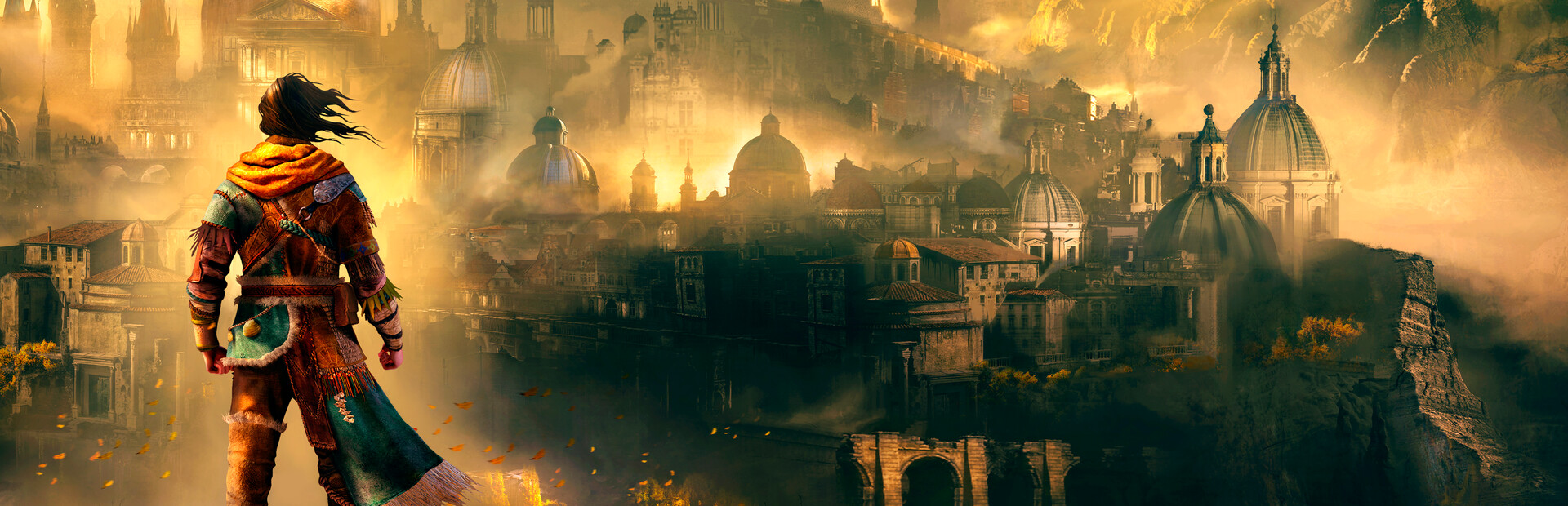
Update log
Full GreedFall: The Dying World update
The complete published notes, normalized for clean reading and source attribution.
Extracted changes
- Store
- UI and audio
- Gameplay
- Performance
Dear Carants,
Since the beginning, when GreedFall: The Dying World launched in early access in 2024, the game has come a long way. At the time, the foundations were there, but the journey was only just starting.
Over time, through updates and constant work, the game has evolved tremendously. This evolution has been shaped by countless iterations from the team, technical improvements, and the invaluable feedback we have received from you.
In this blog, we want to take a step back and focus on one specific aspect of that evolution: the game’s graphics and visuals, through the lens of environment and lighting work.
This is a behind-the-scenes look at how the game’s visual identity has grown to become what it is now. From early experiments to more refined artistic choices, every decision has aimed to make the world of GreedFall more immersive and visually striking.
Let's get into it!
Create the world…
The environment in the game is composed of multiple elements working together, such as objects (buildings and structures, props and items, vegetation) and textures that can be found on ground surfaces and objects.
The role of our environment artists is to assemble these elements into a coherent composition on the screen, but also to make sure that you can understand it and immerse yourself in it.
Our approach to environment
In GreedFall: The Dying World, every location has a role to play, and the environment must make that role immediately clear to you, while remaining technically sound and loyal to the artistic direction.
Telling the story through the world
Environments are paramount to the storytelling in a narrative game like GreedFall: The Dying World. As they are often the first contact you have while navigating the world, they need to carry narrative weight, without relying solely on dialogue or exposition. For instance, in the city of Peren, you will find signs of wear and decrepit props hint at past events and conflicts, like the Malichor plague.
Supporting the gameplay
The levels are also built around how they are played and what the location brings in terms of gameplay experience for you – combat areas need room and clear sightlines, points of interest are either hidden or distinct, etc.
Technical aspect and performance
Of course, behind the scenes, every environment must also respect technical imperatives, such as view distance, asset loading and performance. All which shape how spaces are ultimately designed. This requires constant collaboration and iteration between artists and programmers to balance visual ambition with technical constraints – so that navigating a location feels visually pleasant and smooth in the gameplay for you.
The different stages to build our environments
Creating a zone in GreedFall: The Dying World happens in three main phases, each building on the last.
1. Establishing the blueprint of a level
The first step is to block out the overall shape of a zone. At this stage, environments are very rough - simple shapes show where villages, combat areas, paths, and points of interest will be. The goal is not visuals yet, but scale and structure, and how players move through the space.
2. Refining the structure and visual identity
Once the layout feels right, it is refined. Landmarks, buildings, and terrain are shaped into their final forms to guide navigation and draw the eye through composition. The world may still look plain at first, but this is where the environment’s proportions and identity are locked in before textures
Source