
Full notes
Full Graviter update
Read the full published notes in a cleaner layout. The original post stays linked below.
What changed
- Performance
- Maps
- Gameplay
- UI and audio
The release of Graviter is fast approaching! I thought it could be a good moment to take a look back and go on an adventure through memory lane. Join me, have a coffee, and find out how Graviter came to life!
NERD IS MAKING THE GAME
I think that the true beginnings of Graviter we can track all the way back to the times when I was in high school. I remember very well one physics lesson - as you can guess the teacher was talking about gravity. Inspired by the lecture, I made a model of the Solar System in Unity engine. Bodes were experiencing realistic forces - in other words, nothing was on predetermined “tracks”. All movement has been simulated according to Newton's laws of physics. Yep, I used to be a physics nerd back then :p.
It was just for fun and the fun came from my interest in physics. Shortly after that, I bumped into the game that really started all of this - Kerbal Space Program. I was into everything connected to space and rockets before, but now that game sparked my interest in rocket construction. These were also the times when SpaceX has had their first big advancements. I thought to myself that I feel a lack of some kind of simple video game in which you could casually test various planet alignments and just have fun with gravity. The idea started to sprout in my head.
Of course, I wasn’t the first. Yes, there were games about gravity before, but, in my opinion, they took all the joy out of the game due to the inability to operate on objects that attract the player. You know, in other games you were always manipulating either your character or generally the forces of physics. I wanted to make a different game, where you can experience some freedom and create crazy trajectories. I’ve created the first prototype. It turned out it’s indeed quite good fun! I set up a few puzzles, and finally, I decided that it’s worth it to make a whole game based on those mechanics. I wasn’t completely sure if it’s really a good idea if it’s truly what players would want. But in the meantime, I came to the final of Imagine Cup Microsoft competition with an early version of what in the future will become Graviter. It confirmed to me that the title is worth developing.
DAWN OF GRAVITER
Easier said than done. Graviter came through many iterations and I changed the basic assumptions a few times. First, you could move every planet whenever you like, but it required so much reflex from the player and also was more frustrating than fun. So, the second iteration was letting you control only the comet, like the rocket. It was cool, but… incredibly boring! Mainly because of limits imposed by stuff like fuel, speed, etc. Graviter, on that stage, became something I really wanted to avoid. And in that way, I went to the third version, where the players would jump between planets to the music beats, but it turned out that such gameplay deprives players of freedom.
^Old version of Graviter
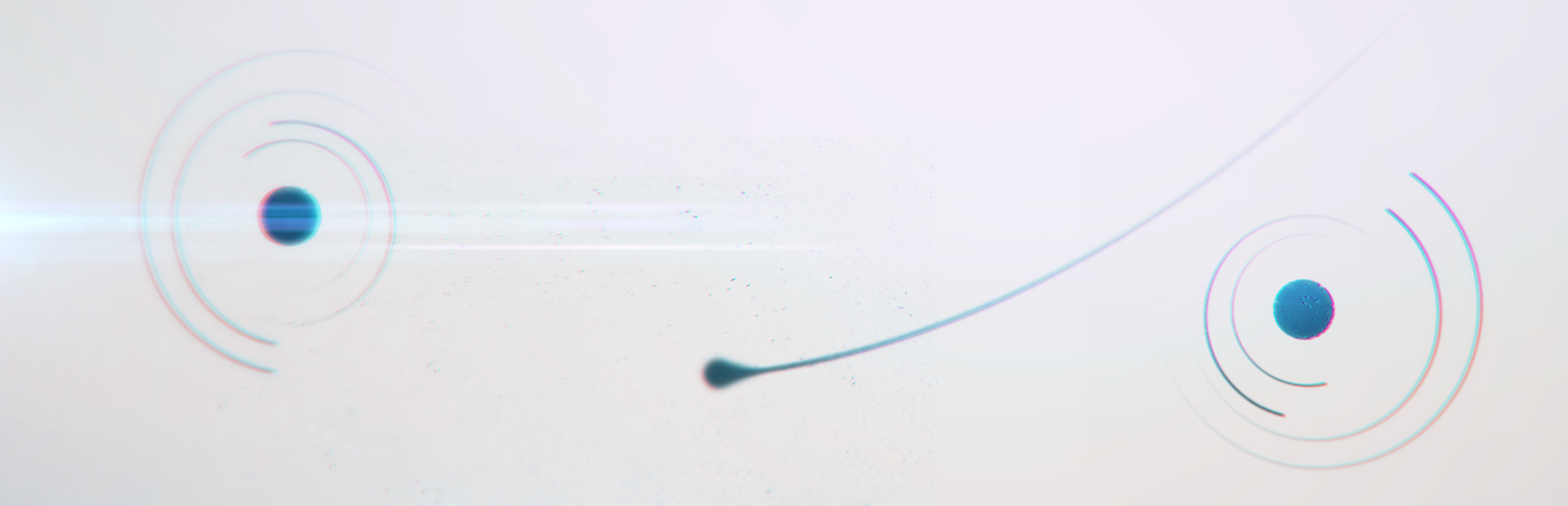
Finally, I’ve changed the art style to a very simplistic and ascetic one, I added calm music and I based the gameplay of my puzzle-arcade game, on the Pause mechanism, which became a unique core of Graviter.
ROCKET SCIENCE
It all still sounds pretty easy, but I had many technical difficulties while making an
Source
Changelog.gg summarizes and formats this update. How we read updates.