
Full notes
Full Get Your Tentacles Off My Waifu! update
Read the full published notes in a cleaner layout. The original post stays linked below.
Repeated intro
Hey guys - Dev here
What changed
- Gameplay
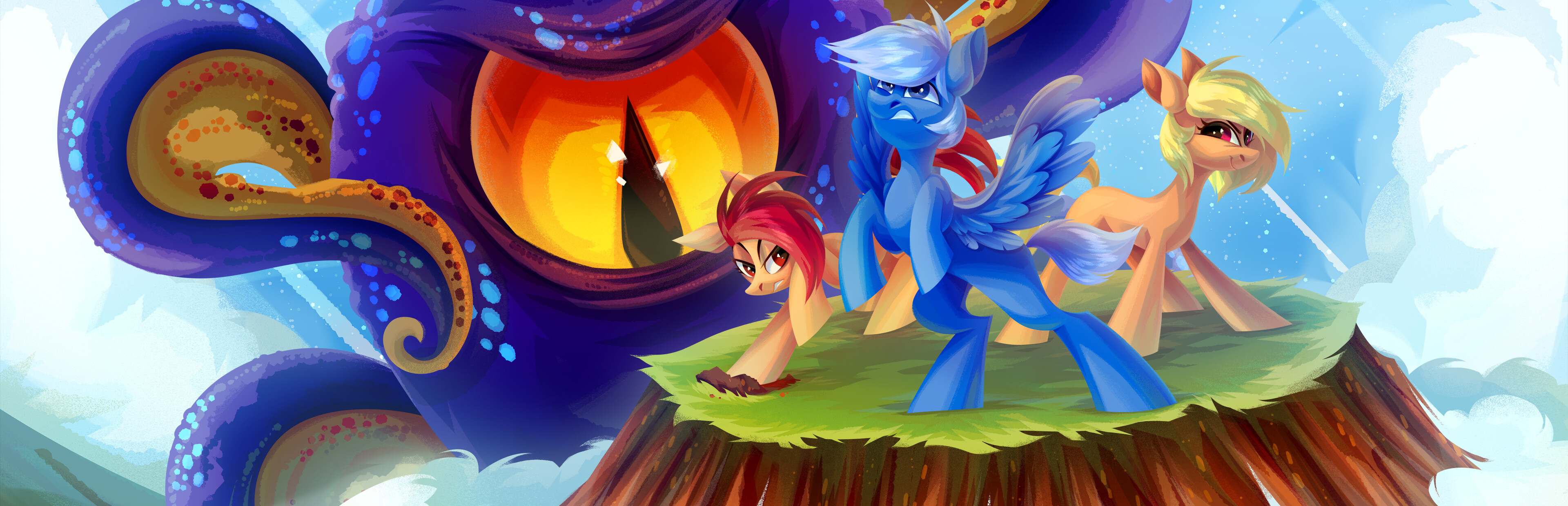
I don't have a lot of new gameplay pictures to show, but I will drop a picture of the Yandere Waifu to show that I still like you.
Since our last post, we have spent all our time writing dialogs. We started with the most exhausting part, which is the "house dialogs" with the Waifus. Besides that, we also got the dialogs for seven of the nine big story arcs. So, let's nerd out about video game writing for a bit.
House Dialogs
Writing these was tough, and they are currently making up about 23,000 words. In comparison, Doki Doki Literature Club! is estimated to have about 65,000 words. Angels with Scaly Wings has over 175,000 words. Dune has about 188,000 words, and Fahrenheit 451 has 46,000 words. See? You don't need to write half a million words to write a fantastic novel. The word count kind of matters for us because we have to keep in mind that this game is a Shoot 'em Up first, with a few secondary features like crafting, a zen minigame, and an equipment system. The whole idea of giving it extensive dialogs came pretty much at the end, when we decided not to hold back for budget reasons. While the game is not a visual novel, it is clear that the Waifus in the game need personality and interesting things to say. At the same time, the Waifus can also act as tutorial guides, and some offer side activities like doing Poneh Zen, while other dialog options are important for the story arcs. All of these things together caused us a healthy amount of pondering.
Structured Dialogs vs. Natural Flow
At first, we thought that every Waifu would have a dialog tree based on some categories:
What do you think about...
What do you know about...
Can you help me with...
About other Waifus...
Side Activity
Story Arc Options
This structure had two big problems. The first one is that it makes every Waifu dialog static, and it takes all personality away from the Waifus. Different people talk differently. The second problem that popped up was that a lot of these categories overlapped, while at the same time prohibiting a natural flow from one category to another. For example, the Sword Waifu knows a lot about Poneh Zen and also offers to do some Zen with Poneh. It is only natural to talk about Zen and then take the time to do a Zen session. When we decided that the Waifus should also talk about each other, the overlap between Waifus, Think About, and Know About became so massive that we discarded that entire category idea. Instead, we do what the kids these days may call vibe-writing. That has nothing to do with AI-based vibe-coding. Nope, it is that we wrote one or two lines, checked out the vibe, and wrote more until we reached the That's Enough Vibe. And the result is apparently very close to how a real conversation may go. It starts at one point, goes elsewhere, and may even circle back. Speaking of circles, we tried to create some nice dialog graphs in the engine, but that nice-to-have idea failed big time. So we just arranged everything into a massive circle. The dialog circles for a few Waifus look like this:
Gameplay Relevant Dialogs
However, that way of writing dialogs may not work for all dialogs that have a significant impact on the gameplay. This includes all dialogs that change the story arcs. Some story arcs let you skip a whole set of levels or finish the game early. This is where the Shoot 'em Up genre takes the highest priority. When you want to blast tentacle monsters, you want to do that and not have to read through 2,000 words of dialog with an unexpected character encounter. This works well for role-playing games like Baldur's Gate (apparently the third game has about 2.5 million words; in comparison, the Harry Potter books have about 1.08 million words). But it doesn't work all too well for a Shmup. For this reason, we decided to keep every gameplay-relevant dialog very concise and short. There are a few spots where there is a bit more text, but these are kept more on the sidelines. Generally speaking, we don't hide any gameplay-relevant dialog in a deep dialog tree. Some story arcs require a bit of talking, and for these arcs, the bit of dialog is the gameplay gimmick. By keeping everything short, the gameplay dialogs summed up to about 4,000 words. About 3,000 of them are dialogs for levels where characters appear for a brief chat. And of course, they have to react differently based on the story arc you are in.
Story Arc Complexity
Another thing that bothers me is the potential complexity of having so many story arcs and the idea that, in theory, you could switch from one to another at any time. Truth be told, that level of freedom is something I cannot provide. In fact, writing the dialogs for these story arcs has shown that some sub-story arcs don't need to exist at all. The idea for the story arcs is that they all relate to essential decisions regarding the Waifus or are centered around a game mechanic. The idea that somebody can go schizo-back-and-forth between all nine story arcs will result in development hell for me. Luckily, the answer is again in the Shmup genre and in doing something some people in the gaming industry are extremely afraid of: trusting the player. Since Shoot 'em Ups are generally very linear games, we can use this trope/expectation to our advantage. Waifu always starts in the Adventure Base Arc, and there are key moments where the game switches to a different story arc. When these entry points are discovered, there will be a rather clear option that asks if you really want to lock in on that arc. And we trust our players' decision-making abilities. Another huge thing we discovered is that much of our story logic is actually not needed and some sub-story arcs were, quite frankly, a waste of time. This is especially important for the game-mechanic-focused story arcs. There is no need to attach the normal gameplay to a story arc based on, let's say, crafting. We have that gameplay already in the Adventure Arc (or the Arcade Arc if you want to turn off all story stuff to get pure gameplay). And we also noticed that not much gets added in regard to lore, story, or characters by keeping some of these story arcs going simply because it would "make sense."
Pictures and Words
Another thing we planned was narrated endings for the story arcs while showing a pretty backdrop to wrap everything up. We spent some time pondering how these ending pictures could look, and we realized that the image itself does a lot of the storytelling. The presence or absence of characters and what they do in the image contain all the information. There is no need for narration, and there is no need for us to dictate what minor details mean. There is a lot to gain from seeing one of the Waifus not participating in the victory party and standing grumpily on the sideline. Is she mad about a decision Poneh made? Did she lose something that may be hinted at in the house dialog? Maybe she just doesn't like fireworks. Giving the players a bit of freedom to interpret the story only fits the idea of an interactive medium. Waifu is also a sci-fi story, and since I read classic sci-fi once or twice a year, I have a strong bias toward the idea that sci-fi leaves room for speculation.
Next Steps
We have to write two more story arcs, but while I was compiling this news, I realized that one of these may not be necessary after all. I will examine this today. After that, we have to write more house dialogs because some story arcs require them. They surely won't require us to write 23,000 words each because the nature of the story arcs results in people having less to say. We think the game may end up with a dialog word count between 30,000 and 40,000, and we are really good on time to get these done. After all, we planned to write these until the beginning of August, but we are likely to be done with them by the beginning of July. We will take the remaining time to stitch all the dialogs and story arc logic together. August will be the big visual offensive, where we finish missing character art, polish and fine-tune monster, robot, and environment art, and also do all the level art.
Thank you for coming to my Ted Talk. Have a good one.
Source
Changelog.gg summarizes and formats this update. How we read updates.