
In this update3
Full notes
Full Ember's Verge update
Read the full published notes in a cleaner layout. The original post stays linked below.
What changed
- Gameplay
- Security
- UI and audio
- Balance
- Events
Ember's Verge changes
Shelters
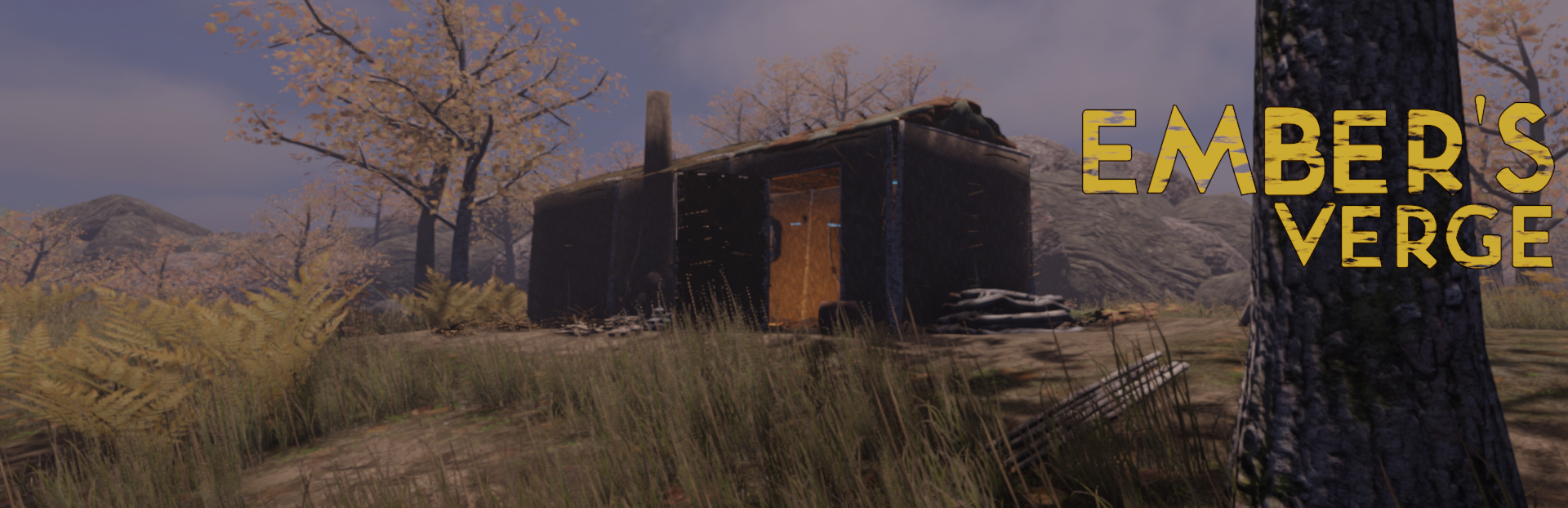
Shelters are designed as a temporary accommodation or distant camp from your main base. There are three types of shelters:
- Stick ShelterA sturdy, frame-based structure covered with leaves or moss. It is the most resilient shelter type, offering 12 slots for storage and vital protection from the wind (once enhancement added).
Lean-to Shelter: A quick-build solution that leans directly against a tree. It provides 8 slots for your gear but leaves you exposed to the biting wind.
Dead Tree Shelter: Built on to a frame of a dead tree. This is the most fragile option with the lowest durability, still offering 9 slots for your gear.
Primitive housing
Housing is modular and progressive. There are 3 tiers for walls and roofs, and you are never "locked in". You can repair or upgrade individual pieces as you gather better materials.
Enhancements: You can attach an oven, a target board, a wall rack or a bed to your house walls.
Insulation and Durability: Higher-tier materials provide more passive warmth, a literal lifesaver when the winter temperature drops. Better structures are also more durable, requiring significantly less maintenance over time.
Security: A fully enclosed house is your protection against wolf attacks.
Protecting items: Some items decay during rain or strong wind. Placing these items inside the house protects from decay (birch bark, leaves, coal fungus, moss etc.).
Cultivation
Farming isn’t about clicking a button to level up a skill, it’s about player knowledge of farming mechanics.
The Five Crops: Find and cultivate Carrot, Potato, Rhubarb, Swede, and Sugarbeet. While crops grow at the same rate, their nutritional value varies greatly. Smart survivors prioritize Sugarbeet for its high caloric density, making it the most efficient use of your time and water.
- Harvesting SeedsFor most vegetables, you can simply right-click the item to harvest its seeds. Potatoes work differently. Instead of harvesting seeds manually, you must let a potato "spoil" until it becomes sprouted. Once sprouted, it can be planted to start a new crop. This makes managing your potato stock a balancing act between eating and replanting.
Hydration is Life: Every plot requires water to function. The more plants you grow in a single plot, the faster they consume its water reserves. While rainfall acts as a natural irrigation system, filling your plots to the brim, a dry spell will force you to carry water manually.
Timing and Nutrients: Growth is a delicate balance of light, temperature, and nutrition. Use fertilizers to multiply the growth rate, but be mindful of the time of day. Since growth peaks under the midday sun and slows during cloudy weather or evenings, timing your fertilization is key to maximizing the growth speed.
The Yield: Domestic crops grow much larger than their wild counterparts, and a harvesting will always yield two plants from a single seed. You can also harvest crops while they are not yet 100%, but this means they are also smaller.
The Risk of Withering: Your crops are at the mercy of the seasons. If the temperature exceeds 25°C without adequate water, or if the first frost of winter hits, your crops will wither. Harvest timing and weather observation are your only defenses against losing a season's work.
Feralless games
Source
Changelog.gg summarizes and formats this update. How we read updates.