
Full notes
Full DreadOut 3 update
Read the full published notes in a cleaner layout. The original post stays linked below.
What changed
- Gameplay
- UI and audio
- Maps
- Events
DreadOut 3 changes
The Irisphone is soooo back!
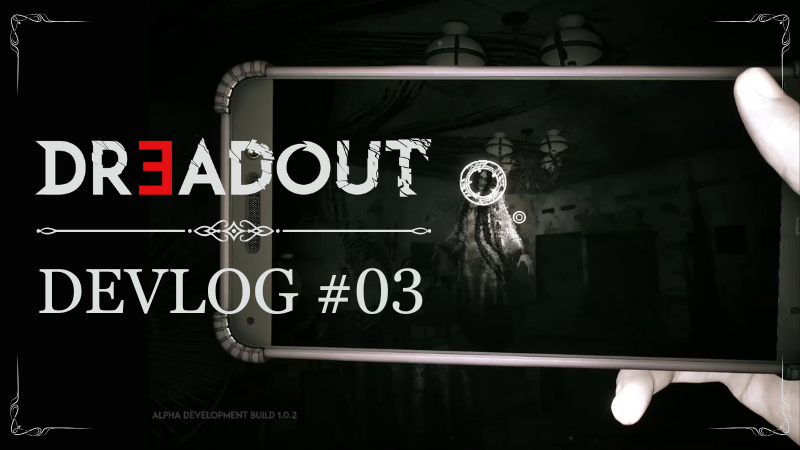
Probably some of you have noticed that in several DreadOut 3 videos we released since the first announcement last year (May 2025), Linda's phone is playing a significant role as ever. Though in the second series, there's a melee weapon (axe) she used to fight certain ghosts, in this third one, we want to bring back the Irisphone to where it belongs.
Talking about Linda’s phone, we definitely heard some of you saying the phone doesn't make any sense coz its battery never died or was never out of power, but what makes sense in Linda's life anymore, right? Jk. We have a line of explanation for that. But first, let’s talk about the irisphone in the previous series.
Irisphone in DreadOut 2
Steam post image [c] Irisphone visual in DreadOut 2 [/c]
Let's take a quick look back at the Irisphone in DreadOut 2. The phone's camera interface appeared clean, uncluttered, and functional, but because it was a little bit too neutral, it felt like it lacked a strong sense of character. Visually, it didn't say much about the user or the world they were in, or the game in the first place. It worked well as a tool, but it didn't yet feel like a fully integrated part of the whole narrative identity. In the context of the gameplay experience, it existed more as a function than a symbol that’s representing enough.
From that point on, we realized something important. If that UI were to appear in isolation online, without the context of a scene or character, players likely wouldn't immediately recognize it as Linda's or associate it with DreadOut. There weren't any visual cues distinctive enough to trigger instant recognition. For us, this signaled that its visual identity hadn't yet fully formed. And from that realization, the need to strengthen the Irisphone's visual character became increasingly clear.
DreadOut 1 Irisphone
Going back even further, in DreadOut, the phone camera interface actually feels a bit more complex. Several additional indicators make it less simple than in later versions, but that complexity fosters a stronger sense of identity. The prominent IRISPHONE branding at the bottom of the screen further emphasizes that this isn't just a phone camera. Visually, the device feels like it belongs to something, not just a mechanical tool in the gameplay system. It carries character, even before the player really considers its function.
Interestingly, Linda's handling of the phone also contributes to this impression. In DreadOut 2, she singlehandedly (literally) holds the phone. In contrast, in the first DreadOut, Linda still holds the phone with two hands, like she truly relies on the device for her survival. This difference in gesture is simple, yet significant. It's like a shift in attitude, how she deals with fear, what upon her, and how she interacts with the surroundings.
Steam post image [c] Irisphone visual in DreadOut[/c]
“Fun fact: this phone model is inspired by one of the famous phone brands during 2013 - 2014 that our creative director used back then. If you used an early generation of touchscreen android phones, you might also recognize or be familiar with the phone.”
So, now we know that that’s the deal with the first two phone models, UI, etc. Then came a hundred dollar (yeah, not so expensive) question: What would the phone and camera UI look like in the third one?
Irisphone in DreadOut 3
In DreadOut 3, we keep that one-handed shooting style, rather than reverting to the two-handed position seen in DreadOut. It felt more natural, and more in tune with how we thought Linda would react in critical situations. But of course, that didn't mean we abandoned all the old elements. We kept the signature glitch effect from the first DreadOut, as that visual disruption still felt most fitting for depicting the moment when the "normal" world begins to crack and something strange emerges. So the approach is to combine what still feels strongest from each phase.
For the camera UI, we didn't want to make it too flashy or overly dramatic. The focus was on making it have a clear identity, but still keeping it simple and user-friendly. Every element that appears on screen has a function. We wanted players to immediately notice the game without over-the-top visuals. Essentially, we want it distinct enough to be recognizable, but subdued enough not to be distracting, and still feel like a tool Linda actually uses.
Some of you might have also seen that we implement a camera crosshair in the camera mechanic of DreadOut 3. After releasing it in a limited, exclusive demo for Gamescom 2025, and the related trailer for the first time, we received numerous feedback on it. Some people said it's too distracting and eliminates a scary factor because the crosshair is covering the ghost face a lot, especially from high-range snapping. Right? We hear you, friends. Now let’s take a look at what currently the overall camera UI–including the crosshair, looks like in the current state of the development.
[c] Current appearance of Irisphone in DreadOut 3 development build [/c]
At this stage, things are still subject to change, but for the upcoming preview, we’re testing adjustments to make the crosshair easier to navigate and more user-friendly. There are several options to make the movement feel more natural and responsive. Essentially, we want the interaction to feel intuitive from the first second, and visually more pleasing to the eye and not distracting from focusing on the ghosts.
Irisphone Battery Power
Now, let’s get back to why the Irisphone has nonsensical battery power and durability? The reason behind it is pretty simple. In DreadOut, most events take place over a very short period of time, usually no more than a day. Linda actually charges her phone offscreen, but the difference is that we're never really shown a clear "home" or hub. So, from a player's perspective, the battery feels purely like a progress indicator. It's not an actively managed resource, and more like a marker of how far along a series of events has progressed.
Meanwhile, in DreadOut 2, we know Linda has a hub, her boarding house. While the charging process still occurs offscreen, the presence of the hub itself changes the context. The battery still drains and recharges, but now it feels like part of Linda's activity cycle, rather than just a silent progress indicator. Okie, for now, that's all we can share from the behind-the-scenes process. Many decisions might seem very small, but they're the ones we spend the most time thinking about. A small hand gesture animation, the feel of the UI, a technical detail that might not be immediately apparent, but all of it slowly shapes the game experience as a whole.
In the next devlog, we'll move on to something like the setting, environment, how Linda moves, reacts, or anything we can update later in the future. Thanks for sharing a peek at the process so far. We'll continue in the next post!
Best, and happy weekends, we’re going to take a break for a while to play RE9: Requiem :p
Happy gaming!
:DH
Source
Changelog.gg summarizes and formats this update. How we read updates.