
Full notes
Full Deck & Conn update
Read the full published notes in a cleaner layout. The original post stays linked below.
What changed
- Gameplay
- Balance
- Workshop
- UI and audio
A long time ago, in an operating system far away, I was a kid playing video games on a beat-up old 286, between re-runs of Star Trek and various '80s sci-fi movies. So when I discovered not just one but numerous Star Trek games stemming from a long lineage leading back to a 1971 game built for mainframe computers.
At the time I was too young to realise that as fun as the game was, "Blow up all the Klingons in the quadrant" probably isn't that believable a set of orders for Starfleet to issue to its captains. But having the freedom to fly a ship around, orbit planets, dock with space stations, and get my posterior handed to me by Klingon warships was a good time that stuck with me.
In the years since I've played tons of space games, usually more complex, nuanced and advanced than something which was originally written in BASIC to run on very limited system resources. But the simplicity of that original game and its various clones & successors (commercial or free) stuck with me.
So much so that years later, an idea began to form.
Deck & Conn came about based on several concepts:
Firstly, that the simplicity of turn-based play on a large number of sectors within a quadrant was fun, and I wanted to keep that. There's a million games where you can fly incredibly detailed space craft, but by keeping limited myself to the core sectors-and-quadrants tile-based style of the 1971 game, I'd force myself to add complexity to other parts of the game.
Secondly, that in the time since I'd played tons of military sim games (many by Microprose) which had dynamic campaigns, missions, and the feeling of a world existing beyond the moment-to-moment play. In short: what if I put the kind of dynamic campaigns I enjoyed in WW2 sub or patrol boat sims atop of the core of this game?
And thirdly, that if I wasn't going to alter the core of the turn-based combat, the complexity I'd want to add could go into the rest of the ship's systems. What if power management and damage control was made more advanced? What if you had a whole start-up procedure you had to work off to bring your space corvette from cold & dark to an operable state?
I began to write all this down in a document, and Deck & Conn had begun to exist in my head.
Once the mechanics began to make sense to me, the next question was the setting. A scenario where you're going out on space war patrols, destroying or taking enemy vessels a prize to me had elements of history books I'd read such as Silent Running by James S. Calvert and historical drama such as the classic Aubrey-Maturin series of Napoleonic naval novels.
What kind of world would fit these mechanics? I began to think back to those '80s and '90s scifi movies, with the sort of cold war dieselpunk & CRT aesthetic they'd accidentally ended up with by taking then-modern technology and moving it into the stars. (I'm looking at you Alien and, well, anything by Peter Hyams.
A forever-war in space fit the kind of gallows humour I favour, and it ended up being a good jumping off point.
Of course, at the time I thought this would be a quick, fun side project to do between other things. My first shot at it was a pico-8 game, and when that felt too limiting, I scrapped it and started again in Lua & Love2d, a simple 2d game engine.
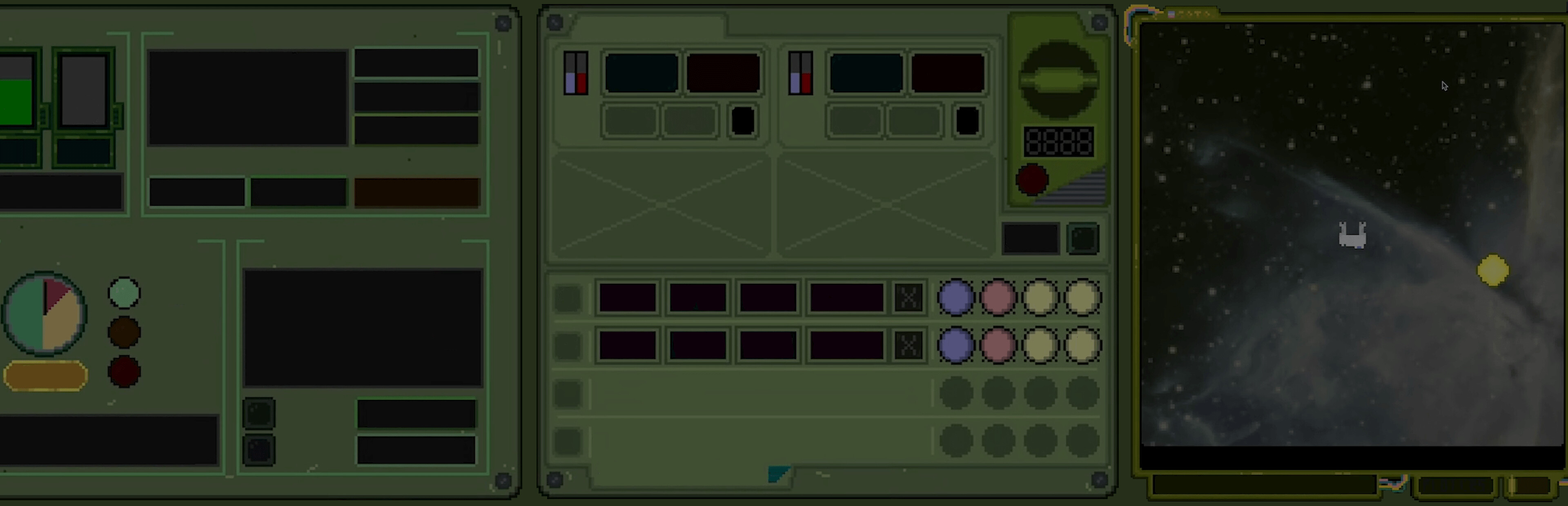
Steam post imageBut the more I worked on the game the more I wanted to do with it, and soon I began writing a custom C++ engine specifically to make this kind of UI-centric vintage pixel-art game. (Why do things the easy way when you can do them the hard way?)
Somehow that grew and developed, and with the support of Screen NSW and Microprose, it's become the turn-based space ship command game I'm now completing.
So, welcome to Deck & Conn! I'm going to write more of these blog posts talking about the development process in the coming months as development on the game gets closer to completion. I know what I want to write, but I am also more than happy to answer questions, or even write blog posts covering subjects that people who are interested ask me about.
Source
Changelog.gg summarizes and formats this update. How we read updates.