
In this update5
Full notes
Full Death Standing update
Read the full published notes in a cleaner layout. The original post stays linked below.
What changed
- Gameplay
- Balance
- Performance
Death Standing changes
Standing, also referred to as orthostasis, is a position in which the body is held in an upright (orthostatic) position and supported only by the feet. Although seemingly static, the body rocks slightly back and forth from the ankle in the sagittal plane, which bisects the body into right and left sides. The sway of quiet standing is often likened to the motion of an inverted pendulum.
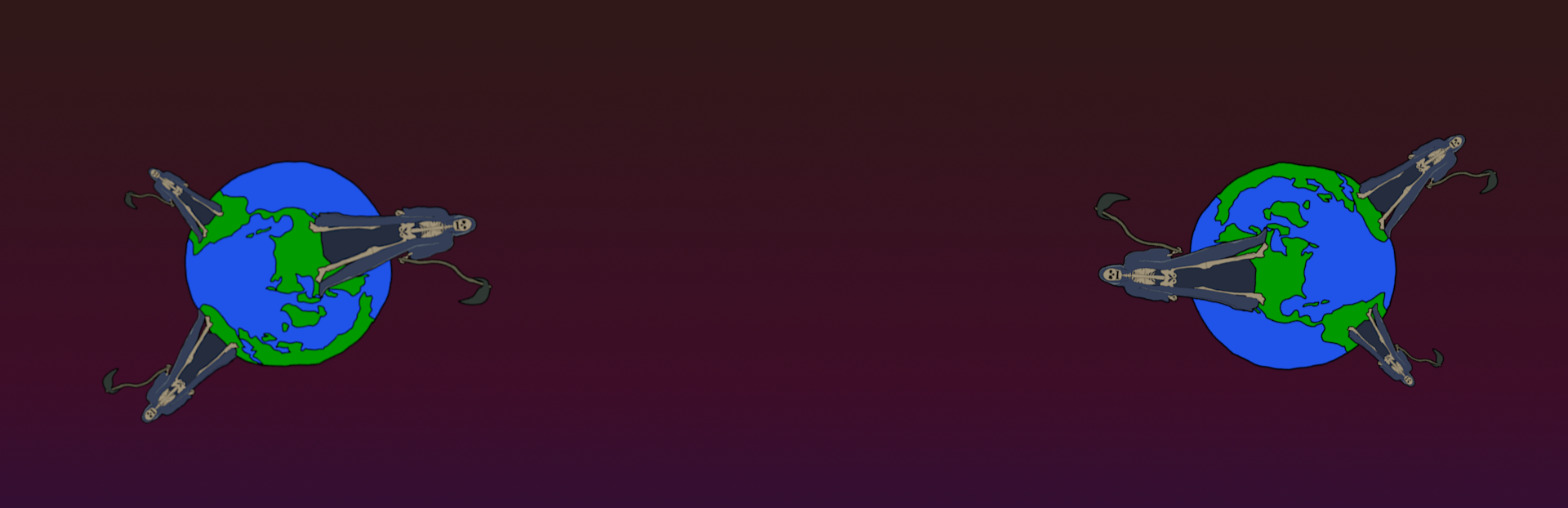
It can now be done with up to 9 people, no matter where they are standing.
Control
Standing posture relies on dynamic, rather than static, balance. The human center of mass is in front of the ankle, and unlike in quadrupeds, the base of support is narrow, consisting of only two feet. A static pose would cause humans to fall forward onto the face. In addition, there are constant external perturbations, such as breezes, and internal perturbations that come from respiration. Erect posture requires adjustment and correction. There are many mechanisms in the body that are suggested to control this, e.g. a spring action in muscles, higher control from the nervous system or core muscles. Humans begin to stand between 8 and 12 months of age.
Spring action
Traditionally, such correction was explained by the spring action of the muscles, a local mechanism taking place without the intervention of the central nervous system. Recent studies, however, show that this spring action by itself is insufficient to prevent a forward fall. Also, human sway is too complicated to be adequately explained by spring action.
Nervous system
According to current theory, the nervous system continually and unconsciously monitors our direction and velocity. The vertical body axis alternates between tilting forward and backward. Before each tilt reaches the tipover point, the nervous system counters with a signal to reverse direction. Sway also occurs in the hip, and there is a slight winding and unwinding of the lower back.
An analogy would be a ball that volleys back and forth between two players without touching the ground. The muscle exertion required to maintain an aligned standing posture is crucial but minimal. Electromyography has detected slight activity in the muscles of the calves, hips and lower back.
Core muscles
The core muscles play a role in maintaining stability. The core muscles are deep muscle layers that lie close to the spine and provide structural support. The transverse abdominals wrap around the spine and function as a compression corset. The multifidi are intersegmental muscles. Dysfunction in the core muscles has been implicated in back pain.
Expansion of pendulum model
Some investigators have replaced the ankle inverted pendulum analogy with a model of double linked pendulums involving both hip and ankle sway. Neither model is accepted as more than an approximation. Analysis of postural sway shows much more variation than is seen in a physical pendulum or even a pair of coupled pendulums. Furthermore, quiet standing involves activity in all joints, not just the ankles or hips.
In the past, the variation was attributed to random effects. A more recent interpretation is that sway has a fractal structure. A fractal pattern consists of a motif repeated at varying levels of magnification. The levels are related by a ratio called the fractal dimension. It is believed that the fractal pattern offers a range of fine and gross control tuning. Fractal dimension is altered in some motor dysfunctions. In other words, the body cannot compensate well enough for imbalances.
Source
Changelog.gg summarizes and formats this update. How we read updates.