
In this update8
Full notes
Full DDoD update
Read the full published notes in a cleaner layout. The original post stays linked below.
Repeated intro
Hey there, folks!
What changed
- Gameplay
- Balance
- Server
- Maps
DDoD changes
Welcome to the first issue of Monster of the Week - a new series in which we drag one of DDoD’s mutants out of the swamp, place it in a spotlight, and explain what it is, how it hunts, and what happened behind the scenes while we were creating it.
So the first subject is a creature that perfectly represents the local wildlife’s tendency to make your day worse:
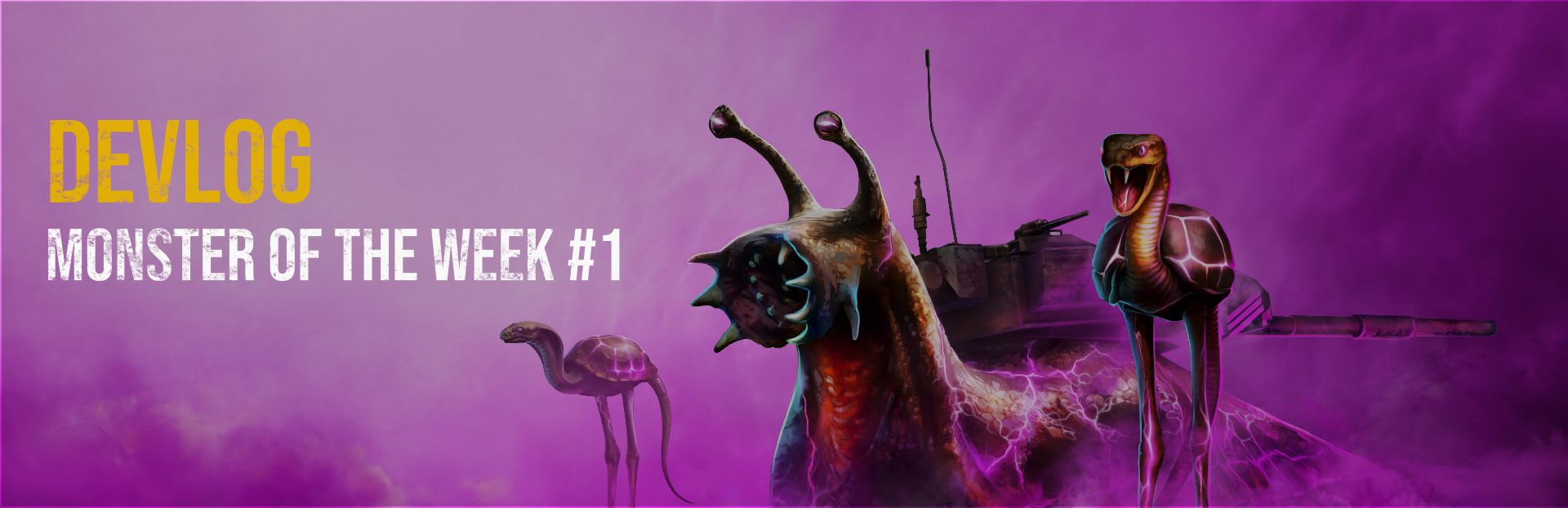
Meet the Heroncobra 🐢🐍
At first glance, the Heroncobra may look like an unusually dark rock, an abandoned shell, or another harmless piece of swamp scenery. That is precisely what it wants you to think.
The Heroncobra is a territorial venomous predator combining the long-legged agility of a heron, the fangs and flexible body of a cobra and the defensive shell of a turtle. It is most commonly found in swampy and forested areas, where muddy water, reeds, fallen branches and poor visibility provide plenty of opportunities to disappear.
While resting, it hides its legs inside its shell and remains almost completely motionless. Occasionally, it crawls to a new position, but most of the time it simply waits for something edible or sufficiently distracted to approach.
In other words, checking every suspicious object in the swamp is probably a good habit.
Steam post image
The Swamp’s Least Pleasant Surprise
The Heroncobra does not actively chase everything it sees. It prefers to protect its territory and let its prey make the first mistake.
Its preferred weapon is venom: from a distance, the Heroncobra spits toxic projectiles at its target. The resulting poison effect can accumulate through repeated hits, turning a manageable encounter into a rapidly worsening problem.
Long Legs Are Not Just for Decoration
Closing the distance does not make the fight easier.
When the Heroncobra has enough room, it can rush toward its target and deliver a powerful two-legged kick dealing a shitload of physical damage. At very close range, it can also spin its long tail through the surrounding area, striking anyone standing nearby.
So, to summarize: stay far away, and it spits venom at you. Move closer, and it kicks you. Stand beside it, and it hits you with its tail.
Emergency Shell Protocol
The Heroncobra’s shell is more than camouflage.
After receiving enough damage, the creature can pull itself inside and temporarily protect itself within its shell. During this defensive state, physical attacks either cannot harm it or are significantly less effective.
This creates a brief pause in the encounter. Players must decide whether to wait for the creature to emerge, reposition before its next attack, or use the time to deal with other threats around them.
The Heroncobra, meanwhile, uses this moment to reflect on its actions :)
From Sketch to Swamp Menace
Now that you know what (or who?) the Heroncobra is, let’s dive into how it was created.
The initial idea sounded straightforward: take the silhouette of a heron, replace its neck and head with a cobra, add a protective turtle shell, and give the creature a long serpentine tail.
Simple, right? No.
Then we had to answer more questions, such as:
Where do the legs go when it hides?
How does the tail connect to the body?
How large should the shell be?
How does a cobra balance on two extremely thin bird legs?
Why did we decide that it also needed to kick people?
The early sketches focused on finding the correct balance between recognizable animals and something that still felt unnatural.
Some versions leaned more heavily toward a bird, with feathers, wings, and longer beak-like facial features. Others emphasized the cobra’s hood, flexible neck, and predatory expression.
The shell helped connect the different shapes into one readable body while also supporting the creature’s camouflage and defensive behavior.
Naturally, several early versions looked less like a terrifying mutant and more like a cobra wearing a bird as trousers.
Eventually we locked in the current version. That is what concept development is for.
Building Its Camouflage
The next step was finding a palette that would work in the wetlands.
The Heroncobra uses muted greens, muddy yellows, dark browns, and almost black shell plates. Small lighter markings break up its silhouette and help the body merge with vegetation, wet soil, and reflected swamp light.
Its long legs provide a warmer contrast, but they are mostly concealed while the creature is waiting in ambush.
The goal was to make the monster recognizable once discovered, but easy to overlook from the normal gameplay camera.
We wanted players to look at a patch of swamp and think:
“Was that thing there a second ago?”
Sculpting the Final Creature
Once the overall design was established, the model moved into its 3D sculpting stage.
At this point, the team refined the cobra’s facial structure, the thickness of its hood, the individual shell plates, the joints of the legs, and the connection between the tail and body. The proportions also had to remain readable from above, where the shell, head, and long legs form the monster’s most important visual features.
The tail was positioned around and behind the legs to make the silhouette more dynamic without turning every animation into an unsolvable knot.
Our animators remain deeply grateful. Probably. Not verified.
The final textures brought the creature closer to its environment: a mossy green head and neck, dark armored plates, subtle yellow markings, and reddish legs that become visible only after it rises from hiding.
What Should We Study Next?
That concludes the first issue of Monster of the Week.
Which DDoD creature would you like us to cover next? Tell us in the comments, and let us know whether the Heroncobra would successfully catch you off guard.
You can also follow us on our social channels (see below) for more development insights, creature concepts, gameplay clips, and other evidence that our developers should not be allowed near a biology textbook.
See you next week!
Your DDoD Team 🐌
Source
Changelog.gg summarizes and formats this update. How we read updates.