
Full notes
Full Civica: Italian Renaissance update
Read the full published notes in a cleaner layout. The original post stays linked below.
What changed
- Balance
- Server
Civica: Italian Renaissance changes
The launch of our Kickstarter campaign and the release of the demo for Civica: Italian Renaissance are now behind us. We’re overwhelmed by your feedback, the numerous ideas, and suggestions for improvement, and we’re thrilled by how positively Civica has been received so far.
If you like Civica, we'd of course be thrilled to have your support on Kickstarter to help us continue developing the game.
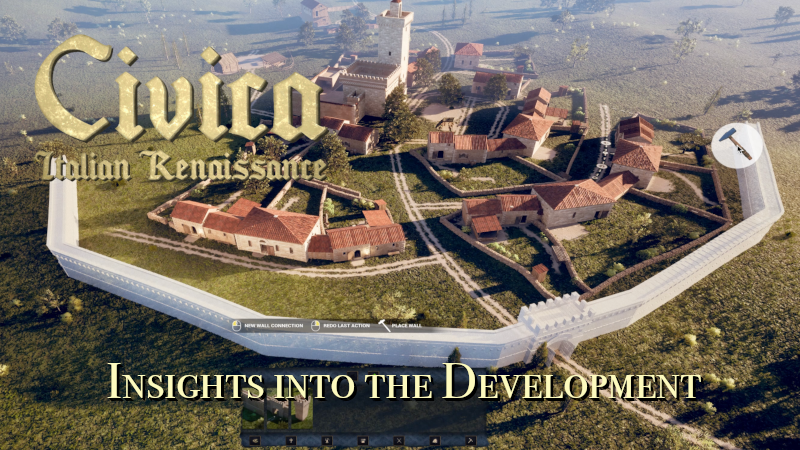
Of course, development continues seamlessly for us, and today we’d like to give you a little glimpse into what’s currently taking shape behind the scenes.
Although the political system was originally planned only as part of a stretch goal, we quickly realized that it is indispensable to our vision. If we want to bring the Italian cities of the Renaissance to life in an authentic way, politics must be a central part of the game from the very beginning.
Historically, many Italian city-states were governed by a council of citizens chosen by lot—the so-called Signoria. In Civica, once your city has reached a certain size, you can run for one of the six seats on the Signoria. Each office comes with its own powers, such as setting tax rates or shaping religious laws.
Of course, you’re not alone in this. Other citizens and influential families are also competing for political power. In the true spirit of the Renaissance, you can try to improve your chances through intrigue, manipulation, or even rigged elections.
Legislative changes are decided at regular meetings of the Signoria held at City Hall. These decisions have a direct impact on life in the city and influence, among other things, productivity, religiosity, and the general mood of the population. Things get particularly exciting during elections: The elected citizens bring with them individual attitudes toward religiosity, integrity, and four other character traits that shape their voting behavior. This gives rise to unpredictable political dynamics, heated debates, and often surprising election outcomes. And when persuasion alone isn’t enough, there’s always bribery and skillful influence-peddling. Florence provides a particularly fascinating example of this. Despite a system designed to prevent the concentration of power, the Medici family managed to seize control of the Signoria. In Civica, too, you can build an extensive network of supporters and work your way up to the top of society as a Gonfaloniere—ultimately exploiting a system created for balance to your own advantage. We’re very excited about this new political layer in Civica and how it will enrich life within the city. It not only opens up new paths to success but also creates the conflicts, and power struggles that make every city unique.
Your Civica: Italian Renaissance Team
Source
Changelog.gg summarizes and formats this update. How we read updates.