What changed
0 fixes0 additions1 change0 removals
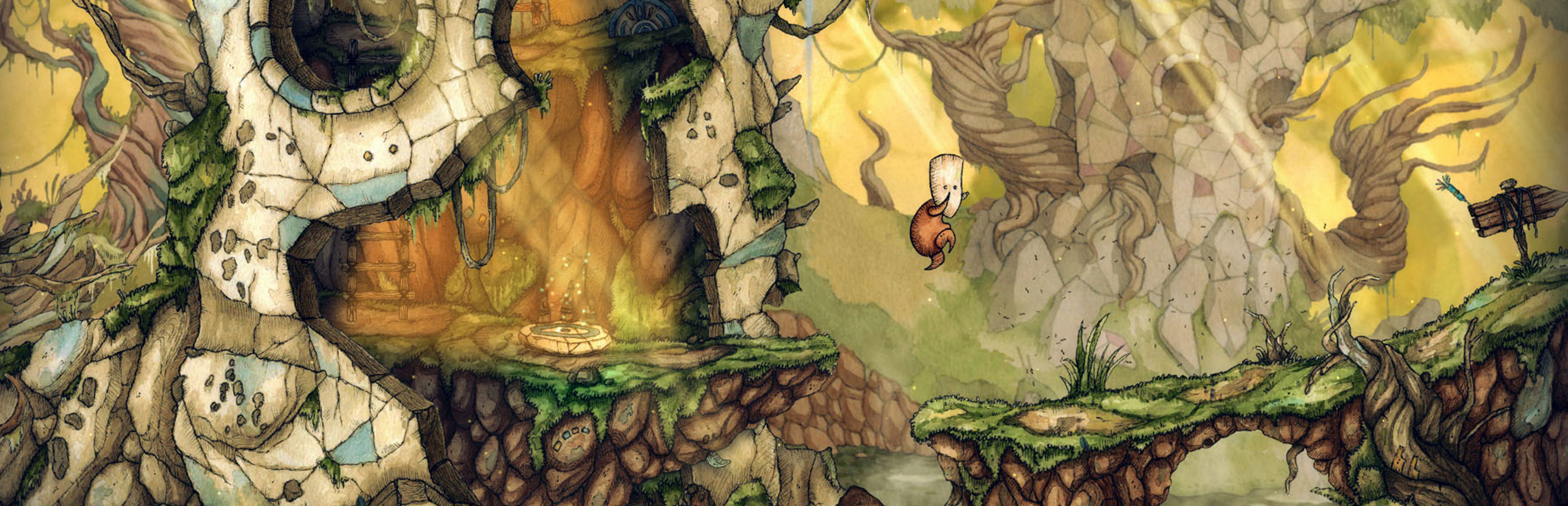
changedHOW WE MADE A WATERCOLOR GAMEBY JOSE A. GUTIÉRREZ Sometimes, we are not fully aware of the path we’ve been walking along until we reach the very end of it. Four years ago, we were just a couple of guys at the university with the dream of making a game someday, like many others in their twenties who share their passion. Candle has changed us, both personally and professionally. It has been an amazing experience, but equally exhausting. This is the result of a crazy idea: creating the best 2D adventure out there, and doing it by using traditional hand-made art techniques. When we started, yes, four years ago, we couldn’t see what was coming. When you think you have a good idea on your hands, you feel unstoppable at first, with more than enough energy to achieve everything you always dreamed of. In our case it was creating a videogame… who knows, maybe even reaching important & influential stores like Steam, where the small developers were gaining a lot of importance back in the day. At that time (it was 2012), that’s how we felt. Miguel (my current partner) and I were just 22, and we haven’t finished our degrees at the university (he was studying Software Engineering and I was studying Fine Arts), but we already saw the potential of what we had in mind: Candle, a game in which the player takes control of Teku, a masked kid who needs to save the Shaman of his tribe only with the help of the tiny candle he carries. With this idea, and the gameplay mechanics mostly designed, I worked on a comic at an illustration workshop of the university and it was the perfect occasion to also design the world of Candle and its main characters. Although the looks of the characters were very similar to those in the final game, the aesthetics and the narration tone were much more violent and darker than in the actual game we ended up developing (I was really influenced by Art Jensen’s “Limbo” back then, I must admit). Thanks to this comic story, we were able to send the project to a contest, a small entrepreneurs competition hosted by the University of Zaragoza. We had to present a project that would eventually become a studio, and its first “product” to develop. We ended up winning the first prize! Although we just got 3000€, we then had to take the most crucial decision of the entire development: take that money, create a nice and small students project and make it be a little anecdote in our lives, or get serious and try to build a professional future for ourselves with Candle. Of course we chose the latter and with that money, we equipped ourselves with a couple of computers to start working.
Candle changes
changedBY JOSE A. GUTIÉRREZ Sometimes, we are not fully aware of the path we’ve been walking along until we reach the very end of it. Four years ago, we were just a couple of guys at the university with the dream of making a game someday, like many others in their twenties who share their passion. Candle has changed us, both personally and professionally. It has been an amazing experience, but equally exhausting. This is the result of a crazy idea: creating the best 2D adventure out there, and doing it by using traditional hand-made art techniques. When we started, yes, four years ago, we couldn’t see what was coming. When you think you have a good idea on your hands, you feel unstoppable at first, with more than enough energy to achieve everything you always dreamed of. In our case it was creating a videogame… who knows, maybe even reaching important & influential stores like Steam, where the small developers were gaining a lot of importance back in the day. At that time (it was 2012), that’s how we felt. Miguel (my current partner) and I were just 22, and we haven’t finished our degrees at the university (he was studying Software Engineering and I was studying Fine Arts), but we already saw the potential of what we had in mind: Candle, a game in which the player takes control of Teku, a masked kid who needs to save the Shaman of his tribe only with the help of the tiny candle he carries. With this idea, and the gameplay mechanics mostly designed, I worked on a comic at an illustration workshop of the university and it was the perfect occasion to also design the world of Candle and its main characters. Although the looks of the characters were very similar to those in the final game, the aesthetics and the narration tone were much more violent and darker than in the actual game we ended up developing (I was really influenced by Art Jensen’s “Limbo” back then, I must admit). Thanks to this comic story, we were able to send the project to a contest, a small entrepreneurs competition hosted by the University of Zaragoza. We had to present a project that would eventually become a studio, and its first “product” to develop. We ended up winning the first prize! Although we just got 3000€, we then had to take the most crucial decision of the entire development: take that money, create a nice and small students project and make it be a little anecdote in our lives, or get serious and try to build a professional future for ourselves with Candle. Of course we chose the latter and with that money, we equipped ourselves with a couple of computers to start working.
HOW WE MADE A WATERCOLOR GAME
BY JOSE A. GUTIÉRREZ Sometimes, we are not fully aware of the path we’ve been walking along until we reach the very end of it. Four years ago, we were just a couple of guys at the university with the dream of making a game someday, like many others in their twenties who share their passion. Candle has changed us, both personally and professionally. It has been an amazing experience, but equally exhausting. This is the result of a crazy idea: creating the best 2D adventure out there, and doing it by using traditional hand-made art techniques. When we started, yes, four years ago, we couldn’t see what was coming. When you think you have a good idea on your hands, you feel unstoppable at first, with more than enough energy to achieve everything you always dreamed of. In our case it was creating a videogame… who knows, maybe even reaching important & influential stores like Steam, where the small developers were gaining a lot of importance back in the day. At that time (it was 2012), that’s how we felt. Miguel (my current partner) and I were just 22, and we haven’t finished our degrees at the university (he was studying Software Engineering and I was studying Fine Arts), but we already saw the potential of what we had in mind: Candle, a game in which the player takes control of Teku, a masked kid who needs to save the Shaman of his tribe only with the help of the tiny candle he carries. With this idea, and the gameplay mechanics mostly designed, I worked on a comic at an illustration workshop of the university and it was the perfect occasion to also design the world of Candle and its main characters. Although the looks of the characters were very similar to those in the final game, the aesthetics and the narration tone were much more violent and darker than in the actual game we ended up developing (I was really influenced by Art Jensen’s “Limbo” back then, I must admit). Thanks to this comic story, we were able to send the project to a contest, a small entrepreneurs competition hosted by the University of Zaragoza. We had to present a project that would eventually become a studio, and its first “product” to develop. We ended up winning the first prize! Although we just got 3000€, we then had to take the most crucial decision of the entire development: take that money, create a nice and small students project and make it be a little anecdote in our lives, or get serious and try to build a professional future for ourselves with Candle. Of course we chose the latter and with that money, we equipped ourselves with a couple of computers to start working.
THE CREATIVE PROCESS
It’s said that luck only knocks on your door when there’s a large amount of hard work and effort on your back. In our case, at least, it is totally true. We soon realized that working on Candle was going to be very demanding. And we were facing a lot of obstacles in our path: we didn’t have any experience in game development whatsoever, we didn’t even take part in a quick and small game jam. Miguel had never coded a videogame before and I, despite having many years of experience using several art techniques, had never worked on an animation either. Our first year of work was