
In this update7
Full notes
Full 螺钉与浮城 Bolt & Whalington update
Read the full published notes in a cleaner layout. The original post stays linked below.
What changed
- Gameplay
- Events
螺钉与浮城 Bolt & Whalington changes
Hi everyone! I’m Bread, the producer of Bolt & Whalington.
Our Open Playtest is still live, so if you haven’t joined yet, feel free to jump in and give it a try!
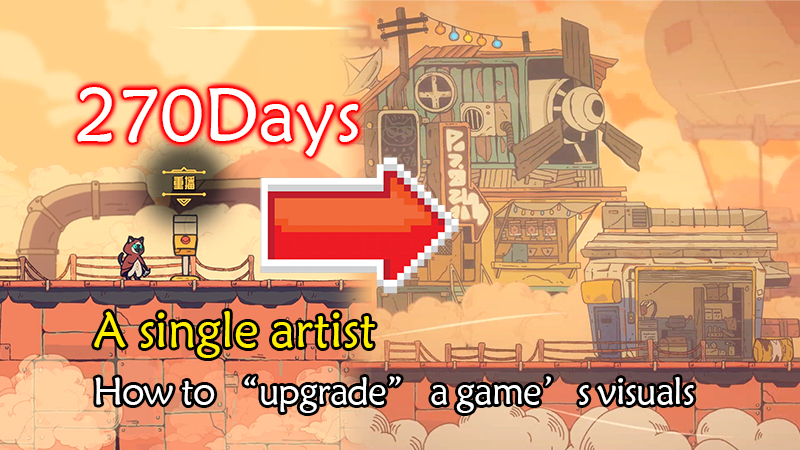
After the previous test, I received a lot of helpful feedback about our environments. So I started another round of visual polish, with one main goal in mind: making the scenes feel more layered and immersive.
1. Making the scene feel more layered
The first step was improving how we handle different visual planes in each scene.
The gameplay plane where Bolt stands is always the clearest and most detailed layer.
For the foreground, I use darker, more saturated colors, and sometimes even full silhouettes, so it adds depth without stealing too much attention.
For the far background, I apply more blur to help emphasize the space closer to the player.
2. Outdoor scenes
Outdoor scenes are affected more by atmospheric perspective.
The farther away a layer is, the more it tends to have:
● lower saturation
● higher brightness
● fewer details
● stronger influence from the surrounding environment color
This helps outdoor areas feel more open and believable.
3. Indoor scenes
Indoor scenes work a little differently.
Since indoor spaces usually don’t benefit as much from atmospheric perspective, I separate the layers by adding effects like mist, smoke, or soft visual haze between them. This helps create depth even in enclosed spaces.
4. Building depth with parallax
After that, I place each visual layer into a 3D scene.
By positioning distant layers farther away from the camera, I can create a stronger parallax effect.
When objects move more slowly relative to the camera, they naturally feel farther away. This helps the whole scene feel deeper and more alive.
5. Adding more “lived-in” details
The next step was enriching the environment itself.
I’m a huge fan of Hayao Miyazaki’s works, so while making the game, I’ve also drawn inspiration from some of his design ideas.
When designing our areas, I pay special attention to combining two things:
● a sense of everyday life
● a sense of mechanical fantasy
A lot of this comes from observing real life and reimagining it inside the game world.
For example, in the kitchen area, we have a section called the Rat Hole.
While designing it, I started asking myself: how would rats survive in a world full of cats?
In the end, I decided they would live down in the sewers, surrounded by pipes and all kinds of kitchen waste.
6. Designing the Residential District
For the Residential District, I mainly drew inspiration from the look and atmosphere of Kowloon Walled City.
I wanted this area to feel more densely lived-in, so I pulled a lot of those elements into the environment:
● signboards hanging on walls
● shoe cabinets packed with shoes
● doorways decorated with red Spring Festival couplets
● and those tiny ad stickers you often see on roadside poles or inside elevators
These kinds of details make the area feel more grounded, crowded, and full of everyday life.
7. A visual reference: the Liziba Monorail Station
Another visual reference was Chongqing’s famous Liziba Monorail Station, known for the train passing directly through a residential building.
We didn’t just use that idea as background flavor, either. We also brought it directly into gameplay, including:
● parkour
● puzzle-solving
● combat encounters
● and more
In this Open Playtest, we’ve also opened a Residential District Time Trial Challenge, so feel free to give it a try!
If you run into any issues, join our Discord and chat with us there.
That’s all for this devlog!
See you next time, and don’t forget to join the Playtest!
Source
Changelog.gg summarizes and formats this update. How we read updates.