What changed
0 fixes2 additions0 changes0 removals
addedCollectingMost creatures you will encounter have common genes. This means that the creature will have the standard look that follows the default colours and design for that creatures' species. However, you will regularly run into the more exciting and rare variants as you explore the wilds and can seek them out to tame them and add them to your team. Not all genes can be acquired this way however, as some of the genes have special requirements that must be met in order to earn them . A notable example is the Plague gene variant. This gene variant can only be obtained by combating and defeating a fungal spore plant . These plants can be encountered in the wild and will infest nearby creatures. Their zombified recruits then will defend the fungal plant with their lives. But if you are up for the challenge you can take them on in battle and earn the chance to harvest the spores from the defeated plant. These spores can then be fed to any creature of your choosing to give them the rare and otherwise unobtainable Plague gene variant.
addedBreedingWhen collecting rare genes, you may find that the creature possessing them is not one that you wish to use or in the case of the fungal plant (example above) that you only get a few spores from this challenging endeavour. There is, however, always the possibility to cross the genes into new species with selective breeding, which allows you to keep a healthy stock of your prized rare gene variants that you can mix and replicate as you wish. Not to mention breeding rare and desirable combinations to sell on the creature markets for a healthy heaping of coin.
Amber Island changes
addedMost creatures you will encounter have common genes. This means that the creature will have the standard look that follows the default colours and design for that creatures' species. However, you will regularly run into the more exciting and rare variants as you explore the wilds and can seek them out to tame them and add them to your team. Not all genes can be acquired this way however, as some of the genes have special requirements that must be met in order to earn them . A notable example is the Plague gene variant. This gene variant can only be obtained by combating and defeating a fungal spore plant . These plants can be encountered in the wild and will infest nearby creatures. Their zombified recruits then will defend the fungal plant with their lives. But if you are up for the challenge you can take them on in battle and earn the chance to harvest the spores from the defeated plant. These spores can then be fed to any creature of your choosing to give them the rare and otherwise unobtainable Plague gene variant.
addedWhen collecting rare genes, you may find that the creature possessing them is not one that you wish to use or in the case of the fungal plant (example above) that you only get a few spores from this challenging endeavour. There is, however, always the possibility to cross the genes into new species with selective breeding, which allows you to keep a healthy stock of your prized rare gene variants that you can mix and replicate as you wish. Not to mention breeding rare and desirable combinations to sell on the creature markets for a healthy heaping of coin.
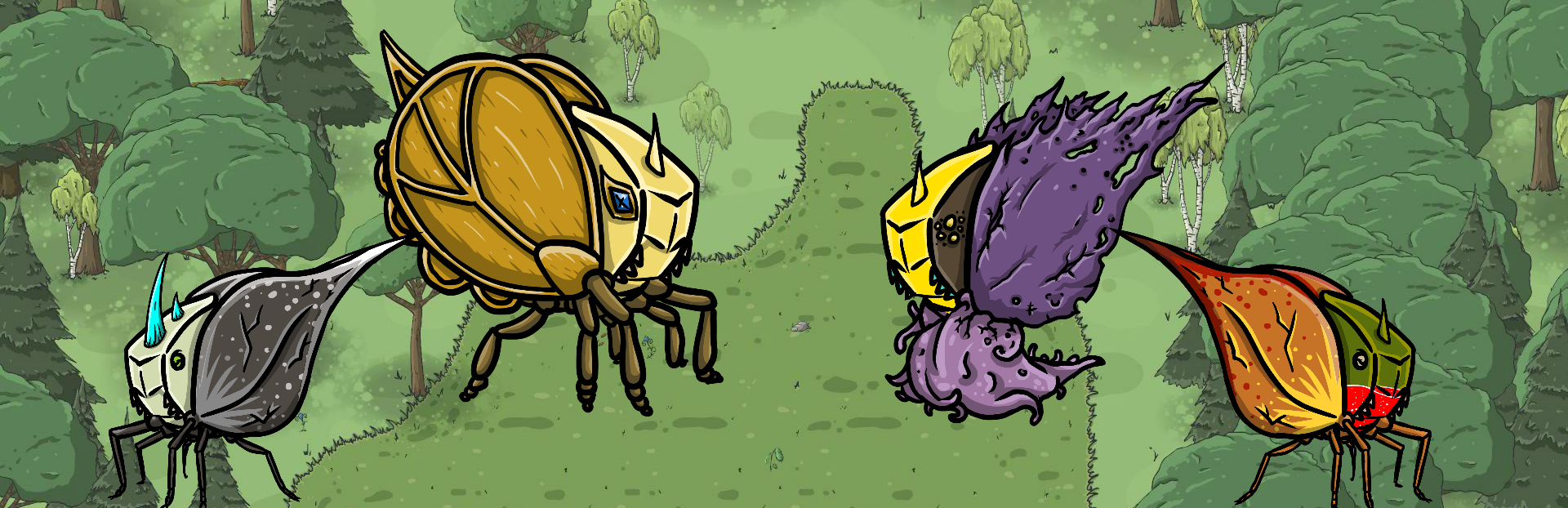
The creatures of Amber Island have a dazzling array of colours and special variants. Allowing you to customise the team you collect and breed.
So How Do They Work?
Every creature has three genes that can be combined to give the final result. They are the primary gene, secondary gene and colour gene. The primary and secondary genes are the most influential and determines the base colours and design of the creatures. All of the primary genes can be combined with any secondary gene to give many combinations to mix and match. In addition, the secondary gene also features a dynamic colour that is controlled by the final colour gene which allows the secondary gene to be further customised even more by one of the many colour options on the genetic colour wheel.
Collecting
Most creatures you will encounter have common genes. This means that the creature will have the standard look that follows the default colours and design for that creatures' species. However, you will regularly run into the more exciting and rare variants as you explore the wilds and can seek them out to tame them and add them to your team. Not all genes can be acquired this way however, as some of the genes have special requirements that must be met in order to earn them. A notable example is the Plague gene variant. This gene variant can only be obtained by combating and defeating a fungal spore plant. These plants can be encountered in the wild and will infest nearby creatures. Their zombified recruits then will defend the fungal plant with their lives. But if you are up for the challenge you can take them on in battle and earn the chance to harvest the spores from the defeated plant. These spores can then be fed to any creature of your choosing to give them the rare and otherwise unobtainable Plague gene variant.
Breeding
When collecting rare genes, you may find that the creature possessing them is not one that you wish to use or in the case of the fungal plant (example above) that you only get a few spores from this challenging endeavour. There is, however, always the possibility to cross the genes into new species with selective breeding, which allows you to keep a healthy stock of your prized rare gene variants that you can mix and replicate as you wish. Not to mention breeding rare and desirable combinations to sell on the creature markets for a healthy heaping of coin.