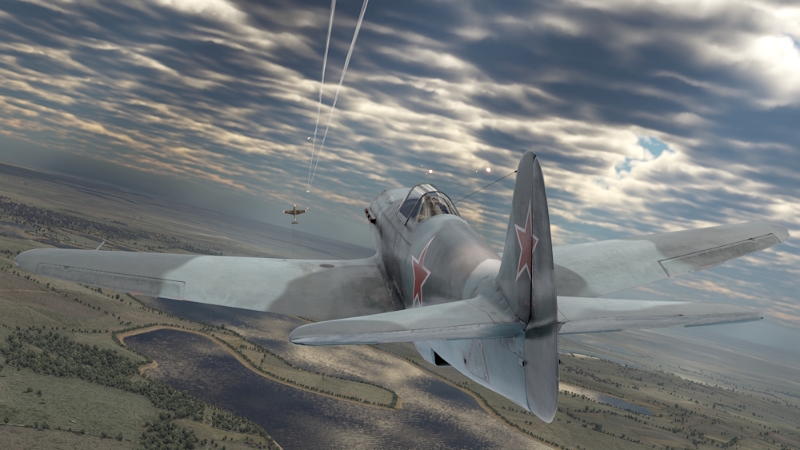
The choice of an ammunition belt directly affects the damage you deal, the ability to set enemies on fire, penetration, and the visibility of your bullets.
In this update1
Full notes
Full Aces of Thunder update
Read the full published notes in a cleaner layout. The original post stays linked below.
What changed
0 fixes1 addition4 changes0 removals
Balance
Store
Gameplay
changedThe choice of an ammunition belt directly affects the damage you deal, the ability to set enemies on fire, penetration, and the visibility of your bullets. The same aircraft can feel very different solely because of the belt composition. This article briefly covers ammo types, the benefits of “Stealth” belts, and effective setups for the P-47D-22-RE, Bf 110 G-2, Yak-3, and other aircraft.
changedHow to use beltsAgainst light fighters, the “Air Targets” belt with a predominance of HE and HE-I work best, as they quickly rip up the skin and often start fires. Against attack aircraft, the “Universal” belt is more convenient, as the HE shatters structures and fuel tanks, while AP reaches radiators and engines. For ground targets, take “AP”/“Ground Targets” and if possible, a larger caliber; HE is effective against soft targets (trucks, open-top AA guns).
changedHow to use beltsSteam post imageOn a number of German fighters, load the stock 7.92 mm MG 17 with a “Stealth” belt for higher damage, and let the cannons do the main work. If you install additional wing-mounted 20 mm MG 151s, choose “Air Targets” with an emphasis on HE, making it the fastest way to break aircraft apart. On the Soviet La-5FN and Yak-3, the 20 mm ShVAK is especially effective with “Ground Targets” or “AP” belts, thanks to the higher share of AP, helping to destroy tough modules. The American 12.7 mm Browning M2 on the P-51C-10, P-63A-5, F4U-4, P-47D-22-RE, and P-40E-1 works reliably with the “Universal” belt, as the balance of incendiary and AP suits most tasks.
changedHow to use beltsA note on heavy calibers. This is where the right ammo choice pays off the most. The pod-mounted 37 mm BK 3.7 on the Bf 110 G-2 and the 37 mm NS-37 on the Yak-9T can destroy ground targets with a single well-placed shot. Use AP against armor and HE against soft targets and unarmored modules. These calibers are dangerous against aircraft too, but the result depends on hit placement.
addedHow to use beltsSteam post image If you’re getting acquainted with a new cannon, start with “Air” or “Tracer” belts and only then switch to “Stealth”.
Aces of Thunder changes
changedThe choice of an ammunition belt directly affects the damage you deal, the ability to set enemies on fire, penetration, and the visibility of your bullets. The same aircraft can feel very different solely because of the belt composition. This article briefly covers ammo types, the benefits of “Stealth” belts, and effective setups for the P-47D-22-RE, Bf 110 G-2, Yak-3, and other aircraft.
changedAgainst light fighters, the “Air Targets” belt with a predominance of HE and HE-I work best, as they quickly rip up the skin and often start fires. Against attack aircraft, the “Universal” belt is more convenient, as the HE shatters structures and fuel tanks, while AP reaches radiators and engines. For ground targets, take “AP”/“Ground Targets” and if possible, a larger caliber; HE is effective against soft targets (trucks, open-top AA guns).
changedSteam post imageOn a number of German fighters, load the stock 7.92 mm MG 17 with a “Stealth” belt for higher damage, and let the cannons do the main work. If you install additional wing-mounted 20 mm MG 151s, choose “Air Targets” with an emphasis on HE, making it the fastest way to break aircraft apart. On the Soviet La-5FN and Yak-3, the 20 mm ShVAK is especially effective with “Ground Targets” or “AP” belts, thanks to the higher share of AP, helping to destroy tough modules. The American 12.7 mm Browning M2 on the P-51C-10, P-63A-5, F4U-4, P-47D-22-RE, and P-40E-1 works reliably with the “Universal” belt, as the balance of incendiary and AP suits most tasks.
changedA note on heavy calibers. This is where the right ammo choice pays off the most. The pod-mounted 37 mm BK 3.7 on the Bf 110 G-2 and the 37 mm NS-37 on the Yak-9T can destroy ground targets with a single well-placed shot. Use AP against armor and HE against soft targets and unarmored modules. These calibers are dangerous against aircraft too, but the result depends on hit placement.
addedSteam post image If you’re getting acquainted with a new cannon, start with “Air” or “Tracer” belts and only then switch to “Stealth”.
The choice of an ammunition belt directly affects the damage you deal, the ability to set enemies on fire, penetration, and the visibility of your bullets. The same aircraft can feel very different solely because of the belt composition. This article briefly covers ammo types, the benefits of “Stealth” belts, and effective setups for the P-47D-22-RE, Bf 110 G-2, Yak-3, and other aircraft.
Steam post imageIn basic “Standard” belts, you often find practice rounds. They’re fine for training, but weak in combat. Replace them with a task-specific belt as soon as you unlock modifications. Tracer rounds provide clear visual correction but slightly worsen ballistics (especially on the 12.7 mm Browning M2) and give away your firing position. This is where the usefulness of the “Stealth” belt comes in, as they have no tracers. Because of this, they’re harder to correct with, but that does mean it’s also harder for the enemy to tell where the shots are coming from.
How to use belts
Against light fighters, the “Air Targets” belt with a predominance of HE and HE-I work best, as they quickly rip up the skin and often start fires. Against attack aircraft, the “Universal” belt is more convenient, as the HE shatters structures and fuel tanks, while AP reaches radiators and engines. For ground targets, take “AP”/“Ground Targets” and if possible, a larger caliber; HE is effective against soft targets (trucks, open-top AA guns).
Steam post imageOn a number of German fighters, load the stock 7.92 mm MG 17 with a “Stealth” belt for higher damage, and let the cannons do the main work. If you install additional wing-mounted 20 mm MG 151s, choose “Air Targets” with an emphasis on HE, making it the fastest way to break aircraft apart. On the Soviet La-5FN and Yak-3, the 20 mm ShVAK is especially effective with “Ground Targets” or “AP” belts, thanks to the higher share of AP, helping to destroy tough modules. The American 12.7 mm Browning M2 on the P-51C-10, P-63A-5, F4U-4, P-47D-22-RE, and P-40E-1 works reliably with the “Universal” belt, as the balance of incendiary and AP suits most tasks.
A note on heavy calibers. This is where the right ammo choice pays off the most. The pod-mounted 37 mm BK 3.7 on the Bf 110 G-2 and the 37 mm NS-37 on the Yak-9T can destroy ground targets with a single well-placed shot. Use AP against armor and HE against soft targets and unarmored modules. These calibers are dangerous against aircraft too, but the result depends on hit placement.
Steam post image If you’re getting acquainted with a new cannon, start with “Air” or “Tracer” belts and only then switch to “Stealth”.
Share your experience! Which belts do you take on the MG 151 for hunting fighters, what do you load in the NS-37 for ground-pounding, and what do you put in the Brownings on American planes?