
In this update7
Full notes
Full Train Sim World® 6 update
Read the full published notes in a cleaner layout. The original post stays linked below.
What changed
- Balance
- Gameplay
- UI and audio
- Maps
- Store
Train Sim World® 6 changes
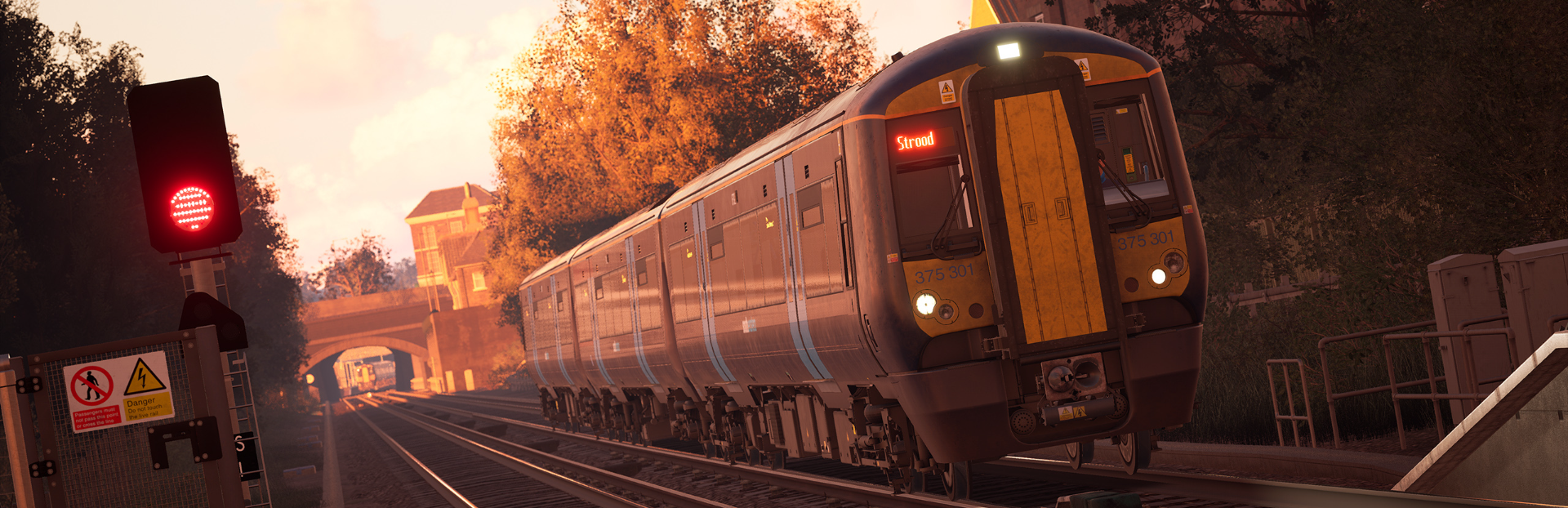
As unveiled in Season of Reveals 2025, the Medway Valley Line is heading into Train Sim World 6, created by a conglomerate of community modders turned official partner developers; Firefly Simulations. By chance, 2026 marks the 170th anniversary of the completion of the line, and the route is ready to be in your hands on March 26th! So, to get in the right spirit, let’s take a deeper look at the route, with info on its real-world background, and marvel at how Firefly have captured this picturesque slice of Kentish countryside. I suggest you get tea and biscuits for this one.
Medway Valley Line Preview Stream
Make sure to tune in on Wednesday 25th March (if you’ve finished reading this by then!) to get your first live glimpse at the Medway Valley Line ahead of its release the following day - hosted by Executive Producer Matt, Community Manager Jamie, Adam and Charlie from Firefly, and yours truly, James!
South Eastern Origins
Please click on the images to read their captions (there’s enough text here as-is).
In the earliest days of the steam era, there were already some considerable ambitions to link key locations together by rail. A railway line from London to Dover would unlock the potential for cross-channel traffic to reach into the heart of the country, and the first proposals go back as far as 1825. These ideas were hindered by land ownership, and the difficulties of crossing the River Medway, so little progress would be made in the subsequent decades.
Fast forward a decade and the odds were starting to shift, thanks to one of the most notable early railways; the London, Brighton & South Coast Railway. This new route, which is known today as the Brighton Main Line, offered the chance for the South Eastern Railway to be incorporated and explore route options which would briefly share LBSC territory, then branch off and make way eastbound for Dover. The eventual route resulted in the SER diverging at Redhill, running some 40 miles in a near-straight line towards Ashford, before rounding the southern crest of the Kent Coast to reach Dover in 1844.
Our attention turns to 5 miles of this 40-mile stretch, the section of South Eastern Main Line between Tonbridge and Paddock Wood, where our connection with the Medway Valley Line begins. But first, a little on Tonbridge itself.
Tonbridge, or as it was originally known, Tunbridge, was first opened in 1842 and originally resided east of the road upon which it now sits west of. It started life as a terminus, until the line eventually reached Ashford, and then it started to grow connections to Tunbridge Wells, and more lines from London were established. The station was rebuilt at its current location in 1864 and became a vital junction station. Also situated nearby is Tonbridge West Yard, and Engineers Sidings on the site of the former East Yard - this makes Tonbridge a hive of activity, being a pivotal point for freight and engineering trains, as well as the home of Rail Head Treatment Trains for the South East during the Autumn.
Hop to Maidstone
When the SEML was built, Paddock Wood station was in fact named Maidstone Road, despite being some 8 miles further south than the County Town. Bypassing the town ensured the line could get to the coast as efficiently as possible, but this did ultimately leave out the largest and most significant town in Kent - which had expanded over time owing to its big industrial links along the River Medway.
As such, in the same year that the line to Dover opened, the SER had already begun construction on a branch line which would turn north and follow the banks of the Medway to Maidstone itself. In September 1844, Maidstone Road was renamed to Paddock Wood, and the southern half of the Medway Valley Line opened to traffic. Today, Paddock Wood station is where most Medway Valley services terminate, with onward travel to Tonbridge requiring use of the 4-track wide footbridge, although there are services all the way to Tonbridge in the rush hour.
The line was designed primarily so that the local fruit and hop farming industries could remain competitive through the advancement of rail, providing much more direct connections for these perishable goods to key customers. One can catch a glimpse of this history to this day, with the Hop Farm near Beltring station offering a unique horizon with its characterised Oast Houses now playing host to a family-orientated farm and museum. These Oast Houses are a common relic in Kent, and as such can be found across the length of the route.
Beltring is our first stop, although it did not open with the line in 1844, coming into existence some 60 years later. Originally named Beltring and Branbridges Halt, the station was built as a rather simple construction and initially featured a siding for farm produce, an industry which has long since departed the railway. The station was rebuilt in the 1990s to replace its old wooden platforms, although the structure remained very simple. While still served by Southeastern every half an hour, it is one of the least used stations in Kent.
Between Beltring and Yalding, the next station, two features rush by in quick succession. The first is a crossing of the River Medway, note how narrow the waterway is now compared to when we see it again further up the line! Shortly after that is East Peckham Tip. While it hasn’t seen trains in a few years, and thusly has no timetable services, this siding is still connected to the line, and was used for the emptying of spoil trains. The squared gantry over the track is designed to sprinkle the spoil, making wagon contents damp and reducing the kick-up of dust.
Notable features continue throughout the line but the next few all reside around Yalding station. Yalding opened with the line in 1844 and originally only featured a single platform, the line wouldn’t be doubled until 1846. Much like Beltring, there used to be a goods yard here, but modern developments and overgrowing foliage now populate the land. The station is the first of a few stations to feature staggered platforms, this being a minor case, we will see just how displaced some station footprints get as we continue!
The level crossing just south of the station is also of note - the speed limit across it is 30mph and it is protected by a unique set of flashing white signals. This is due to the limited protection offered compared with other crossings along the route.
From Paddock Wood until now, the line was built much like the SEML itself in a fairly straight line, but this now changes upon leaving Yalding as the tracks were laid closely following the bank of the River Medway. The next few miles have awarded the line praise for its beauty, travelling through rather untouched Garden of England countryside and doing dance with the river. The SER must have appreciated the picturesque nature of the line here too, as the next station sees a dramatic upscale in grandeur.
Wateringbury station opened with the line much like Yalding, and originally was just a wooden platform halt, but this changed in a most impressive way when the line was doubled. Built to a mock Tudor style, a grand station building was erected and commands a towering stance over the Medway with elaborate red brickwork and tall chimney structures. Grade II listed in 1985, Wateringbury station building is regarded as one of the finest of its type in the country.
Also notable here are the completely staggered, or should even be separated platforms, with their only link being a footbridge. Situated on the far end of the station is another enticing facet of this route which is present in a few locations, locally staffed signal boxes! This one is Grade II listed, and alongside it remains one of the original railway sheds from the old good facilities, although this is now used by a private timber business. One also cannot forget to mention the proximity to the river here, the pinnacle of scenic views with boats moored along the marina.
With Wateringbury in our wake, the scenic hugging of the Medway continues along one of the longer stretches between any two stations. Now is a good time to mention the seasonal elements of the route too! As the months roll by, you many notice a change in the lineside population as sheep get accompanied by their young in the spring, and the volume of boats on the Medway changes as the year progresses.
East Farleigh station, as old as the line itself, is another example of a smaller, staggered station which bends tightly following a kink in the riverbank. The level crossing which divides the station provides instant views into the village, which descends sharply to the water and just as quickly rises away to the north. The medieval road bridge over the river here is Grade I listed and is thought to be one of the oldest river crossings in Kent.
The station building and signal box remain, and both were recently restored to Southern Green and Cream condition, the latter still being staffed as well, although all the manual crossing gates on the line were replaced in recent years. East Farleigh came under the spotlight in 1976 following a Nationwide programme reporting on the commuters of London, with its station master Spud Murphy going the definition of above and beyond for his regular passengers.
Watch the spotlight here, as part of the BBC Archives:
As the line continues along the northern face of the river, the tranquil countryside starts to give way to the outskirts of Maidstone, the largest intermediate town, and as mentioned earlier, the County Town of Kent. After weaving around the housing estates of Tovil, one approaches Maidstone West station’s large and historic footprint, complete with, once again, a staffed signal box overlooking the curve - this one having survived bombing in WW2 which necessitated some reconstruction.
The original terminus of the Medway Valley Line, Maidstone West offers ample hints into its freight and parcels past, with space for old sidings and southern-facing bay platforms still in situ, even if all the tracks haven’t survived.
Let’s take the time to look at one of Maidstone’s most unique relics, an old ZBV Grampus wagon lays abandoned one of the old bays. The story goes; some 40 odd years ago this wagon, carrying spoils, had to be shunted out of a train due to brake issues, so it was put aside for future repair and recovery... Evidently, someone never quite got their toolkit to it, as there it remained until the floor rotted away, depositing spoils onto the track beneath it, and then following some infrastructure works, it was locked in place when the track leading to it was ripped up - and there it has remained to this day! As to not feel too sorry for it, it’s been coated in an application of Southern olive-green paint, serving nicely as a unique bit accidentally preserved, slightly overgrown railway history. This wagon will be a detail you can add to the route yourself as it is in fact the unlockable Mastery scenery tile.
There is plenty of station building to see at Maidstone West, with its unique facade of being a single storey building on the roadside, but actually two-storey from the platform. The old lattice footbridge remains, complete with its original corrugated canopies still in place – something which many other footbridges of this style have lost over the years. A hub of activity, this station serves the bulk of the town, and sees Highspeed services to London St Pancras in the rush hour. The station features a central road so northbound traffic can overtake services here, before converging back into two tracks underneath the London Road tunnel.
Straight up to Strood
You still with me? Right then, let’s keep going!
Following the line’s opening in 1844, and upgrading just a couple years later, it was clear that the Medway Valley Line had proved successful. Further up the river, towards the much more industrialised estuary, the South Eastern Railway had also made their way to Strood via Gravesend, by way of following the Thames Estuary canal and terminating short of the Medway’s western bank. The next logical step was going to be joining up the two lines, by stretching further north and extending the Medway Valley Line to Strood.
Before one has barely had the time to drive through London Road Tunnel and process the fact that they’ve left Maidstone West, the next station is already in view. Maidstone Barracks, originally known as just “Barracks”, named after the nearby military compound, it did not open with the extension, it was added 18 years later to complete with London, Chatham & Dover’s new line through via Maidstone East.
When electrification arrived in 1939, sidings were used by old slamdoor EMUs making it quite the hive of activity, and the station ended up looking rather respectable with canopies and platform-level buildings… which is a stark contrast to its truncated status today; all sidings concreted over, station features stripped back, just enough to get the job done (and perhaps a little less).
As the county town is left behind us, but not before passing beneath the aforementioned Maidstone East Line, another brief spell of scenic riverside views can be enjoyed. The line may not be as close to the bank, but the Medway will noticeably progress to get wider now each time we see it.
The next station is one which isn’t as easily forgettable as the Barracks, but before we get there, we pass Allington Sidings. Served multiple times a week, this terminal takes deliver of limestone from the likes of Whatley Quarry, Somerset, to produce asphalt. The setup here requires a lot of complex movements for drivers, as the site is shorter than the trains that serve it. Immediately adjacent to the sidings, the railway passes under the M20 motorway - this concrete construction was a newer addition over the line when the M20 was built in the 1960s and early 70s.
The sweeping approach into Aylesford - our next station - provides a nice amount of contrast to look out for; new, vibrant housing developments stand in line around one corner, followed by the old village flanking the nearby level crossing. Be sure to check spawning and fast travel locations in this area if you fancy having a walk around. As the platforms come into view, one could be forgiven for thinking momentarily they’d just teleported back to Wateringbury, but Aylesford station has its own history and unique style.
Aylesford was opened with the extension in 1856, and its location just so happened to pass through the historical Preston Hall Estate, which was the home of Edward Betts: the railway contractor in charge of building the Medway Valley Line through the area. I guess we all would make our local station the grandest if we had the choice, and so the station building and nearby station masters house were built to mirror the design of the nearby estate and Aylesford Priory, including the use of Kentish Ragstone as the primary construction material, giving it a parting palette to Wateringbury’s redbrick faces.
The signalbox at Aylesford is not its original, but provides a nice example of 1920s Southern Railway design to further add to the variety. It can’t be missed either that the station features staggered platforms - the curve makes it easily approachable from the south but can catch you off guard when coming from the north!
The next km or so is perhaps the section of line which has seen the largest scenery change in recent years. One defining attribute of the Medway Valley Line is that its northern extension is far more industrial than the southern half, and this was depicted for decades by the massively complex Aylesford Newsprint and paper mill, complete with siding for the delivery of fuel, later coal, to power the massive site. Sadly though all this has gone, raised to the ground and in its place, equally massive but architecturally less inspiring warehouses now stand with rows of lorries for loading, including a large DHL distribution centre. Do not reminisce for too long though as you’ll miss braking in time for the next, and newest station on the line.
New Hythe is the most recent station to have been built along the Medway Valley Line, if one can call 1929 recent, and its sole purpose was to serve the nearby paper mill during its heyday, acting as a halt for workers. Much of the station was rebuilt when the line was electrified - although it has always been rather crude in construction. It does however hold the distinguishing feature of having platforms that can support 8-car trains. This is impractical these days as most services would overhang every other station, but one can imagine how many people from Strood or Maidstone would be travelling directly to New Hythe for work, caring not about the fact that half their train wouldn’t fit at intermediate stations.
When the line’s signalling was upgraded in 2005 from semaphore to colour light, New Hythe was a rare exception for the line to lose its signalbox entirely, the work being transferred to Aylesford box - this also being partly due to the station having already lost its level crossing in the 1990s, replaced by a road bridge in conjunction with the opening of the New Hythe Industrial Estate.
It’s a straight shot northbound for the next mile, with the line bordered by water on both sides but unlike other locations, this is not the River Medway - between New Hythe and Snodland, the line cuts its way through a series of lakes. Made up of old sand and gravel pits, the lakes in the area provide nice walking and picnic locations for family days out, but are also managed by private anglers for recreational casting. For those of you out there that fancy yourselves a bit of a fish fetcher, you’d be interested to know the Carp record for Brooklands Lake as of 2025 is 61lb 9oz.
Back to the trains, and just before the level crossing into Snodland station, there still resides an active paper mill on one side of the line, and on the other, a listed, but disused signal box still bearing old Snodland signage. Snodland station itself again opened with the line and, while perhaps not as grand as other buildings, would get a rather sizeable structure not long after its opening. The site here, like others on the line, was once home to a small goods yard and engine shed, in fact the still-standing wall which keeps up the canopy on platform 2 was once the wall of said shed. It is by far the most populated and commuter-heavy town on the line between Maidstone and Strood, and shortly after being introduced the Maidstone Highspeed services started calling here.
In 2016, with 395s massively increasing the daily use of the station, the whole site was renovated. The station building, which for many years housed a takeaway and taxi firm, was reopened as a ticket office, and the car park was rebuilt offering additional capacity - this was then capped off with the addition of a bus stop, with the 71 to Maidstone altered to now terminate here. The latest upgrades to the station happened just a few years ago when the lattice footbridge, of 1890s origin, was repainted into original Southern Railway green, and Snodland lettering was enboldened along Platform 1's wall, which is conviently sized to fit each letter!
Continuing north, and after noting the residual passing loop tracks nestled in the lineside growth, we head into an embankment towards the next station, including passing under many bridges which connect the north end of Snodland and Holborough on one side of the line, to the rural outskirts of Halling on the other. There is a strange gap of foliage too, this is where a bridge used to reside until a few years ago until the newer bridge immediately adjacent replaced it. This new bridge was built to facilitate a new crossing over the Medway itself.
If New Hythe is the youngest station on the line, then Halling is the middle child. Having opened in 1890, Halling missed the grander days of station construction and just got a simple, single-storey building on the Up side, although what stands today is a brick-built replacement of the original, which only lasted 3 years before burning down - pesky wooden buildings...
Simply serving the nearby village, there is not much to be said here, in truth, but what is fascinating is the surrounding area, which itself plays host to old WW2 pillboxes which overlooked the Medway, as well as quarry sites which have been responsible for the materials upon which many people depend on today, such as Waterloo Bridge in the heart of the capital.
Departing Halling, there is a rail connected cement works situated between the line and the river here - while the connection has existed for a long time, trains have only started using it again recently. The Cement works produces concrete railway sleepers which are used in engineering works projects across the country. We don’t have the appropriate wagons to represent this in TSW, but it’s a nice bonus to explore if you’re free roaming about!
Fun fact: as mentioned, this area of Snodland, Holborough and Halling is known for its digging sites, and industrial sites of days past had resident industrial locomotives. One such locomotive, which worked in Snodland Cement Works, was blue in accent and had more characteristics in common with a traction engine than a steam engine. This Aveling & Porter 2-2-0WT was called “Blue Circle” and if you know, then you know!
As the line bends around the curving and widening river, a brief clearing offers a view of a landmark we’ll pass under shortly, but also here is access to Halling Marina via a manually operated crossing. Featured as fast travel point for a bit of spotting, the crossing here features working lights and alarms just like a standard crossing, informing any potential crossers whether it’s safe to cross or not. Now would be a good time to call out that supporting AI trains will sound their horns appropriately at every whistle board, (and there are a lot of whistle boards!), so you’ll know when a train is approaching.
The line straightens out north-eastward again and the next station comes into view. Opened with the extension, Cuxton is quite a small station compared to Aylesford and Snodland, it certainly doesn’t quite have the grand stature of those, but Cuxton has its own diminutive and unique station building, featuring just one floor before the roof caps it off in mock Tudor style. The village itself resides up the bank of the valley, nestled between the MVL and the Chatham Main line which curves into view further up the hillside, with the other side of the station giving access to Cuxton Marina. Much like other stations, there is still a staffed signalbox here.
Now the “valley” part of Medway Valley is really coming into force, with the river having carved a channel right through the chalky North Downs. It is here where, towering far above, is the M2 motorway and more excitingly, High Speed 1 - the very same High Speed 1 that one traverses at 140mph between London and Ashford on Southeastern Highspeed! These iconic structures stretched across the valley in two stages; the first motorway viaduct opened in 1963, and there it remained solo until a 2nd was opened in 2003 as part of the motorway’s widening. High Speed 1, or as it was known then, the Channel Tunnel Rail Project, also bridged the gap in the early 2000s. During construction it was not uncommon to see Class 20s up there, not something you’d see nowadays! In 2003, the viaduct was the location where the Britsh Rail Speed Record was broken, with TMST 3313/314 crossing the valley at 208mph - a record which still stands today.
Crossing under the bridges marks a rapid change in the scenery now, from the Medway Valley Leisure Park to various industrial estates, and even a Diggerland, we are entering the built-up outskirts of Strood. Warehouses and washed up boats flank the final curves, and across the river, the historic Rochester Castle and Cathedral silhouette atop the bank. Threading the needle, the line goes over Strood High Street, then under the Chatham Main Line as it finishes curving into Medway, then quickly joined by Toomer Loop - the connection between North Kent and Chatham Main Lines, before finally arriving at Strood itself.
Strood has enough history that it could be a deep dive on its own, but we’ll keep it brief. The origins of what stands today can actually trace its lineage back to 1800, when approval for Thames & Medway Canal was granted. Bypassing the Hoo Peninsula, this waterway would offer a direct link between each river, and its path is where trains now traverse. As rail grew in popularity, a line was built alongside the Canal, right through the Strood Tunnel, and as business dried up further, the remaining cavity was drained and filled, allowing for double tracks to pass through the tunnel towards London.
The station and surrounding site today is a shadow of its former self, all the sidings and engine sheds are gone. The station itself, of 1845 origin, was rebuilt to make it into a through station rather than a terminus, this provided the connection onward to the Medway towns, but also was readily available to accept the extension of the Medway Valley Line when it arrived.
How Strood looks now is the result of another recent rebuild in the 2010s, replacing its CLASP station building with a much more modern design, complimenting the new Rochester station which itself opened in 2015. The interior is spacious and accessible, with wider entrances, improved parking and most importantly, a shop for snacks! As well as this, the station was also given lifts and platform extensions. And that’s that! Our historical journey along the Medway Valley journey is complete.
But before you rest your eyes, that’s not all the route has to offer, so we’ll do a short summary of the other sections, and moreover, why they’re included.
And and, if you want to know even more about the Medway Valley Line, do indulge in some further reading on Kent Rail and Kent Community Rail Partnership sites.
Hoo Goes There?
Well… freight goes there! Also included in the Medway Valley Line route is 13 updated miles from Southeastern Highspeed, 7 of which takes us to Gravesend via Hoo Junction. Hoo Junction is a key yard and staging point for engineering and freight services, as well as a turnaround point for trains coming to/from the Isle of Grain, and therefore, it offers a natural endpoint for freight within the route.
Then to cap off the route, Gravesend is as far as the tracks go here, allowing for Southeastern Class 395 and Thameslink Class 700s to be playable with a sensible driver swap point before continuing your journey on Southeastern Highspeed, if you so wish.
Make Way for Medway
The remaining 6 miles meanders through the Medway towns of Rochester, Chatham, Gillingham and Rainham, this makes Thameslink reach its natural endpoint and, combined with Gravesend, offers a bitesized version of Southeastern Highspeed gameplay where one doesn’t always have the time to complete a full journey. This stretch also provides access to Gillingham depot which, in addition to Tonbridge Jubilee Sidings, means the entirety of Class 375 Medway Valley services are represented - embark on a full day’s diagram from depot to depot without ever having to leave your train (although a break or two is recommended)!
And... Breathe!
If your brain is all worded out, you’d be forgiven by now for forgetting that the Medway Valley Line is releasing on March 26th on PC (Steam & Epic Games) and Gen 9 consoles (Xbox Series X|S & PlayStation 5) for £29.99/€35.99/$39.99 - the route will not be on Gen 8 (Xbox One & PlayStation 4) platforms.
Source
Changelog.gg summarizes and formats this update. How we read updates.