
In this update4
Full notes
Full Medic: Pacific War update
Read the full published notes in a cleaner layout. The original post stays linked below.
What changed
- Gameplay
- UI and audio
- Maps
- Performance
- Compatibility
Medic: Pacific War changes
Medics, we are so back - and for good.
It’s been almost eight months since we held our first-ever developer stream, and we know that you have been asking the same question ever since - “What now?”
It’s been a long while since we started working on Medic: Pacific War, and we know there have been multiple pauses throughout the years.
Now - this Devlog - is the beginning of the new era. We’re coming in hot with the full commitment of rolling forward. No more stopovers. We will be dropping bombs like zeroes under the morning sun.
We made you wait long enough. It’s now or never!
A New “Medic” Experience - Turning to Realism
Medic: Pacific War began as a passion project aimed at making the role of a World War II Medic engaging while staying true to its historical roots. While this made sense from the start, the deeper we went into development, the more we realized we needed a more realistic approach. After all, we named the game after the impressive work done by the World War II Medical Corps.
With this in mind, we have now gravitated towards making Medic: Pacific War more “realistic,” moving away from the more “arcade” style we initially leaned towards.
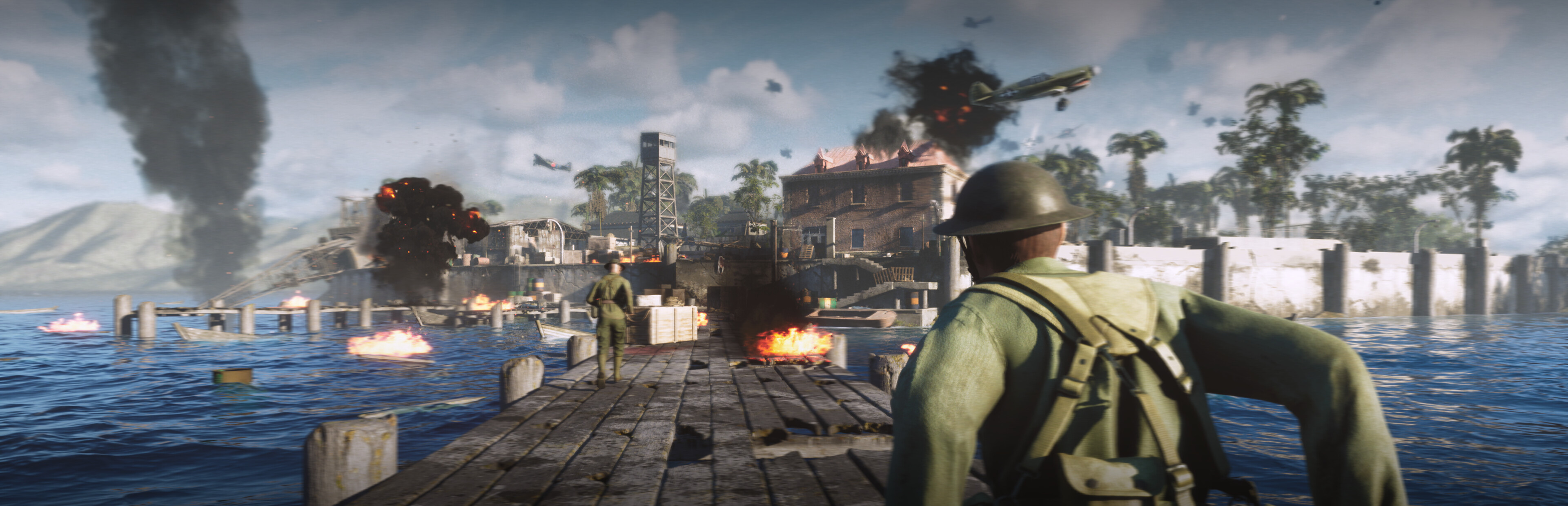
The WW2 Battlefield on Unreal Engine 5
Upgrading to a more advanced and powerful game engine is a no-brainer. After all, everyone involved in the project and the community wants an immersive experience like no other. Immediately, the change to Unreal Engine 5 allowed us to improve every aesthetic aspect of the game, from the graphics to the sound effects.
Thanks to UE5’s Nanite, we can showcase the beauty of our environments at an unprecedented level. Battlefields are now rendered precisely how we wanted them to be - representing the war’s destructive effect on the environment.
The battlefield is filled with different light sources, and UE5’s Lumen has allowed us to make them appear more realistic than ever before. Whether you’re inside a war tunnel lit only by small, flickering ceiling lamps, or getting flashed by shots coming from the zeroes in the sky, light sources bounce off realistically.
The move to Unreal Engine 5 has also allowed us to scale our game’s graphical options for more modern setups, allowing us to use the latest graphical techniques in video games, such as DLSS, XLSS, and more. This will allow for a much wider range of compatibility with different gaming setups.
Considering this, moving towards a newer engine is an almost gargantuan task for a game already built from a previous iteration. While the most noticeable improvements are already in our development build, we’re continuously working on maximizing the potential of Unreal Engine 5 towards Medic: Pacific War. We can’t wait to share more about this!
Better, More Realistic Animations
Moving around the battlefield with a heavy bag of medical supplies wasn’t supposed to be as easy as moving around every day. Plus, the dangers of the battlefield made it harder to take each step forward. Such is the mindset we embody moving forward whilst making Medic: Pacific War lean towards realism.
We’ve updated the in-game animations to better represent the hardship the ground troops went through during the Second World War. Whether you’re trying to get from one cover to another, or you’re trying to sprint toward a wounded ally, the animations will convey how moving for the sake of your survival should
Source
Changelog.gg summarizes and formats this update. How we read updates.