
Update log
Full Far Cry® 2 update
The complete published notes, normalized for clean reading and source attribution.
Extracted changes
- Maps
- Workshop
Deep down, I think we've all wanted to burn down a house.
Not out of vengeance, or a half-baked insurance scam, or to send a message to a crosstown mob boss. To me, pyromania is simply the most relatable form of gleeful mass destruction. Who isn't a little bit entranced by a towering inferno? Of course, in real life you can't work out your emotional baggage through incendiary therapy without getting the cops called on you, but videogames fill the void.
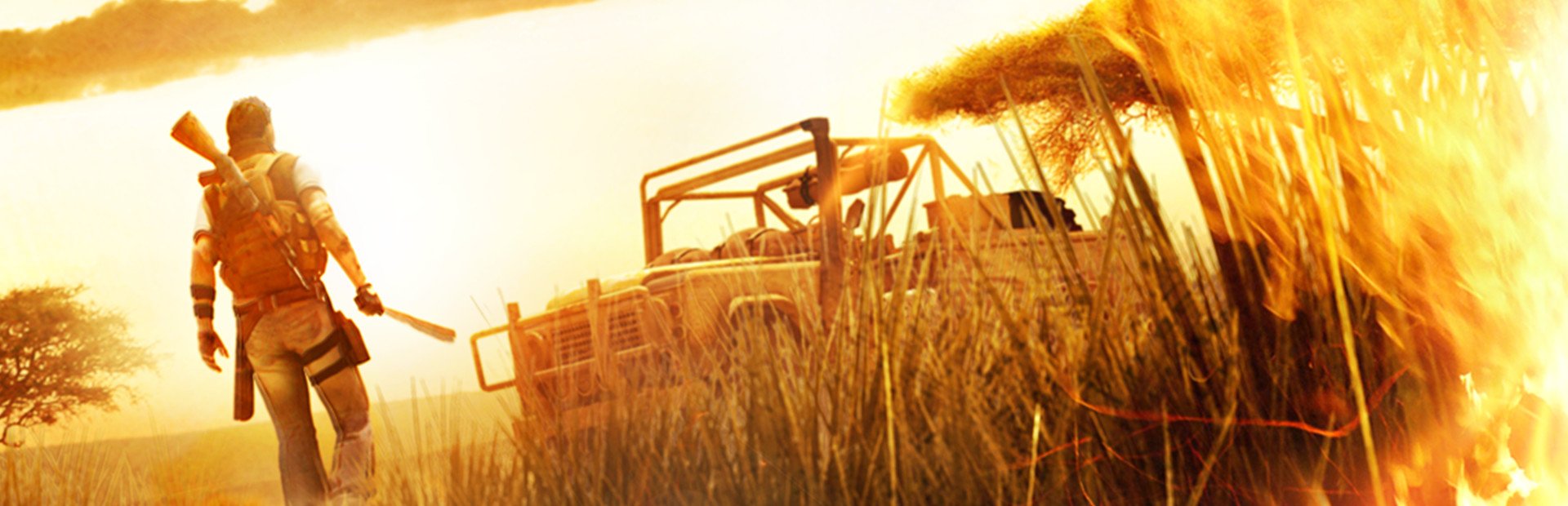
If we're being honest, games have only recently really helped us get in touch with our latent pyromaniac instincts. It was difficult to program inspiring flames on a Commodore 64, and the less said about Doom's pepperoni pizza take on lava the better. But that started to change in 2008, with the release of Far Cry 2 and its unprecedented wildfire mechanics.
"To me [Ubisoft] really nailed how fire should feel and I loved how it would burn the grass and environment, such a wonderful touch," says Bill Munk, creative director of Killing Floor 2, which itself is a game with an incredibly satisfying flamethrower. He's right. Open world sandboxes weren't exactly a rarity in the late-aughties, but Far Cry 2 was one of the first times our machines packed the processing power to handle the physics estimations necessary to set those open-worlds on fire. We haven't looked back since.
https://www.youtube.com/embed/ax_MCN6aHME">
"I really think flame weapons are so fun because of the extreme destruction they cause to NPCs and to the environment," continues Munk, when I ask him why he thinks players enjoy a healthy bit of incineration every now and then. "It's such a fun power trip, not to mention fire-based weapons are generally more forgiving on how accurate you need to be with your aim."
Today, we're seeing games that play with fire on a more granular, mechanical level, rather than the engine-porn stagecraft it's been used for in the past. The best example I can think of is probably Larian Studios' Divinity series, which has persistently injected an immersive suite of environmental effects into the relative solemnity of a turn-based RPG.
I've always found this screenshot, where a rustic wooden platform is scorched to the depths of hell, to be an effective shorthand for why people who don't necessarily play a ton of strategy games still fall in love with the absurdity of Original Sin's magic systems.
"We tried to tweak duration, area and availability of fire skills so that the player is frequently put into position where their battle plan is spinning out of control and they need to improvise and take risks," says Nick Pechenin, systems designer of Divinity Original Sin 2, when I ask him how fire has been a useful tool in Larian's game design. "It was also important to us that although the ways in which surfaces are created and interact with each other have almost no randomness, smallest deviations in how the player targets their skills and positions their characters lead to wildly divergent outcomes, essentially generating fresh combat experiences every time."
It was fun to hear someone speak so intelligently about the mechanical theories behind cauterizing your enemies. For me, fire effects in videogames aren't about all clever design. Fire taps into my baseline, brain-bypassing id—the caveman wants and needs of my idiot gamer brain. But I suppose that's how it should be. A good blaze should be emotionally and aesthetically resonant, and when done right, it serves
Source