
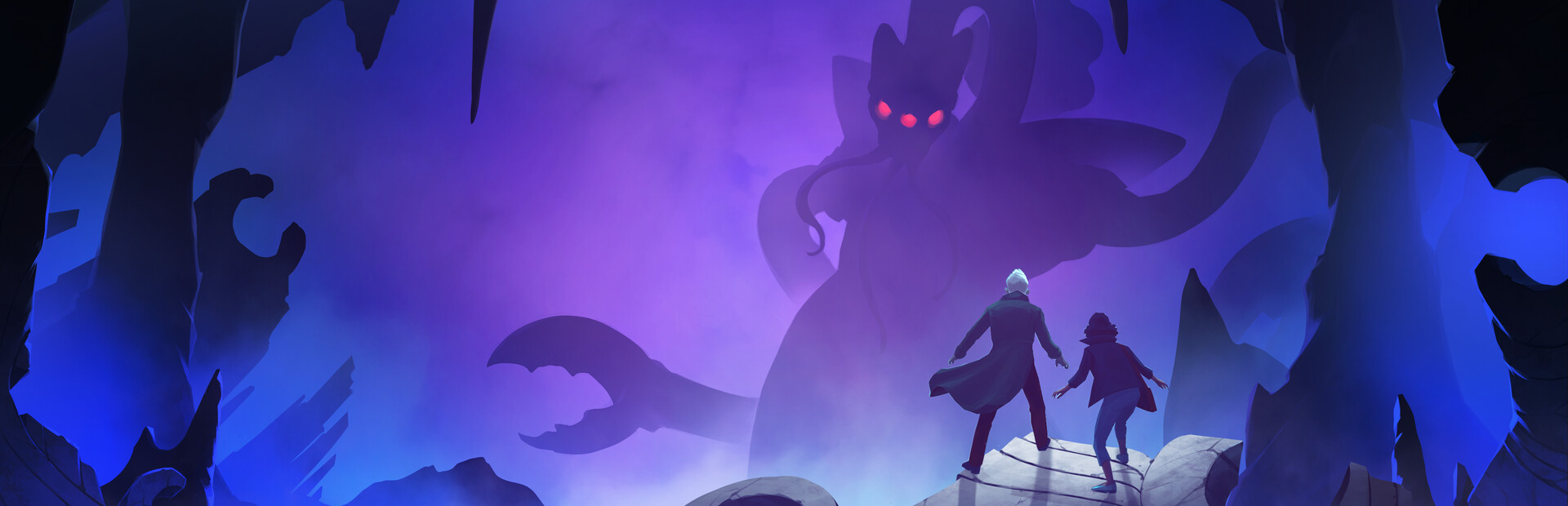
Call of the Elder Gods
Steam News 16 October 20257mo ago

Dev Diary I - An Interview with Out of the Blue Games!

On your venture to find answers, it is important to understand where the journey began. In this month’s Dev Diary, get to know the developers at Out of the Blue Games - Manuel and Tatiana! Q: How (and when) did Out of t…

Update log

Full Call of the Elder Gods update

The complete published notes, normalized for clean reading and source attribution.

Extracted changes

0 fixes1 addition0 changes0 removals
  • Gameplay
addedOn your venture to find answers, it is important to understand where the journey began. In this month’s Dev Diary, get to know the developers at Out of the Blue Games - Manuel and Tatiana! Q: How (and when) did Out of the Blue start? Out of the Blue was born from the idea of creating a studio dedicated to narrative and puzzle games, which is the great passion of its founders, Manuel and Tatiana. After many years working in the industry, they also wanted to create a place where developers could enjoy doing what they love most: making games, but also making games that everyone could be proud of. The idea for the studio began to take shape at the end of 2018 and was officially founded in 2019, starting with the development of its first game: Call of the Sea. Q: Where did the inspiration for the art style for both Call of the Sea and Call of the Elder Gods stem from? One of the main artistic references for Call of the Sea was Firewatch. On one hand, there was the stylized look of the assets, where silhouettes were very important. On the other hand, there was the use of lighting and saturated colors. We decided to take it a step further by using materials that behaved more realistically with light, while still maintaining saturated colors and using light to tint the scenes. Other references can be found in Sea of Thieves, The Witness, and the canceled game In the Valley of Gods. Q: What drew you to following Evangeline and Harry’s Story? During the development of Call of the Sea, we already knew that if we ever had the chance to make a sequel, the protagonists would be Harry and Evangeline. On one hand, we wanted to continue Harry’s story — the sorrowful man we see in the post-credits scene of Call of the Sea — and explore what his life was like without Norah. In his own words, the only thing he had left was his work. And that’s where Evangeline comes in — without giving away any spoilers, she’s also a character connected to Call of the Sea. We wanted to explore a story about grief, while also delving into the evolution of both characters. Q: Has working on Call of the Elder Gods differed in any way to Call of the Sea? If so, how? What we’ve noticed is that, as a studio, we’ve matured and learned a lot — both during the development of Call of the Sea and later with American Arcadia. Now we have the experience and knowledge that allow us to explore new possibilities, such as dialogues between characters or having two protagonists. Q: What inspired you to include Lovecraftian elements in the game? The team members have always been very fond of Lovecraft’s stories and Cosmic Horror. We’ve been long-time role-playing game fans, and we loved playing Call of Cthulhu sessions, especially those focused more on investigation and themes that went a bit beyond what you’d normally expect from this kind of game. That led us to think it would be interesting to create a game that stayed true to Lovecraft’s themes, but from a different perspective. Call of the Sea stood out for being a colorful and beautiful game, where the protagonist, instead of undergoing the typical descent into madness seen in Lovecraft’s characters, chooses to accept her fate, and through that acceptance, finds her sanity. We also wanted to

On your venture to find answers, it is important to understand where the journey began. In this month’s Dev Diary, get to know the developers at Out of the Blue Games - Manuel and Tatiana! Q: How (and when) did Out of the Blue start? Out of the Blue was born from the idea of creating a studio dedicated to narrative and puzzle games, which is the great passion of its founders, Manuel and Tatiana. After many years working in the industry, they also wanted to create a place where developers could enjoy doing what they love most: making games, but also making games that everyone could be proud of. The idea for the studio began to take shape at the end of 2018 and was officially founded in 2019, starting with the development of its first game: Call of the Sea. Q: Where did the inspiration for the art style for both Call of the Sea and Call of the Elder Gods stem from? One of the main artistic references for Call of the Sea was Firewatch. On one hand, there was the stylized look of the assets, where silhouettes were very important. On the other hand, there was the use of lighting and saturated colors. We decided to take it a step further by using materials that behaved more realistically with light, while still maintaining saturated colors and using light to tint the scenes. Other references can be found in Sea of Thieves, The Witness, and the canceled game In the Valley of Gods. Q: What drew you to following Evangeline and Harry’s Story? During the development of Call of the Sea, we already knew that if we ever had the chance to make a sequel, the protagonists would be Harry and Evangeline. On one hand, we wanted to continue Harry’s story — the sorrowful man we see in the post-credits scene of Call of the Sea — and explore what his life was like without Norah. In his own words, the only thing he had left was his work. And that’s where Evangeline comes in — without giving away any spoilers, she’s also a character connected to Call of the Sea. We wanted to explore a story about grief, while also delving into the evolution of both characters. Q: Has working on Call of the Elder Gods differed in any way to Call of the Sea? If so, how? What we’ve noticed is that, as a studio, we’ve matured and learned a lot — both during the development of Call of the Sea and later with American Arcadia. Now we have the experience and knowledge that allow us to explore new possibilities, such as dialogues between characters or having two protagonists. Q: What inspired you to include Lovecraftian elements in the game? The team members have always been very fond of Lovecraft’s stories and Cosmic Horror. We’ve been long-time role-playing game fans, and we loved playing Call of Cthulhu sessions, especially those focused more on investigation and themes that went a bit beyond what you’d normally expect from this kind of game. That led us to think it would be interesting to create a game that stayed true to Lovecraft’s themes, but from a different perspective. Call of the Sea stood out for being a colorful and beautiful game, where the protagonist, instead of undergoing the typical descent into madness seen in Lovecraft’s characters, chooses to accept her fate, and through that acceptance, finds her sanity. We also wanted to

Source

Steam News / 16 October 2025

Open original